Tackling the Virtual Horizon: Arm’s Newly Patented Ultrasonic Solution for Extended Reality Motion Sickness
Executive Overview
Motion sickness remains the proverbial Achilles’ heel of immersive computing. Despite exponential leaps in visual fidelity, refresh rates, and field-of-view engineering across modern extended reality (XR) headsets, the fundamental biological disconnect of virtual environments continues to plague users. When your eyes perceive high-speed locomotion or dramatic spatial shifts while your inner ear registers absolute stillness, the resulting sensory conflict triggers dizziness, nausea, and disorientation.
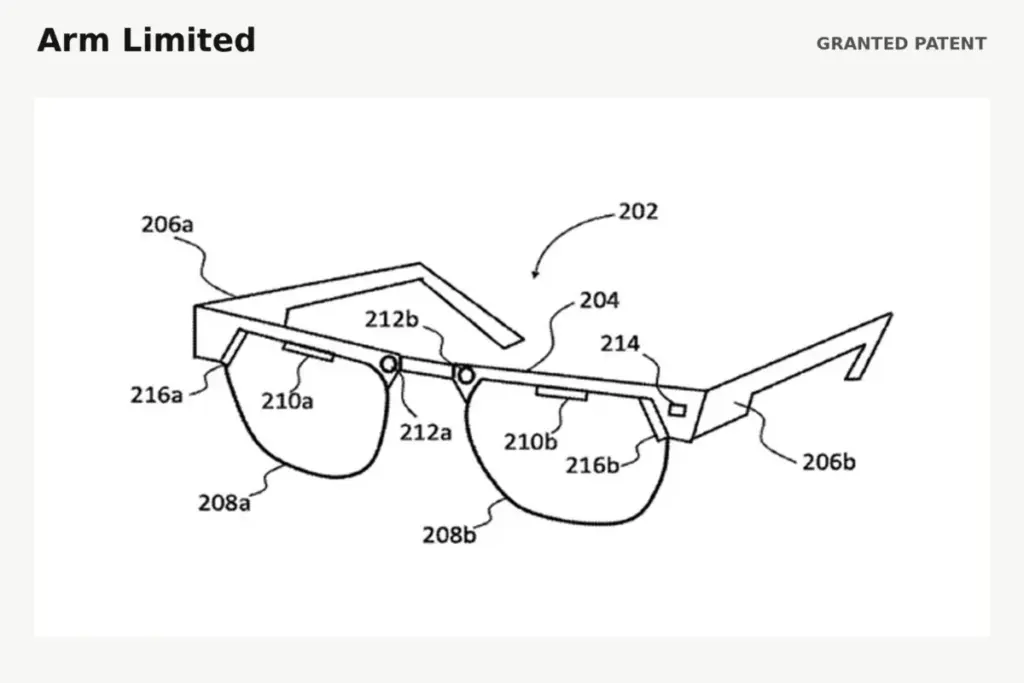
Enter a groundbreaking intellectual property filing from semiconductor giant Arm. Recently granted under the title "Method for minimising motion sickness for head-mountable extended reality," the patent details a sophisticated, hardware-driven approach to solving this age-old neurological dilemma. Rather than relying solely on visual tricks—such as decreasing frame rates, introducing dynamic comfort vignettes, or reducing artificial camera velocities—Arm’s system dives straight into neurophysiology.
By analyzing real-time visual data streams destined for headset displays, the newly detailed system coordinates with an array of integrated ultrasonic transducers. These components issue low-intensity focused ultrasound (LiFU) directly toward the wearer’s vestibular system, artificially stimulating the inner ear to match what the eyes are seeing. It is an ambitious attempt to engineer biological equilibrium from within the hardware architecture itself. While patents are notoriously exploratory and do not guarantee immediate commercial integration, Arm’s conceptual leap signals a significant evolution in how foundational technology providers are thinking about user comfort, physiological safety, and the long-term viability of XR ecosystems.
Detailed Chronology and Technical Architecture
To fully grasp the scope of Arm’s innovation, it is necessary to examine the trajectory of the patent itself and the intricate physics governing its proposed execution.
The Patent Lifecycle
The intellectual property journey began on July 24, 2023, when the initial paperwork was formally filed in the United States. Following years of meticulous patent examination, regulatory review, and iterative refinement regarding its claims, the United States Patent and Trademark Office officially granted the patent (Patent No. 12653753) on June 16, 2026. This timeline highlights a methodical approach by Arm’s engineering divisions to secure proprietary protection over a hardware methodology that bridges consumer electronics and neurostimulation.
The Inner Workings: From Visuals to Acoustic Force
At its core, the patented system operates via a continuous feedback loop between visual rendering pipelines and sensory stimulation hardware. The head-mounted device monitors visual motion within a sequence of rendered frames, constantly evaluating movement vectors against predefined acceleration and velocity thresholds.
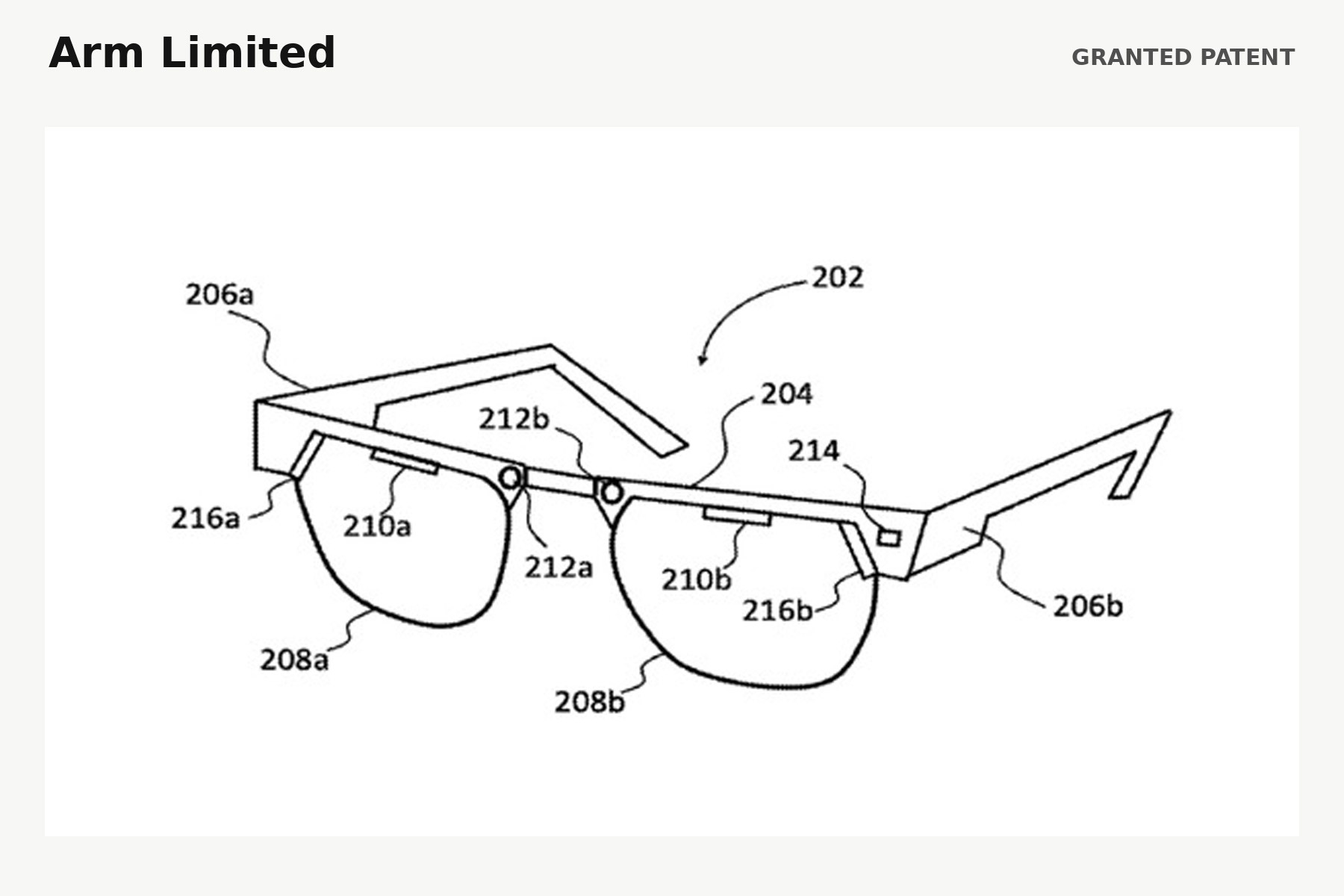
When the system detects a scenario likely to induce sensory conflict—such as rapid artificial translation, sudden rotational snaps, or simulated vehicular acceleration—processing and control circuitry leap into action. Instead of waiting for the user to succumb to simulator sickness, the device generates precise control signals directed toward multiple ultrasonic transducers positioned strategically around the user’s head.
The mechanism relies heavily on low-intensity focused ultrasound (LiFU). By utilizing acoustic radiation forces, the transducers can target the vestibular system—specifically the semicircular canals and otolith organs housed within the inner ear—with localized mechanical pressure waves.
- Subtle Shifts: If a virtual scene depicts a minor, slow drift to the left, the system scales the ultrasonic output to impart a corresponding, gentle physical sensation of leftward movement.
- Aggressive Manpulations: For high-intensity visual sequences, such as roller-coaster simulations or intense flight maneuvers, the acoustic radiation force scales upward, dynamically stimulating the vestibular apparatus to match the violent changes unfolding on the virtual display.
Furthermore, the patent outlines configurations featuring one or more transducers positioned per ear. By leveraging advanced beamforming techniques, the system can constructively and destructively interfere sound waves to target precise sub-regions of the inner ear, creating a nuanced, multi-directional vestibular illusion that closely mirrors the visual stimuli.
Supporting Context & Metrics: The Biological Challenge of XR
To appreciate why a semiconductor company is patenting inner-ear neurostimulation, one must understand the unique physiological burden imposed by extended reality environments.
The Sensory Mismatch Hypothesis
Human balance, spatial awareness, and spatial orientation are governed by a complex tripartite sensory integration system comprising:
- The Visual System: Providing continuous data regarding our position relative to our surroundings.
- The Vestibular System: Located in the inner ear, translating gravity, angular acceleration, and linear movement into neural signals.
- The Proprioceptive System: Providing feedback from muscles, joints, and tendons about body position.
In natural environments, these three systems operate in absolute harmony. If you turn your head, your eyes, inner ears, and neck muscles all report the movement simultaneously. In extended reality, however, this evolutionary symphony breaks down. When a user sits stationary on a living room couch while exploring a virtual reality simulation, their eyes report motion, velocity, and acceleration. Simultaneously, the otoliths and semicircular canals in the inner ear report a stubborn, unyielding truth: you are sitting still.
This sensory mismatch is interpreted by the brain not as a technological marvel, but as a classic symptom of neurotoxin ingestion. Evolutionarily speaking, the primary historical cause of sensory mismatch was poisoning, and the brain’s hardwired defense mechanism against neurotoxins is emesis (vomiting). Consequently, millions of users experience sweating, pallor, fatigue, headaches, and nausea—collectively known as simulator sickness or cyber-sickness.
Adaptive Comfort Management
Arm’s patent recognizes that solving this problem requires more than a blunt instrument. Rather than relying solely on vestibular stimulation, the proposed architecture details a comprehensive, multi-tiered comfort management system.
If ultrasonic intervention alone is insufficient, or if the user’s physical parameters fall outside optimal ranges, the system can dynamically trigger software-level mitigations:
- Visual Attenuation: Fading displayed images or introducing dynamic vignettes (tunnel vision) to reduce peripheral optical flow.
- Pacing and Realignment: Forcing the XR application to throttle visual motion, matching it strictly to the user’s sensed physical movements.
- Closed-Loop Recalibration: Continuously evaluating sensor-derived signals regarding the wearer’s actual pose. If a discrepancy arises where the user’s physical movement fails to align with expected visual parameters, the system dynamically recalibrates its acoustic output to re-establish biological equilibrium.
This holistic approach transforms motion sickness mitigation from a reactive software band-aid into an active, hardware-supported sensory synchronization pipeline.
Industry Position and Strategic Implications
To understand the weight of this patent, one must examine Arm’s unique and influential position within the global technology landscape.
The Engine Behind the Digital World
Arm, operating as a subsidiary of SoftBank, is not a consumer-facing hardware manufacturer in the traditional sense. Instead, the company designs and licenses central processing unit (CPU) architectures and instruction set architectures (ISAs).
Arm’s technology serves as the foundational bedrock for the vast majority of modern mobile computing devices. From smartphones and tablets to high-end extended reality headsets, processors built on Arm architecture—including market leaders like Qualcomm’s Snapdragon series and Apple’s custom Silicon chips—power the mobile revolution. When an industry analyst refers to a processor as "Arm-based," they are acknowledging that the underlying intellectual property governing that chip’s execution logic originated from Arm.
Why Arm is Investing in Biometric and Sensory Patents
By patenting hardware-level vestibular stimulation methods, Arm is signaling a strategic shift in how processor designers anticipate future ecosystem requirements. As XR devices evolve into standalone, untethered spatial computing platforms, the demands placed on system-on-chips (SoCs) extend far beyond raw graphical rendering and compute efficiency.
Future mobile and XR processors will need to integrate sophisticated auxiliary processing blocks capable of managing low-latency biometric feedback loops, real-time spatial audio rendering, and precise peripheral hardware orchestration like ultrasonic beamforming arrays. By securing patents in neural stimulation and sensory conflict mitigation, Arm ensures that if the market pivots toward hardware-assisted comfort management, its semiconductor blueprints will already natively support the necessary control circuitry and computational pipelines.
Future Outlook and Industry Horizons
As the extended reality landscape marches toward lightweight, all-day wearable form factors, the elimination of simulator sickness remains the holy grail of human-computer interaction. While Arm’s newly granted patent provides a fascinating glimpse into a potential technological future, it also raises critical questions that the industry must address.
The Road Ahead: Engineering and Biological Hurdles
Moving from a patent document to a commercially viable consumer product is a monumental undertaking. Several significant challenges stand in the way of ultrasonic vestibular stimulation:
- Physiological Variance: Human anatomy varies wildly. The exact placement of the inner ear, bone density surrounding the skull, and individual sensitivities to ultrasound mean that a one-size-fits-all beamforming profile will not work uniformly across a diverse consumer base.
- Safety and Regulatory Approvals: Directing focused ultrasound toward cranial structures requires rigorous safety validation. Regulatory bodies such as the FDA will demand exhaustive long-term studies proving that prolonged, repeated exposure to low-intensity focused ultrasound has no adverse neurological or auditory side effects.
- Hardware Footprint and Power Consumption: Integrating multiple ultrasonic transducers, precision amplifiers, and real-time beamforming control circuitry into a sleek, lightweight headset adds weight, complexity, and power draw—three elements that XR designers fight against relentlessly.
Alternative Approaches and the Path Forward
Arm’s ultrasonic approach is not the first attempt to conquer vestibular mismatch. Historically, researchers and engineers have explored Galvanic Vestibular Stimulation (GVS), which uses small electrical currents applied via electrodes placed behind the ears to stimulate the vestibular nerve directly. While academic demonstrations of GVS have shown promise in manipulating balance perceptions, electrical stimulation has struggled with comfort, precise directional control, and consumer acceptance due to the prickling sensations often associated with cutaneous electrodes.
By comparison, low-intensity focused ultrasound offers a non-contact or surface-mounted mechanical alternative that bypasses some of the tactile discomfort of electrical currents.
Final Thoughts
It is critical to reiterate that a patent is a legal instrument designed to protect intellectual territory; it is not definitive proof that Arm, or any of its licensee partners, will immediately integrate ultrasonic transducers into upcoming headset generations.
Nevertheless, the filing serves as a profound indicator of where extended reality engineering is heading. As virtual environments become increasingly indistinguishable from physical reality, the hardware powering them must evolve to bridge the gap between digital optical feeds and biological human architecture. Whether through ultrasonic inner-ear stimulation, advanced spatial rendering algorithms, or yet-unimagined neural interfaces, the ultimate victory over motion sickness will require innovations that treat the human body not as a passive observer, but as an active participant in the computational loop.