
The Cost of Scarcity: Inside the Controversial Analogue x Supreme Pocket Launch and the Instant Resale Crisis
Executive Overview
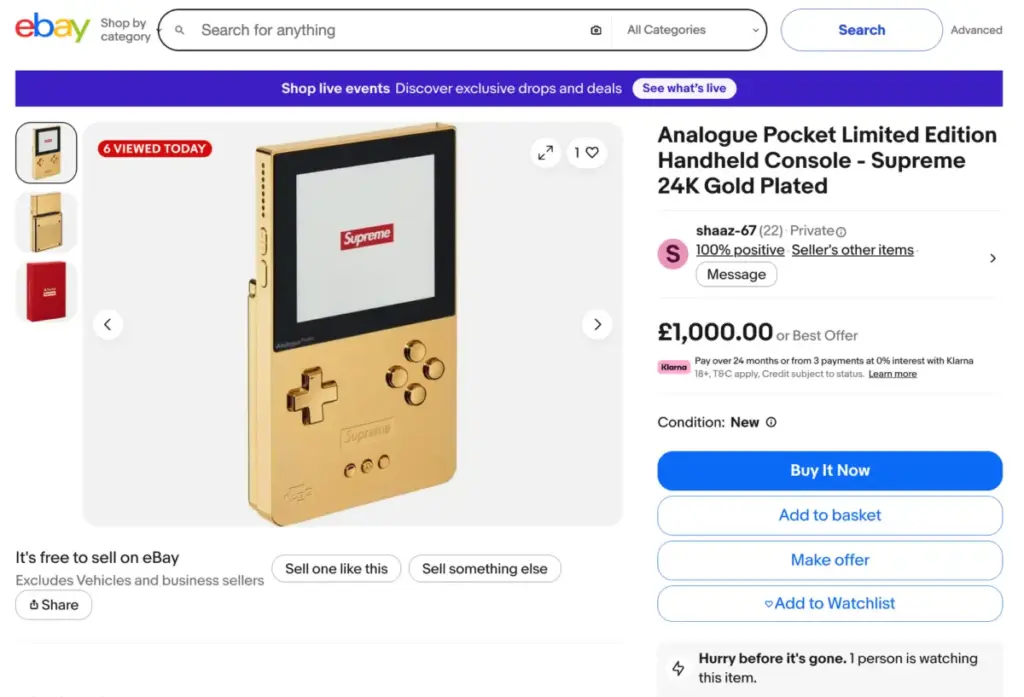
On August 20, 2026, the premium retro hardware manufacturer Analogue, in partnership with the iconic luxury streetwear brand Supreme, officially launched one of the most anticipated—and highly controversial—collaborations in recent gaming history. The drop featured two ultra-limited editions of the critically acclaimed Analogue Pocket handheld: a plated 24-karat gold variant and a striking red anodized aluminum edition.
In keeping with the established sales dynamics of both brands, the entire inventory evaporated from Supreme’s online storefront within minutes of going live. Almost instantly, a familiar secondary-market pipeline went into effect. Before Analogue could even update its official homepage to acknowledge the release, dozens of listings materialized on eBay. Scalpers, leveraging automated checkout systems and speculative listing tactics, began offering the handhelds at markups exceeding 100% of their retail value.
This joint venture highlights a growing trend at the intersection of consumer electronics, high fashion, and video game preservation: the "hypebeast-ification" of hardware. While the collaboration represents a marketing triumph for both Supreme and Analogue, it has simultaneously reignited fierce criticism from the core retro gaming community. Many enthusiasts argue that Analogue’s reliance on artificial scarcity and "fear of missing out" (FOMO) marketing exploits genuine players while prioritizing high-margin luxury collectibles over stable, accessible production runs of its standard hardware.
Detailed Chronology: From Teaser to the Secondary Market
The road to the August 20 launch was paved with calculated ambiguity, a signature strategy of both collaborating parties.
[Early August 2026]       [August 20, 2026 - 17:00 BST]     [August 20, 2026 - 17:05 BST]    [August 20, 2026 - 17:15 BST]
   Teaser Campaign            Online Storefront Opens            Complete Inventory Sell-Out        First Waves of eBay Listings
   (Social Media Buzz)        (Supreme.com Drop)                 (Minutes to Exhaust Stock)        (Prices surge past $1,400 USD)
The Teaser and Anticipation
In the weeks leading up to the release, Analogue and Supreme initiated a subtle teaser campaign across social media and specialized fashion outlets. The announcement of a 24K gold-plated handheld and a Supreme-red aluminum variant instantly divided observers. To fashion collectors, it was a must-have lifestyle accessory; to dedicated gamers, it was a highly desirable piece of hardware wrapped in an incredibly restrictive purchasing ecosystem.
The Launch: August 20, 2026
The listings officially went live on Supreme’s regional websites. In the United Kingdom, the 24K gold-plated version was priced at £508 (approximately $699 USD), while the red aluminum variant commanded a slightly lower, though still premium, retail price of £428 (approximately $583 USD).
The Instant Sell-Out
Within less than five minutes, the "Add to Cart" buttons across all regions were replaced by "Sold Out" indicators. The rapid depletion of stock occurred so quickly that Analogue’s web infrastructure lagged behind the event, leaving their landing page un-updated while the transaction cycle completed entirely on Supreme’s servers.
The Scalping Wave
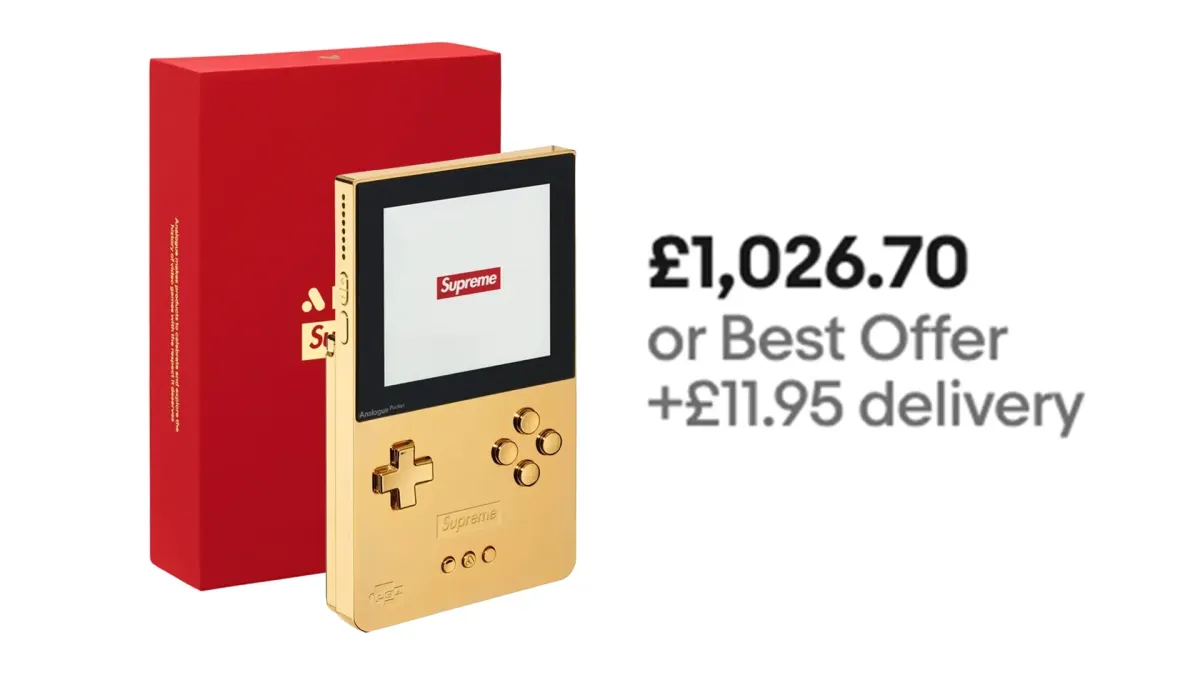
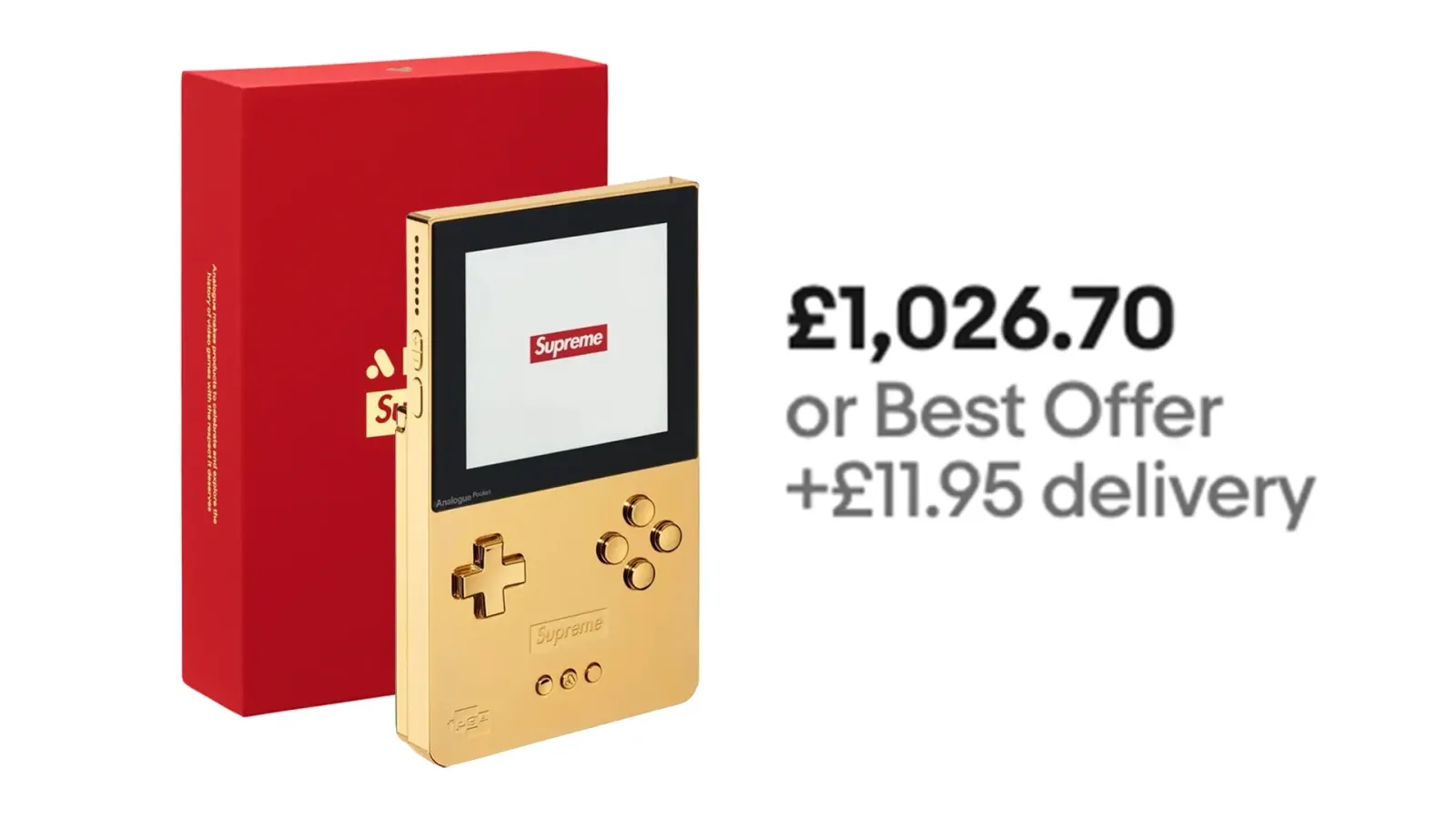
Within fifteen minutes of the official sell-out, the secondary market was flooded with confirmed order screenshots and speculative listings. On eBay UK, at least 19 distinct listings for the Supreme Edition Analogue Pockets appeared almost immediately. Resellers listed the 24K gold-plated model for an average of £900 ($1,220 USD), with several ambitious listings climbing as high as £1,026 ($1,400 USD).

Supporting Context & Metrics: Analyzing the Economics of Scarcity
To understand the market dynamics of this release, it is necessary to examine the pricing structure, secondary market arbitrage, and the underlying hardware that makes the Analogue Pocket so highly coveted.
Pricing and Resale Arbitrage Metrics
The financial delta between the retail manufacturer’s suggested retail price (MSRP) and the immediate secondary market listings illustrates a lucrative environment for scalper arbitrage:
| Model Variant | Retail Price (GBP) | Estimated Retail (USD) | Average eBay Ask (USD) | Maximum Observed Ask (USD) | Minimum Scalper Markup (%) |
|---|---|---|---|---|---|
| Red Aluminum Edition | £428 | $583 | $950 | $1,100 | 62.9% |
| 24K Gold-Plated Edition | £508 | $699 | $1,220 | $1,400 | 74.5% |
This markup represents an immediate, risk-free profit margin of 60% to 100% for automated reseller bots capable of securing inventory faster than human consumers.
Technical Specifications: What Makes the Pocket So Desirable?
The irony of the Supreme collaboration is that beneath the gold plating and streetwear branding lies an exceptionally engineered piece of hardware. Unlike standard emulation handhelds that run games via software on cheap system-on-chip (SoC) architectures, the Analogue Pocket utilizes field-programmable gate array (FPGA) technology.
- Dual FPGA Chips: Features an Altera Cyclone V and a secondary Cyclone IV chip, allowing the system to replicate the actual electrical circuits of classic console hardware at a transistor level. This results in zero-latency, cycle-accurate gameplay.
- Display Technology: Equipped with a 3.5-inch LTPS LCD screen boasting a resolution of 1600×1440 pixels. At 615 pixels per inch (ppi), it features 10 times the resolution of an original Game Boy, allowing for incredibly precise display modes that replicate the exact pixel grid, phosphor patterns, and backlighting characteristics of original retro screens.
- Native Cartridge Support: Out of the box, the system plays Game Boy, Game Boy Color, and Game Boy Advance cartridges, with optional physical adapters supporting Sega Game Gear, Atari Lynx, Neo Geo Pocket Color, and TurboGrafx-16 cards.
+-------------------------------------------------------------+
|                     ANALOGUE POCKET ARCHITECTURE            |
|                                                             |
|   +-----------------------+         +-------------------+   |
|   |   Altera Cyclone V    | <=====> |  Altera Cyclone IV|   |
|   |  (Primary Hardware)   |         | (Developer Core)  |   |
|   +-----------------------+         +-------------------+   |
|               ||                             ||             |
|               /                             /             |
|   +-----------------------+         +-------------------+   |
|   | 1600x1440 LTPS Display|         | Cartridge Adapter |   |
|   |  (615 PPI Precision)  |         | (Zero Latency GBA)|   |
|   +-----------------------+         +-------------------+   |
+-------------------------------------------------------------+
Official Stance and Community Backlash
Neither Supreme nor Analogue has issued formal press statements addressing the immediate sell-out or the subsequent migration of inventory to secondary auction sites. Supreme’s corporate strategy historically relies on silence to cultivate mystique; the company does not publish inventory numbers, production volumes, or anti-bot measures.
However, the silence from Analogue has drawn significant ire from the broader gaming community. On platforms such as Reddit, X (formerly Twitter), and specialized retro gaming forums, the reaction has been overwhelmingly critical.
The Core Arguments of the Community:
- Neglect of the Standard Product Line: Gamers have expressed intense frustration that Analogue continues to allocate manufacturing pipelines, engineering resources, and logistical bandwidth to high-priced, limited-run variants while the standard, black-and-white plastic models—priced at a more reasonable $219 USD—remain chronically out of stock or subject to multi-month pre-order backlogs.
- Exploitation of FOMO: Critics argue that Analogue has abandoned its original mission of video game preservation in favor of boutique lifestyle branding. By leaning heavily into ultra-limited drops (such as the Glow-in-the-Dark, transparent colorways, solid Aluminum series, and now the Supreme collaboration), the company is accused of deliberately fostering consumer anxiety to guarantee instant sell-outs.
- The Fingerprint and Usability Paradox: The 24K gold-plated edition has been mocked by hardware enthusiasts as a fundamentally flawed gaming device. The highly polished, reflective gold surface is notoriously susceptible to fingerprints and micro-abrasions, meaning that the few units not sitting sealed in scalper warehouses will likely spend their lives on display shelves rather than being played.
Future Outlook: The Intersection of Luxury and Nostalgia
The success of the Analogue x Supreme partnership guarantees that the luxury-gaming crossover trend is here to stay. As video games have transitioned from a niche hobby to a dominant global cultural force, the generation that grew up with the Game Boy has reached peak disposable income. Luxury brands recognize that nostalgia is a powerful economic driver.
What Lies Ahead for Analogue?
For Analogue, this collaboration elevates its brand equity far beyond the insular world of retro gaming, positioning it alongside high-fashion icons. However, this strategy carries long-term risks. By alienating its core audience—the preservationists, homebrew developers, and hardware enthusiasts who originally championed the brand—Analogue risks diluting its reputation for technical excellence, reducing its products to mere speculative assets for non-gaming investors.
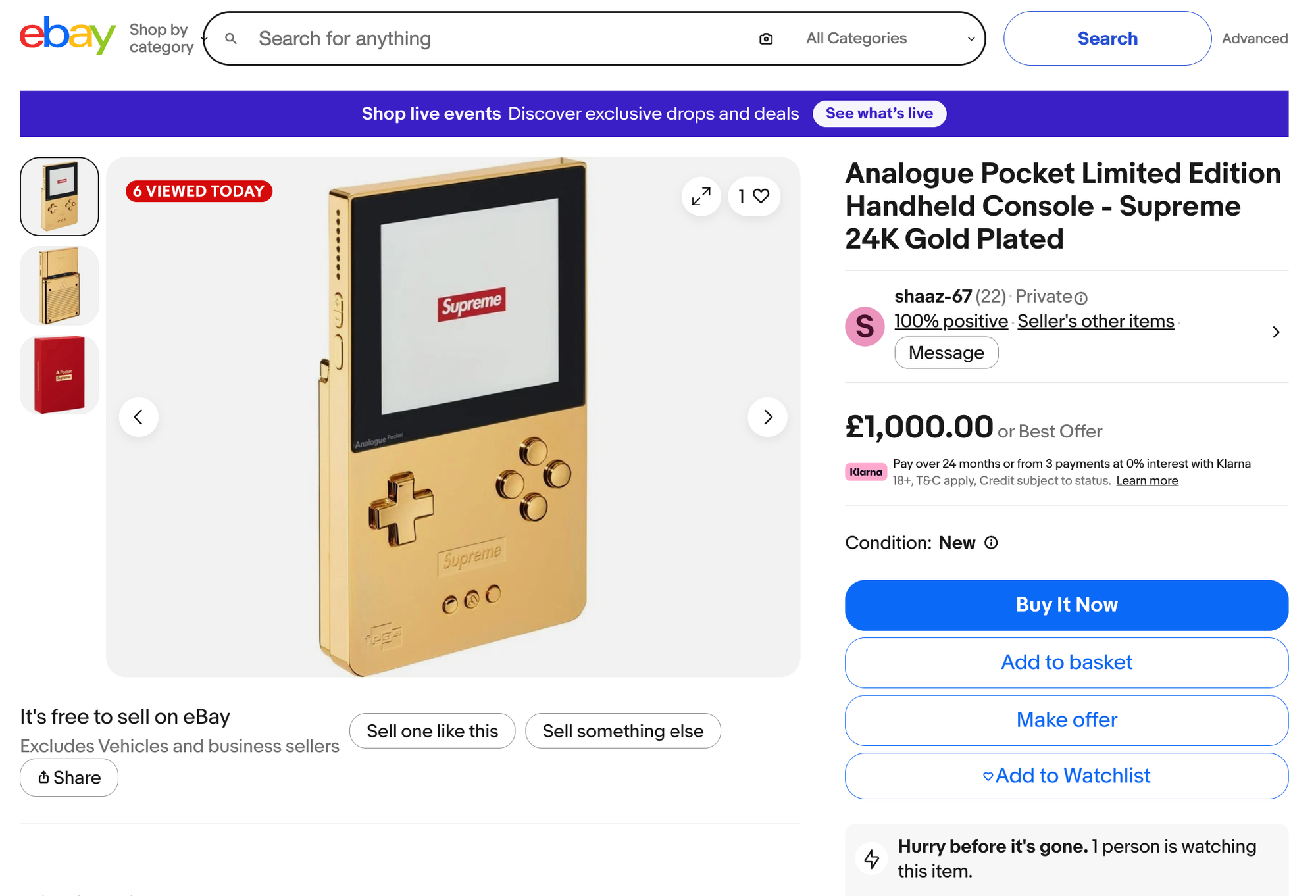
As long as consumers are willing to pay double the retail price on secondary markets, the cycle of automated bot purchases, instant sell-outs, and immediate eBay listings will continue to define premium hardware releases. For the average gamer simply looking to play their childhood cartridges on a modern screen, the wait for accessible, standard-edition hardware remains as long as ever.