Navigating the Labyrinth of the Subconscious: A Deep Dive into the 3D Puzzle Adventure HeartWeaver
Executive Overview
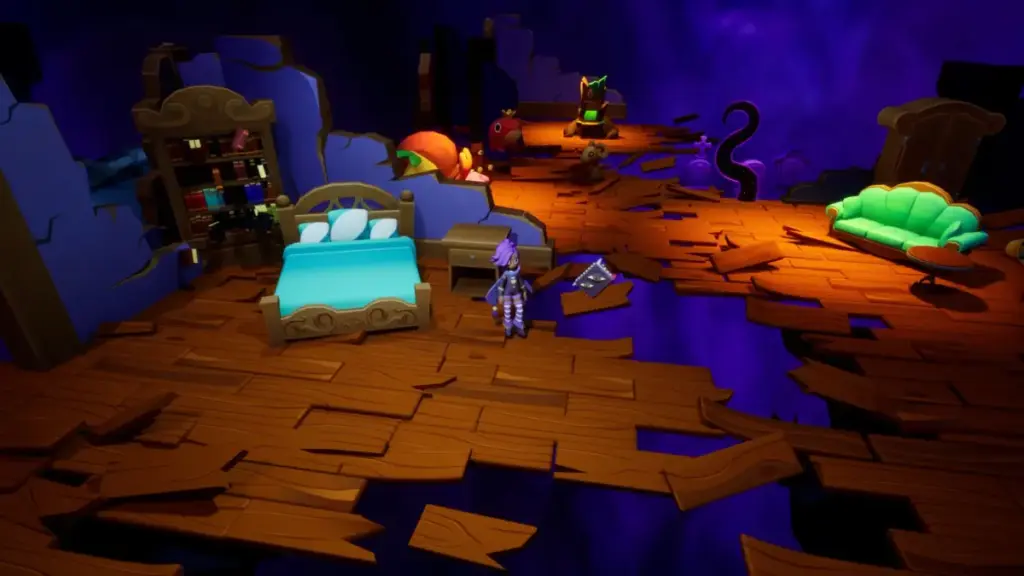
The landscape of independent video game development has long served as a fertile ground for exploring complex psychological themes, interpersonal trauma, and the delicate architecture of human emotion. Few titles in recent development cycles, however, have dared to map the literal interior of a fractured psyche with the imaginative scope and metaphorical depth found in HeartWeaver. Developed as an atmospheric 3D puzzle-adventure game, HeartWeaver casts players in the role of Ace, an individual trapped within the labyrinthine confines of their own mind.
At its core, HeartWeaver is more than a traditional puzzle platformer; it is an interactive meditation on memory reclamation, emotional regulation, and the arduous journey toward psychological healing. Recently showcased at Pocket Gamer Connects, the title has drawn significant attention from critics and players alike for its unique blend of environmental storytelling, mechanics tied directly to emotional states, and an unforgettable—if intensely frustrating—antagonist known as Mark, a towering book monster who embodies the harsh realities of self-criticism.
As players navigate the surreal, fragmented worlds that make up Ace’s cognitive landscape, they must contend with overgrown vines choking forgotten recollections, evasive cephalopodic hazards, and the biting commentary of a companion they cannot simply ignore. With a playable demo currently available on Steam and a growing community of players adding the title to their wishlists, HeartWeaver stands poised to carve out a distinct space within the narrative-driven puzzle genre. This report provides a comprehensive examination of the game’s mechanics, its thematic ambitions, the hands-on preview experiences emerging from recent industry events, and the broader outlook for its eventual commercial release.
Detailed Chronology: From Concept to the Showfloor
The genesis of HeartWeaver lies in a growing industry-wide movement toward games that treat mental health not merely as a narrative backdrop, but as a dynamic mechanical system. While the exact timeline of the game’s early conceptualization remains closely guarded by the development team, the project gained significant momentum leading up to its public playable debut.
The Evolution of Ace’s Mindscape
In the early stages of design, the developers faced a fundamental challenge: how to visually and mechanically represent the abstract nature of trauma, repression, and memory decay. The solution was the creation of Ace’s internal world—a series of distinct, highly stylized zones that feel simultaneously alien and intimately familiar.
- The Overgrown Archives: Early conceptual phases established the presence of intrusive thoughts and blocked memories, symbolized physically within the game world by relentless, thick vines that choke off access to crucial past events.
- The Introduction of Mark: As the world-building expanded, the developers recognized the need for an externalized manifestation of internal critique. Thus, Mark—a towering, sentient book monster—was integrated into the narrative. Mark was meticulously designed to act as an emotional hurdle for the player, representing the inescapable, often hyper-rational, and devastatingly critical voice of self-doubt.
- Mechanical Refinement at Pocket Gamer Connects: The recent showing of HeartWeaver at Pocket Gamer Connects marked a critical milestone in the game’s public-facing chronology. Attendees were given hands-on access to a polished slice of the experience, allowing the development team to gather vital telemetry and qualitative feedback on puzzle pacing, emotional ability integration, and player friction regarding the antagonistic Mark.
The journey from initial design documents to a fully playable Steam demo has been defined by a commitment to psychological authenticity. Every puzzle encountered in the build showcased at Pocket Gamer Connects was engineered to reflect a specific internal struggle, moving the project from a standard conceptual pitch to a tangible, deeply atmospheric reality.
Supporting Context & Metrics: Mechanics, Metaphors, and the Mind
To fully appreciate what HeartWeaver achieves, one must analyze the intricate mechanics that govern gameplay. The title eschews conventional inventory-based puzzle solving in favor of an emotionally driven toolset.
The Psychology of Puzzle Solving
In HeartWeaver, the player’s primary objective is to guide Ace to a state of holistic healing. However, this recovery cannot be achieved by simply forcing one’s way through obstacles. Ace’s mind is actively trying to protect itself through repression, meaning that brute force often results in further emotional fragmentation.
Instead, players must harness the specific abilities tied to different emotional states. When Ace processes feelings such as Sadness, Fear, and Anger, these emotions manifest as active mechanical tools:
- Sadness grants the ability to manipulate the passage of time, slowing down frenetic environmental hazards to allow for calculated navigation.
- Fear provides a disembodied state, enabling Ace to leave their physical vessel behind to scout ahead or interact with inaccessible switches.
- Anger introduces a forceful spatial mechanic, allowing players to push obstructive elements and hostile presences further away from their immediate vicinity.
Crucially, these abilities must be utilized with care. The game’s design philosophy dictates that puzzles should be solved without exacerbating Ace’s underlying emotional volatility, reinforcing the idea that true healing requires balance rather than suppression.
Navigating Hazards: Vines and Cephalopods
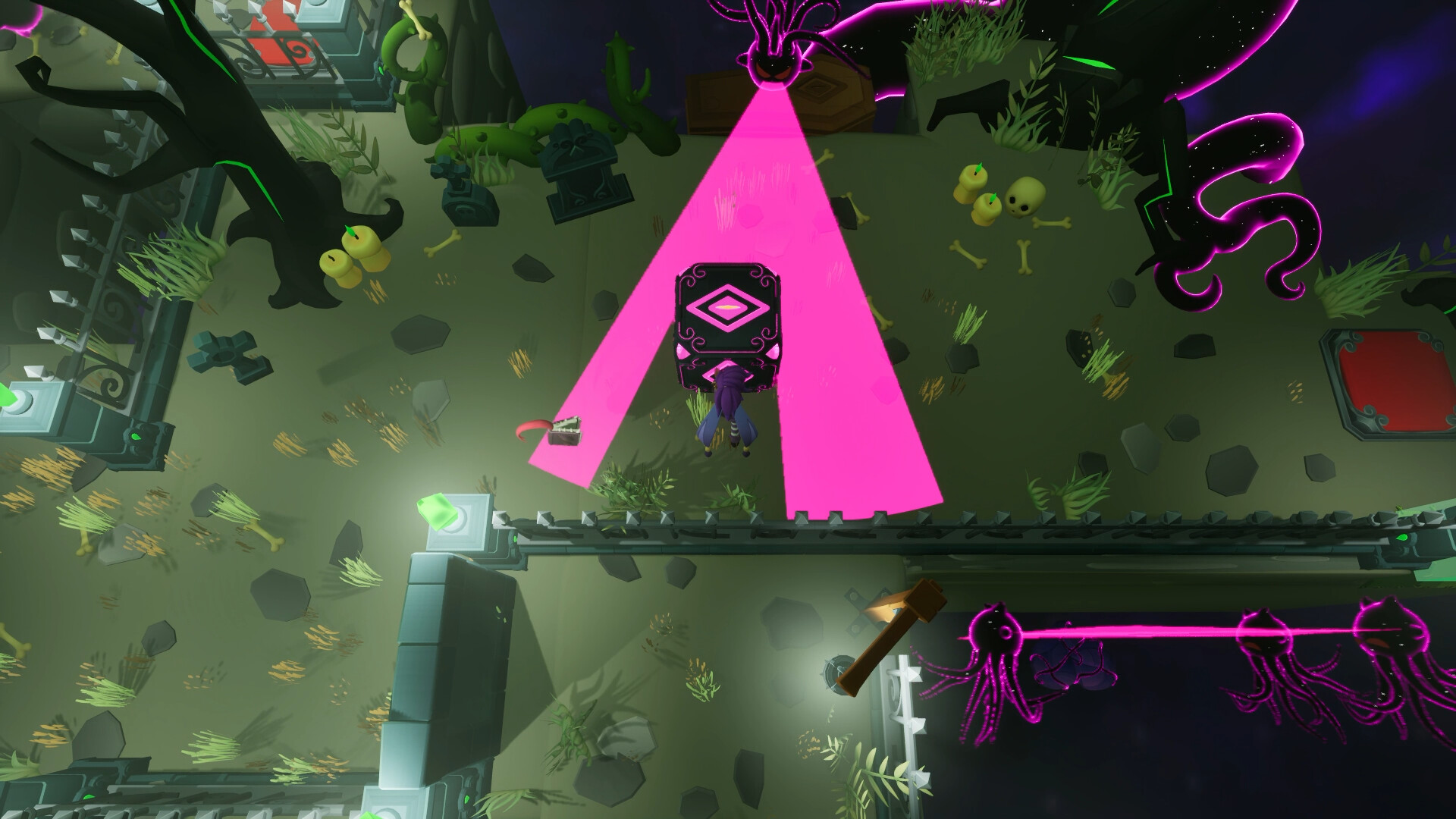
The environment within Ace’s mind is rarely cooperative. Players frequently encounter two primary environmental threats:
- The Vines: These parasitic growths dominate large portions of the memoryscapes. While players frequently discover methods to hack, slash, or burn away these vines to recover long-buried recollections, their eradication is rarely straightforward.
- Octopus Monsters: Unlike the vines, these complex entities cannot simply be destroyed. They require nuanced, lateral-thinking puzzle solutions. Players must carefully study their surroundings, leveraging their emotional toolkit to bypass these creatures without triggering catastrophic psychological regression.
The Antagonist Paradox: The Burden of Mark
Perhaps the most striking element of the HeartWeaver experience is the presence of Mark. Described by early players as intensely irritating, Mark serves a brilliant psychological narrative function. As a giant book monster, Mark is hyper-literate, consistently harsh, and—most frustratingly of all—almost always correct.
Interacting with Mark is mandatory for anyone hoping to navigate out of Ace’s mind. He constantly critiques the player’s choices, dissects Ace’s flaws, and offers unvarnished truths that are painful to hear. This dynamic creates a compelling gameplay paradox: the player is forced to listen to a character they inherently dislike, mirroring the real-world struggle of confronting one’s own internal critic in order to achieve personal growth.
Official Statements and Developer Insights
While formal press releases from the HeartWeaver development team continue to roll out alongside updates to their Steam store page, developer commentary captured during industry showcases offers a revealing look into the philosophy guiding the project’s design.
"When we set out to build HeartWeaver, our goal was never to create a clinical simulation of mental health struggles, but rather to honor the emotional complexity of feeling trapped within one’s own thoughts," shared a development representative during the Pocket Gamer Connects exhibition. "Ace is not a hero in the traditional sense; they are someone seeking reconciliation with their own history. Every puzzle, every environmental block, and even characters like Mark are designed to externalize internal battles that millions of people fight in silence every day."
Furthermore, the team emphasized the intentionality behind Mark’s abrasive personality: "We knew players wouldn’t like Mark. We didn’t want them to like him. If you enjoy listening to your harshest inner critic, the metaphor has failed. Mark is meant to be an obstacle—not just because of his physical presence in the book-filled corridors of Ace’s mind, but because listening to uncomfortable truths is the hardest part of healing."
The decision to offer a publicly accessible demo on Steam has also been praised as a vital step in maintaining transparency with the community. According to studio representatives, player feedback gathered from the demo is actively shaping the final balancing passes of the emotional abilities and puzzle difficulty curves.
Future Outlook: What Lies Ahead for HeartWeaver
As HeartWeaver looks toward its official commercial launch, anticipation within the indie gaming community continues to build. The combination of a deeply resonant psychological narrative, innovative emotional mechanics, and striking 3D art direction positions the title as a notable upcoming release in the puzzle-adventure genre.
Upcoming Milestones
- Demo Optimization & Community Feedback: The ongoing availability of the Steam demo serves as an open testing ground. Developers are utilizing player metrics and community forums to refine the pacing of early-game memory fragments and fine-tune the interactions with Mark.
- Content Expansion: While the demo offers a tantalizing taste of Ace’s fractured worlds, the full release promises an even wider array of biomes, each representing different strata of repressed memory and complex emotional watersheds.
- Release Date Announcement: Industry analysts anticipate that following the positive reception at Pocket Gamer Connects, a definitive release window will be announced later in the development cycle, accompanied by further trailers detailing the later stages of Ace’s psychological journey.
Conclusion
HeartWeaver transcends the conventional boundaries of puzzle-adventure gaming by anchoring its core loops in the universal human experience of confronting inner turmoil. By transforming abstract psychological concepts into tangible mechanics—time-dilation through sadness, spectral scouting through fear, spatial displacement through anger, and the bitter medicine of self-criticism embodied by Mark—the developers have crafted something truly special.
For players eager to embark on a journey of self-discovery, memory reclamation, and emotional resilience, the path is clear. The demo is live on Steam, waiting for those brave enough to step inside Ace’s mind, face the vines, endure the critique of the book monster, and help guide a troubled soul back to the light.