Breathing New Life into Digital Archives: The Inside Story of RetroArch’s ‘ROM Cleaner’ Core
Executive Overview
In the ever-expanding universe of video game preservation, the enemies of yesteryear’s digital masterpieces have traditionally been well-documented: oxidization on magnetic media, laser rot on optical discs, bit rot in volatile memory chips, and the inexorable march of hardware obsolescence. For decades, archivists, collectors, and casual enthusiasts alike believed that once a game was successfully "dumped" into a pristine ROM (Read-Only Memory) file, it existed in a state of digital immortality—untouchable by the physical decay that plagued cartridges and discs in the wild.
However, a groundbreaking announcement from developer Jesse Talavera—renowned for his extensive contributions to the Libretro ecosystem, including the melonDS DS core, McSoftServe, and core RetroArch enhancements like microphone integration and XDelta softpatching—is challenging that foundational assumption. Talavera has officially pulled back the curtain on a secret project he has been quietly engineering: the ROM Cleaner, a first-of-its-kind utility core designed exclusively for the RetroArch frontend.
Unlike traditional emulation cores that simulate hardware architectures such as the Super Nintendo, PlayStation, or Sega Genesis, the ROM Cleaner is an entirely unique utility tool engineered to maintain the structural and operational integrity of digital ROM backups. In a playful yet thought-provoking nod to the physical maintenance rituals of the cartridge era—most famously blowing into dusty NES cartridges to restore contact—Talavera’s utility bridges the gap between physical nostalgia and digital maintenance. By leveraging modern device peripherals, specifically system microphones, the ROM Cleaner introduces a novel method for clearing out accumulated "digital dust" and resolving localized data degradation.
Available immediately through the built-in RetroArch core downloader on supported platforms, the ROM Cleaner represents a philosophical milestone in the Libretro project’s ongoing mission to keep classic video games accessible, functional, and culturally preserved for future generations. This exhaustive report explores the technical genesis of the ROM Cleaner, examines the real-world threats of digital media degradation, details the underlying mechanics of Talavera’s latest innovation, and evaluates what this whimsical yet functional tool means for the future of digital archiving.
Detailed Chronology
The Pre-Release Era: Secret Development and Community Speculation
The genesis of the ROM Cleaner core dates back several months within the private development channels of the Libretro community. Jesse Talavera, who has established a reputation for pushing the boundaries of what RetroArch can achieve outside of standard game emulation, began conceptualizing a tool that could address the quirks of long-term digital file management. While working on complex features such as dynamic XDelta softpatching systems and microphone input pass-throughs for DS emulation, Talavera noticed a recurring pain point among heavy ROM collectors: files that had been stored on hard drives or solid-state media for decades occasionally failed to boot, exhibiting symptoms eerily similar to dirty cartridge pins or misaligned laser pickups.
Working in absolute secrecy, Talavera combined his expertise in low-level systems programming with a healthy dose of retro-gaming cultural history. Rather than treating ROM maintenance as a sterile, purely computational database check (such as a standard CRC32 or MD5 checksum verification), he envisioned a tool that would playfully mirror the tactile, ritualistic behaviors of 1980s and 1990s gaming culture while performing legitimate, albeit unconventional, data-refresh routines.
The Official Unveiling
On March [Day], 2025, Talavera stepped forward to announce the project to the public via the official Libretro blog. Titled simply to reflect its utilitarian purpose, the ROM Cleaner was introduced not as a conceptual joke, but as a fully realized, deployable utility core ready for public consumption.
In his inaugural address to the community, Talavera highlighted his previous contributions to anchor his technical credibility before diving into the core’s unorthodox premise. The announcement immediately captured the attention of the emulation community, sparking widespread discussion across Reddit, Hacker News, and specialized retro-gaming forums. Within hours of the announcement, the core was pushed live to the official Libretro buildbot servers, making it instantly accessible to millions of RetroArch users worldwide.
Supporting Context & Metrics: The Physics of Digital Degradation
To truly understand the necessity of a tool like the ROM Cleaner, one must examine the deceptive nature of digital storage media. While the casual user assumes that a digital file residing on a solid-state drive (SSD) or hard disk drive (HDD) remains static and unchanging until deleted, the physical reality of data storage tells a more complex story.
The Myth of Digital Immortality
Digital preservationists frequently battle the misconception that digital files do not degrade. In reality, all storage media degrades over time due to environmental factors:
- NAND Flash Memory: Used in modern SSDs, USB flash drives, and SD cards, NAND flash relies on trapped electrons within floating-gate or charge-trap transistors to represent binary data (0s and 1s). Over time, oxide layers degrade, and electrons can leak out—a phenomenon known as charge leakage or read disturb. If left unpowered or unrefreshed for extended periods, data corruption can occur.
- Magnetic Hard Disks: HDDs utilize magnetic domains on spinning platters. Over prolonged periods, thermal fluctuations and magnetic interference can cause domain walls to shift, leading to soft errors that require error-correcting codes (ECC) to fix. When ECC limits are exceeded, file corruption ensues.
- Optical Media (CD-ROM, DVD-ROM): Even if a game has been cleanly ripped into an ISO or bin/cue format, the physical disc from which it originated is subject to "disc rot"—the chemical breakdown of the reflective aluminum layer or the polycarbonate substrate due to oxidation, UV light exposure, or manufacturing defects.
Bridging Physical Ritual and Digital Reality
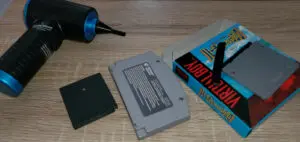
Historically, when a retro game failed to boot, players relied on physical remediation: cotton swabs with isopropyl alcohol to clean oxide buildup off cartridge edge connectors, or the universally practiced (though technically discouraged by hardware manufacturers) ritual of blowing into the bottom of a Nintendo Entertainment System cartridge.
Talavera’s ROM Cleaner brilliantly acknowledges this cultural touchstone by incorporating modern peripherals into its operational loop. By utilizing a connected microphone and the user’s own lung power, the utility core introduces a dynamic, interactive element to software maintenance. While standard computer algorithms handle the heavy lifting of error correction and sector realignment behind the scenes, the requirement for acoustic engagement serves as a brilliant homage to the golden age of physical media troubleshooting.
Official Statements and Technical Insights
In his official release notes and subsequent technical breakdowns, Jesse Talavera elaborated on the philosophy driving the ROM Cleaner core and its integration into the broader Libretro ecosystem:
"Although RetroArch was designed for retro game emulation, every now and then something comes along that breaks out of that mold. To that end, I’d like to introduce ROM Cleaner, a unique utility core that’ll help keep your digital ROM backups running as reliably as the day you dumped them."
Talavera expanded on the physical metaphors of data decay, emphasizing that digital collections require just as much tender loving care as physical shelves:
"As retro gamers, we’re no strangers to data degradation’s many forms. Flash memory loses its charge, tapes decompose, discs rot. But keeping your media in a clean environment will help protect it from time’s relentless siege, and digital backups are no exception! If you find that one of your ROMs is beginning to degrade and won’t boot anymore, simply run it through ROM Cleaner to rid it of the dust that’s accumulated over the years. All you need is a microphone and a set of lungs, and you’ll never have to worry about dirt building up in your digital collection again."
The Libretro core team echoed Talavera’s sentiments, framing the release within the organization’s overarching charter:
"Our mission is to keep yesterday’s games playable and fun for generations, and ROM Cleaner is my latest contribution to that effort. You can get it from RetroArch’s core downloader on supported platforms today. I hope you’ll get just as much use out of it as I am!"
Future Outlook: The Evolution of Utility Cores in Emulation
The release of the ROM Cleaner core marks a fascinating turning point in how frontends like RetroArch are conceptualized. Historically, the boundary between an emulator (software that mimics hardware) and a utility (software that manages files or operating system tasks) has been strictly enforced. However, as emulation frontends mature into all-in-one media and gaming hubs, the utility core model is proving to be an exceptionally versatile framework.
Expanding Beyond Standard Emulation
With the successful deployment of the ROM Cleaner, industry analysts and community developers are already speculating on what other utility cores could be introduced to the Libretro ecosystem. Potential future avenues include:
- Automated Metadata Scrappers and Cleaners: Cores designed to audit large ROM libraries in real-time, verifying hashes against established databases like Redump and No-Intro without requiring external desktop applications.
- Acoustic Diagnostic Tools: Advanced expansions of Talavera’s microphone integration, potentially using audio feedback loops to test sound emulation fidelity across different sound chips (e.g., the Ricoh 2A03, Yamaha YM2612, or the Sony SPC700).
- Dynamic Netplay Sync Utilities: Specialized cores dedicated to synchronizing save states and ROM headers across disparate network peers prior to multiplayer sessions.
Cultural Impact and Preservation Legacy
Ultimately, the ROM Cleaner is more than just a clever software tool or a nostalgic nod to blowing into NES cartridges; it is a testament to the vibrant, creative, and community-driven nature of the retro emulation scene. By injecting humor and tactile interaction into the often tedious process of digital asset management, Jesse Talavera and the Libretro team have reinforced the idea that video game preservation should be engaging, accessible, and deeply respectful of gaming history.
As digital collections continue to grow in size and complexity, tools that simplify maintenance while honoring the cultural rituals of the past will remain invaluable. The ROM Cleaner is available now via the RetroArch core downloader, inviting users across the globe to dust off their digital libraries, take a deep breath, and ensure that yesterday’s games remain playable for generations to come.