Immersive Diamond: Apple and MLB Bring Live "Friday Night Baseball" to the Vision Pro Era
Executive Overview
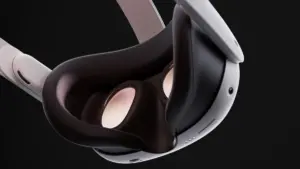
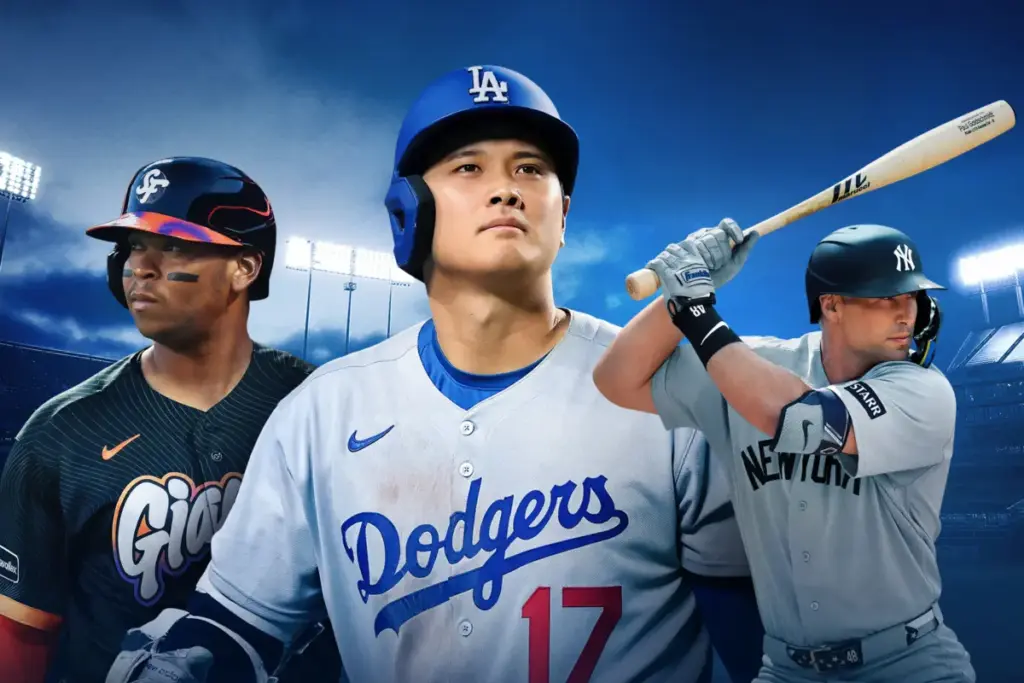
In a development that signals a profound maturation for spatial computing as a viable broadcast medium, Apple and Major League Baseball (MLB) have officially announced that a select slate of live "Friday Night Baseball" games will be broadcast directly to the Apple Vision Pro. Beginning August 28, 2026, and running through September 18, four pivotal late-season matchups will be transformed from traditional flat-screen broadcasts into hyper-realistic, 180-degree stereoscopic 3D experiences.
This initiative represents more than just a seasonal programming update; it is a critical milestone in Apple’s broader strategy to position the Vision Pro not merely as a productivity tool or a niche entertainment device, but as the premier front-row seat for live sports entertainment. Following the successful introduction of livestreamed immersive NBA games featuring the Los Angeles Lakers earlier this year, the integration of live MLB content bridges the gap between passive viewing and active, spatial participation.
Subscribers to the Apple TV app holding a valid Vision Pro will find themselves transported behind home plate, into the dugout, and alongside the warning track, all from the comfort of their living rooms. Supported by a robust suite of real-time spatial data, interactive player statistics, team lineups, and on-demand replays, this rollout offers a compelling glimpse into the future of sports consumption. Available across multiple global territories—including the United States, Canada, the United Kingdom, Japan, Australia, Germany, Hong Kong, South Korea, and Taiwan—this cross-border deployment underscores Apple’s ambition to scale spatial sports programming to an international audience.
Detailed Chronology: From Summer Schedule Ambiguity to Spatial Reality
The path to bringing live, immersive baseball to spatial computing devices was marked by careful calibration and quiet anticipation among tech analysts and sports enthusiasts alike. The narrative began earlier in the summer when Apple and Major League Baseball published their collaborative August "Friday Night Baseball" schedule. At the time of the initial press release via the official Apple Newsroom, the announcement detailed standard broadcast windows and matchups, yet left a conspicuous silence regarding whether subscribers would receive dedicated immersive broadcasts to round out the 2026 baseball season.
For weeks, speculation mounted within the developer and early-adopter communities. Industry watchers wondered if the hardware constraints of capturing high-speed outdoor athletic events in stereoscopic 3D—coupled with the complexities of multi-camera spatial sync—would delay spatial baseball until the 2027 season or beyond.
However, behind the scenes, production teams were finalizing the logistical framework required to bring Apple’s proprietary Immersive Video format to major league ballparks. The turning point arrived with the official confirmation that four high-profile "Friday Night Baseball" games leading up to September 18 would receive the full spatial treatment.
The announced schedule features a dedicated broadcast booth and reporting team to guide viewers through the immersive experience. Veteran broadcaster Paul Severino will handle play-by-play duties, bringing his familiar cadence and sharp game-awareness to the spatial audio mix. He will be joined by analyst Xavier Scruggs, whose deep diamond insights will translate effectively into the analytical overlays available in the viewer’s virtual space, and sideline reporter Michelle Margaux, who will provide on-the-ground context from the dugouts and concourses.
The rollout kicks off on August 28, plunging fans straight into the heat of the late-summer pennant races. The featured matchups will continue weekly, culminating on September 18, just as division races reach their dramatic apex. By timing these broadcasts for the final stretch of the regular season, Apple and MLB have ensured that the content will be high-stakes, drawing maximum viewership from fans eager to experience crucial playoff-implication games through a revolutionary lens.
Supporting Context & Metrics: The Mechanics of Spatial Broadcasting
To truly appreciate the significance of bringing Major League Baseball to the Apple Vision Pro, one must examine the technological architecture underpinning the broadcast. Unlike traditional 2D broadcasts—which rely on flat rectangular frames, standard camera cuts, and fixed perspectives—Apple’s Immersive Video format utilizes 180-degree, 3D spatial video captured at ultra-high resolutions, paired with Spatial Audio that places commentators, crowd noise, and environmental acoustics precisely where they would naturally occur in a physical stadium.
When a user puts on the Vision Pro and launches the Apple TV app to watch a Friday Night Baseball game, they are not simply looking at a giant floating screen (though that option remains). Instead, they are enveloped in a stereoscopic environment that creates a palpable sense of depth, scale, and distance. The geometry of the ballpark—the curve of the infield dirt, the height of the outfield wall, the precise distance from the batter’s box to the backstop—is rendered with breathtaking fidelity.
Furthermore, the interface is designed to respect the user’s physical space without overwhelming it. Floating natively within the viewer’s field of view are dynamic, real-time widgets displaying:
- Interactive Team Lineups: Instant access to batting orders, defensive alignments, and pitching matchups that update dynamically as substitutions are made.
- Advanced Player Statistics: Statcast metrics, pitch velocity, launch angles, and historical batter-versus-pitcher data accessible at a glance.
- Multi-Vantage Point Navigation: The ability to toggle between carefully curated camera angles, shifting the user’s virtual seat from behind home plate to elevated press-box positions or low-angle baseline views.
- On-Demand Replays: If a batter hits a dramatic walk-off home run or an outfielder makes a diving, game-saving catch, users can instantly summon high-resolution, multi-angle spatial replays without missing live action.
This ecosystem mirrors the technological milestones established earlier in the year when Apple integrated livestreamed immersive NBA games featuring the Los Angeles Lakers. The basketball broadcasts proved that fast-paced, indoor court sports could be successfully rendered in 180-degree 3D without inducing motion sickness or cognitive fatigue. Baseball, with its unique rhythm—staccato bursts of high-speed action punctuated by deliberate tactical pauses—presents an ideal canvas for this medium. The quiet moments between pitches allow the viewer to absorb the atmospheric details of the ballpark, while explosive plays like a 100-mph fastball or a sliding play at second base showcase the raw speed and power of the athletes in true stereoscopic depth.
Global accessibility is another cornerstone of this release. The livestreamed games will be available to Vision Pro users maintaining an active Apple TV subscription across a remarkably wide geographic footprint. The supported regions include:
- North America: United States, Canada
- Europe: United Kingdom, Germany
- Asia-Pacific: Japan, Australia, Hong Kong, South Korea, Taiwan
In addition to live streaming, Apple has accounted for global time zones and scheduling conflicts. For fans unable to catch the live broadcasts due to geographic time differences or personal schedules, full game replays and curated highlight packages will be made available on-demand within the Apple TV app for Vision Pro, ensuring that the immersive archive remains accessible long after the final out is recorded.
Official Statements & Industry Perspective
While Apple and Major League Baseball have maintained a disciplined public relations approach, industry analysts and sports tech executives have been vocal about the paradigm shift represented by this collaboration.
The partnership builds upon a multi-year agreement that has seen Apple become a dominant digital home for Friday night baseball broadcasts. By extending this partnership into the realm of spatial computing, both entities are validating a shared thesis: that modern sports fans are increasingly demanding more control, higher fidelity, and deeper data integration from their viewing experiences.
"We are witnessing the transition from passive television consumption to active spatial presence," notes Dr. Elena Vance, a senior media tech analyst at Silicon Valley Research Group. "For decades, the broadcast industry innovated by adding pixels—moving from standard definition to high definition, and then to 4K. But the fundamental grammar of the broadcast remained tied to the rectangular frame dictated by cathode-ray tubes. Spatial computing shatters that frame. When you watch a major league game in 180-degree 3D on the Vision Pro, you aren’t watching through a window; you are standing in the stadium."
MLB executives have similarly emphasized the league’s historical commitment to technological innovation. From being early adopters of radio broadcasts in the 1920s to pioneering television coverage, pitch-tracking radar, and advanced Statcast analytics, baseball has consistently embraced new mediums to connect younger, digitally native demographics to America’s pastime. The integration with Apple Vision Pro is viewed as the natural next step in this evolutionary chain.
Furthermore, the inclusion of a dedicated broadcast crew—Paul Severino, Xavier Scruggs, and Michelle Margaux—signals that traditional broadcasting expertise is not being discarded in favor of tech gimmicks. Instead, seasoned professionals are adapting their craft to suit the spatial medium, ensuring that play-by-play descriptions and analytical breakdowns complement the visual grandeur of the 3D environment rather than compete with it.
Future Outlook: Where Spatial Sports Go From Here
As the final out of the September 18 game settles into the catcher’s mitt, the legacy of this initial MLB spatial rollout will be measured not just by viewership metrics, but by how it shapes the roadmap for sports broadcasting heading into the late 2020s.
The success of the Lakers’ immersive NBA broadcasts earlier this year, combined with the upcoming MLB Friday Night Baseball schedule on Vision Pro, establishes a proven commercial and technical blueprint. We are rapidly approaching a tipping point where major sports leagues will routinely produce simultaneous broadcasts: a traditional 2D feed for legacy cable and mobile screens, and a dedicated 180-degree or 360-degree spatial feed for mixed-reality headset owners.
Looking ahead, several key developments are expected to shape the future of spatial sports:
- Hardware Evolution and Mass Adoption: As Apple and competing hardware manufacturers refine spatial computing headsets—making them lighter, more affordable, and more socially transparent—the potential subscriber base for immersive sports will expand exponentially beyond early adopters and enterprise users.
- Enhanced Social Viewing: Future iterations of spatial software are widely anticipated to introduce social features, allowing friends located in different parts of the world to sit next to each other in a virtual stadium, chatting, cheering, and sharing data overlays in real time.
- Interactive Augmented Data Feeds: The integration of real-time computer vision and tracking data will likely allow users to customize their view further—perhaps tracking the exact trajectory of a breaking ball in three dimensions or viewing live heat maps projected directly onto the pitcher’s mound.
- Expanded League Partnerships: With baseball and basketball now firmly established within Apple’s spatial ecosystem, industry speculation naturally turns to other major sports leagues. The National Football League (NFL), English Premier League (EPL), and Formula 1 racing are widely considered prime candidates to adopt similar spatial broadcasting frameworks in the near future.
Ultimately, the decision by Apple and Major League Baseball to bring live games to the Vision Pro is a bold declaration of intent. It proves that the future of sports media is immersive, interactive, and unbound by physical screens. For the fans lucky enough to experience the August and September matchups from behind home plate in virtual reality, baseball will never look the same again.