
Maritime Mystery in Southeast Alaska: How a Stranded Skiff, a Cruise Ship, and Mark Zuckerberg’s Superyacht Collided in Farragut Bay
By Terrence O’Brien
Published by The Verge
Executive Overview
In the pristine yet unforgiving waters of Southeast Alaska, maritime traditions dictate an unwritten code of the sea: when a vessel is in distress or stranded, nearby boats render assistance. However, a recent incident near Farragut Bay has ignited a public debate regarding corporate luxury, maritime etiquette, and the responsibilities of mega-yacht crews navigating remote wilderness.
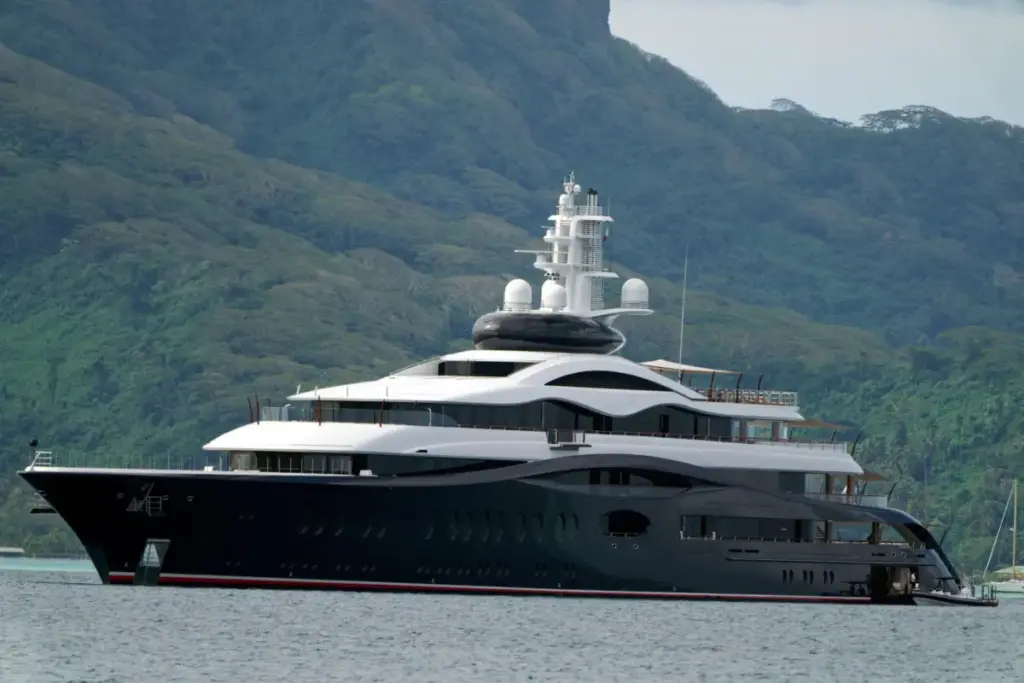
Earlier this week, a small skiff found itself stranded and out of fuel in the icy waters of the region. While an Alaskan small-ship cruise vessel, the Wilderness Legacy, ultimately detoured to rescue the mariners, public tracking data and eyewitness accounts reveal a controversial twist. According to Automatic Identification System (AIS) telemetry and passenger testimony, the closest vessel to the stranded skiff was not the rescue ship, but rather Launchpad—the massive 387-foot superyacht owned by Meta CEO Mark Zuckerberg.
As the Wilderness Legacy sailed past the stationary mega-yacht to rescue the drifting boat, passengers aboard the cruise ship allegedly broke into boos upon learning that the luxury vessel had reportedly failed to respond to radio hails. The incident quickly spilled over from the deck of the cruise ship to social media platforms like Bluesky, capturing public attention and prompting inquiries from maritime journalists, the Alaska Beacon, and the Halifax Shipping News.
While representatives for Zuckerberg and his wife, Priscilla Chan, maintain that the family was not on board at the time and that the crew missed the radio hails due to channel monitoring discrepancies, the event underscores growing tensions between the ultra-wealthy owners of private superyachts and the tight-knit, mutual-aid maritime communities of remote regions like Alaska. This report delves into the timeline of the rescue, the telemetry data, the official statements from regulatory bodies and yacht representatives, and the broader implications for superyacht operations in sensitive wilderness areas.
Detailed Chronology: The Events in Farragut Bay
To understand the scope of the incident, it is necessary to reconstruct the sequence of events as they unfolded on the waters of Southeast Alaska, drawing from passenger accounts, maritime tracking data, and official reports.
The Breakdown and Initial Drift
The incident began when a small recreational skiff, operating in the waters near Farragut Bay, exhausted its fuel supply. In the vast and often hazardous expanses of Southeast Alaska, running out of fuel is more than an inconvenience; it represents a genuine survival risk due to swift currents, unpredictable weather, and frigid water temperatures.
As the skiff drifted, its occupants attempted to signal for assistance. According to Coast Guard Public Affairs Specialist Shannon Shepard, who spoke with the Alaska Beacon, authorities were notified of the situation. At approximately 9:56 p.m., the United States Coast Guard assessed the situation and determined that while the occupants of the skiff were not in immediate, life-threatening danger—meaning they were not sinking or experiencing medical trauma—they were nonetheless stranded and required a tow. Consequently, the Coast Guard issued a marine assistance request broadcast to vessels in the vicinity.
The Convergence of Vessels
At the time of the broadcast, multiple vessels were operating in or near the area. Chief among them was Launchpad, the towering, custom-built superyacht associated with Mark Zuckerberg. AIS tracking data reviewed by various marine publications indicates that Launchpad was positioned in close proximity to the stranded skiff, having entered or stationed itself near the entrance of Farragut Bay.
However, rather than moving to assist, the superyacht appeared to stall or maintain its position. Shortly thereafter, the Wilderness Legacy, an Alaskan cruise ship carrying passengers eager to experience the region’s wilderness, approached the area.
According to Michael Love, a passenger aboard the Wilderness Legacy who documented the event on Bluesky, the cruise ship’s captain made an announcement over the public address system updating passengers on the situation. The captain reportedly informed guests that Launchpad was significantly closer to the stranded skiff than their own vessel, but that the mega-yacht had “repeatedly refused to respond” to hails.
The Rescue and Public Reaction
Realizing that the stranded mariners required immediate help and that no other local response was actively underway, the crew of the Wilderness Legacy made the humanitarian decision to alter their course.
AIS tracking logs show the Wilderness Legacy navigating past the stationary Launchpad, turning around to approach the stranded skiff, securing a towline, and safely hauling the disabled vessel back to safety. For the passengers on board the cruise ship, the juxtaposition of a massive, billionaire-owned luxury superyacht sitting idle while a working tour vessel performed a rescue mission was jarring. According to Love’s account, the announcement that the superyacht was ignoring calls was met with audible booing from the cruise passengers on deck.
Supporting Context & Metrics: The Anatomy of Superyacht Launchpad
To contextualize the public outcry, it is vital to examine the scale, technology, and operational protocols of the vessel at the center of the controversy: Launchpad.
Vessel Specifications and Technology
Launchpad is no ordinary recreational boat. Delivered to its owner in early 2024, the superyacht measures an impressive 118 meters (approximately 387 feet) in length. Built by the prestigious Dutch shipyard Feadship, the vessel features exterior design by Espen Øino and interior styling by Zuretti Interior Design. Estimated to have cost upward of $300 million, Launchpad is equipped with state-of-the-art navigation, communication, and safety systems.
Superyachts of this magnitude carry professional crews—often numbering around 30 to 50 trained individuals, including licensed captains, engineers, deckhands, and communications officers. These vessels are mandated by international maritime law to maintain continuous watchkeeping on standard marine VHF radio channels, particularly VHF Channel 16, which is universally monitored for distress and calling purposes.

The AIS Telemetry Puzzle
The crux of the public criticism centers on the Automated Identification System (AIS) data captured during the incident. AIS is a tracking system that uses transponders on ships to automatically provide information—including position, speed, and heading—to other ships and coastal authorities.
In this instance, public maritime tracking aggregators displayed Launchpad maintaining a stationary or holding pattern near the mouth of Farragut Bay, directly adjacent to the coordinates where the skiff was disabled. Proponents of the criticism point out that modern bridge teams on vessels like Launchpad have advanced radar and AIS screen overlays that clearly display nearby watercraft, including small skiffs, even if visual sightings are impaired by darkness or geography.
The stark contrast between Launchpad’s stationary profile on the tracking maps and the proactive maneuverability of the Wilderness Legacy became the primary catalyst for the narrative that the mega-yacht crew had willfully or negligently ignored a plea for help.
Official Statements and Institutional Responses
As news of the Farragut Bay incident spread across regional news outlets and social media, stakeholders issued formal statements to clarify their roles and perspectives.
United States Coast Guard
The US Coast Guard, through Public Affairs Specialist Shannon Shepard, provided crucial context regarding the nature of the emergency. Speaking to the Alaska Beacon, Shepard clarified the official classification of the incident:
"At approximately 9:56 p.m., the Coast Guard determined they were not in distress and issued a marine assistance request broadcast on their behalf."
This distinction is legally and operationally significant in maritime law. A "distress" call (such as Mayday) denotes imminent danger to life or property, requiring mandatory assistance from all capable vessels under international law. Conversely, a "urgency" or "assistance request" broadcast (such as Pan-Pan or standard marine assistance) indicates a non-life-threatening mechanical failure, grounding, or fuel depletion where commercial towing or voluntary assistance is requested, but immediate life-saving intervention is not required. Nonetheless, maritime custom and ethical norms in remote areas strongly encourage vessels to assist whenever feasible.
Representatives for Mark Zuckerberg and Priscilla Chan
In response to inquiries from The Verge, Brian Baker, a spokesperson for Mark Zuckerberg and Priscilla Chan, provided a detailed clarification regarding the circumstances on board Launchpad:
"Mark and his family were not on board at the time of the incident. As the Coast Guard noted, the boat was not in distress, and by the time the crew reviewed the Coast Guard contact on a different radio channel from the one they were operating on, the assist was already underway. We’re grateful all parties are safe."
This statement addresses two critical aspects of the controversy:
- Absence of the Owner: Zuckerberg and his family bore no personal responsibility for the navigation decisions made by the professional crew, as they were not on the vessel at the time.
- Communications Discrepancy: The crew asserts that they were monitoring a different marine radio channel rather than the one utilized for the Coast Guard broadcast. By the time they tuned into the correct frequency and reviewed the communication, the Wilderness Legacy had already intervened and initiated the towing operation.
While this explanation accounts for the operational delay from the yacht’s perspective, maritime experts note that professional bridge crews on vessels of Launchpad’s caliber are typically expected to maintain dual-watch capabilities or regularly monitor primary hailing frequencies, especially in remote cruising grounds where local infrastructure and emergency response times are limited.
Future Outlook: Superyacht Etiquette and Wilderness Stewardship
The incident in Farragut Bay has sparked a broader conversation within the maritime community about the ethics of ultra-luxury vessel operations in pristine, isolated ecosystems like Alaska.
The Clash of Cultures in Remote Waters
Southeast Alaska is renowned for its rugged beauty, challenging environment, and tight-knit maritime culture. In regions where weather can turn treacherous in a matter of hours and professional search-and-rescue assets are spread thin across hundreds of miles of coastline, local mariners rely on a culture of radical self-reliance coupled with mutual aid.
The arrival of multibillion-dollar superyachts into these northern waters has occasionally created friction with local commercial fishermen, tour operators, and recreational boaters. Incidents where mega-yachts appear disconnected from local maritime norms—whether through perceived aloofness, communication lapses, or failure to render voluntary assistance—tend to amplify underlying resentments regarding wealth disparity and environmental impact.
Potential Policy and Operational Implications
In the wake of the Farragut Bay controversy, maritime analysts suggest that superyacht management companies and captains operating in remote regions may need to re-evaluate their community engagement and operational protocols. Key areas of focus include:
- Enhanced Communications Monitoring: Ensuring bridge teams maintain active monitoring on multiple VHF channels, including local emergency and hailing frequencies, regardless of primary operational channels.
- Proactive Community Relations: Recognizing that mega-yachts operating under intense public scrutiny must adhere to higher standards of visible helpfulness to mitigate reputational risks.
- Regulatory Compliance vs. Ethical Duty: Understanding that while international maritime law draws sharp lines between "distress" and "non-distress" situations, local populations and passenger vessels judge actions based on community ethics rather than strict legal minimums.
As superyachts increasingly venture into remote wilderness destinations—pushed by owners seeking privacy and unique expedition experiences—the crew members aboard these floating palaces serve as ambassadors for their wealthy owners. How they respond to a drifting skiff in Alaskan waters will continue to be measured not just by the letter of maritime law, but by the unwritten code of the sea.