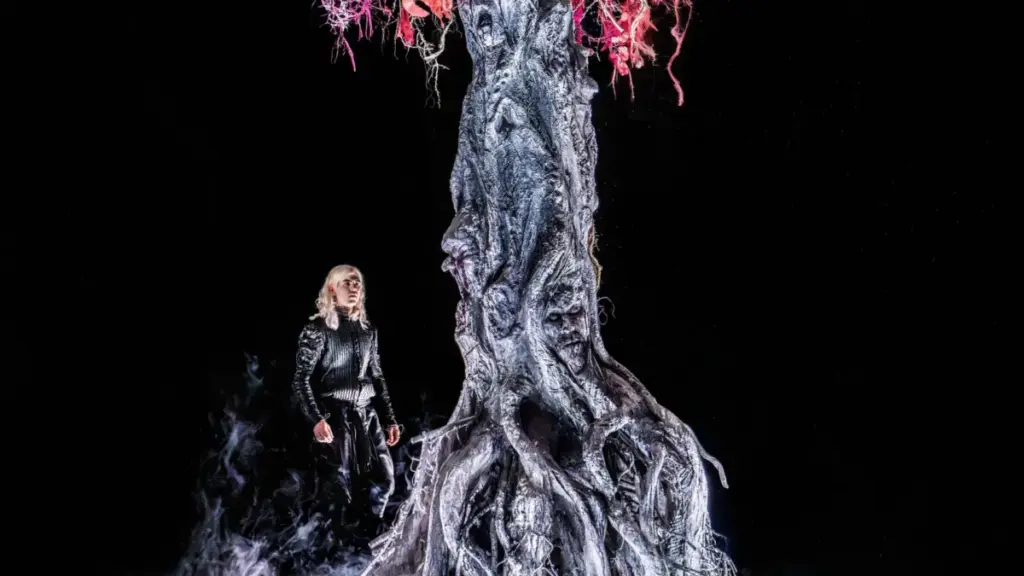
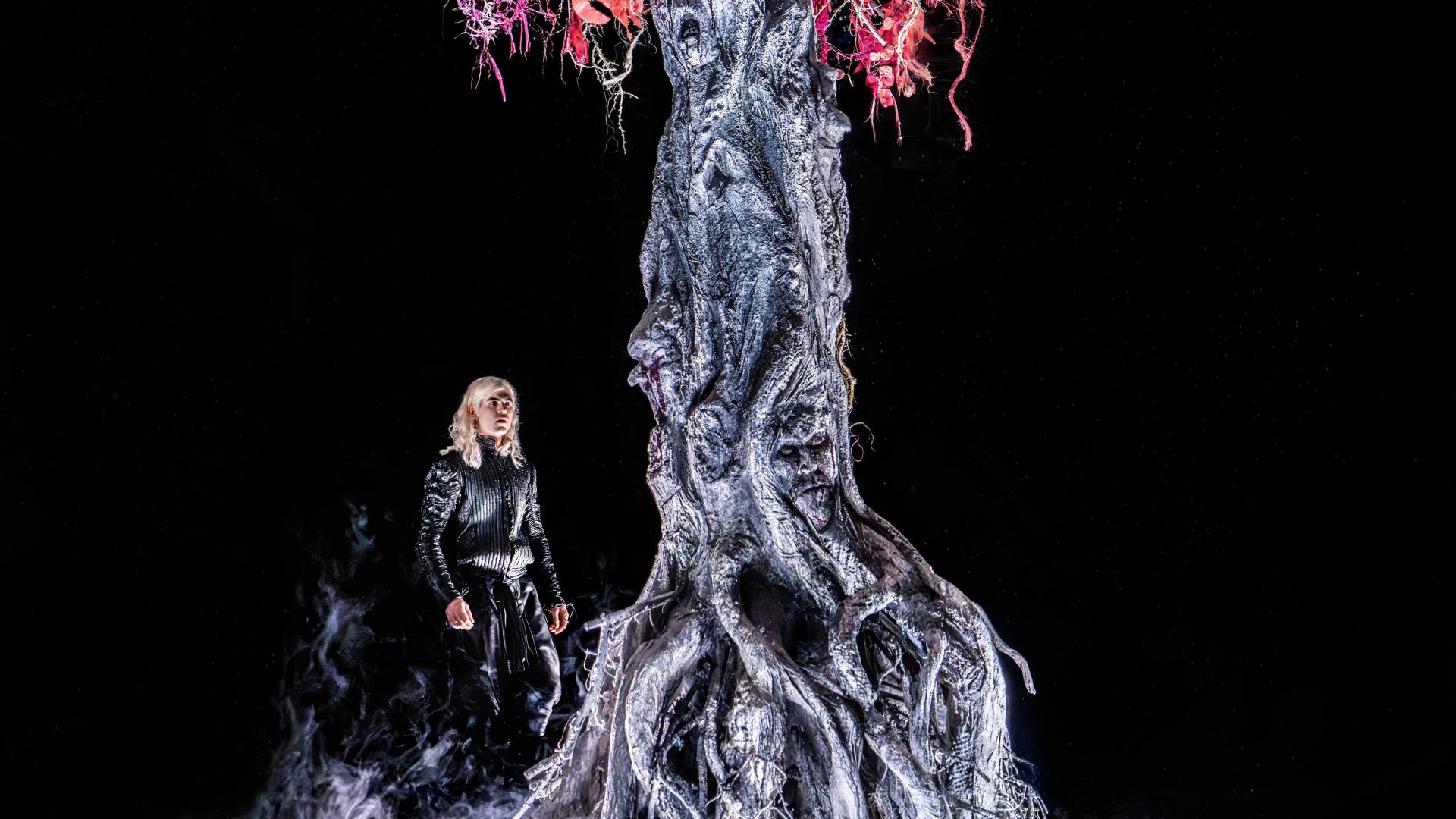
The sweeping expanse of George R.R. Martin’s Westeros has officially transcended the boundaries of television and literature to find a new, fiercely theatrical home. Currently staging an unprecedented run at the historic Royal Shakespeare Theatre in Stratford-Upon-Avon, Game of Thrones: The Mad King stands as a masterclass in immersive stagecraft, grand storytelling, and bold theatrical ambition.
Adapted by acclaimed playwright Duncan MacMillan and directed with kinetic precision by Dominic Cooke, this landmark production plunges audiences headfirst into the powder-keg politics of the Seven Kingdoms just moments before the cataclysmic events of the primary novels and television series. Spanning an epic three hours and forty minutes, the play chronicles the fateful, star-crossed tourney at Harrenhal, the harrowing descent of King Aerys Targaryen, and the sweeping tides of Robert’s Rebellion.
Far from a mere cash-grab spin-off, the Royal Shakespeare Company (RSC) has delivered an emotionally resonant, visually staggering tragedy that feels entirely at home in the birthplace of the Bard. By blending state-of-the-art puppetry, visceral choreography, and deeply humanized performances, The Mad King elevates fantasy theatre into high art—capturing the timeless, Shakespearean proportions of ambition, madness, and familial betrayal that define Martin’s legendary universe.
Detailed Chronology of the Production
Act I: The Fateful Tourney at Harrenhal and the Seeds of Rebellion
From the moment spectators approach the Royal Shakespeare Theatre—greeted by a digital marquee welcoming them directly to Westeros—the line between reality and fantasy dissolves. The auditorium is masterfully configured: two intersecting catwalks bisect the stage space, with the audience seated intimately around the perimeter. Central braziers crackle with real flames, casting long, dramatic shadows that immediately invoke the foreboding atmosphere of the realm.
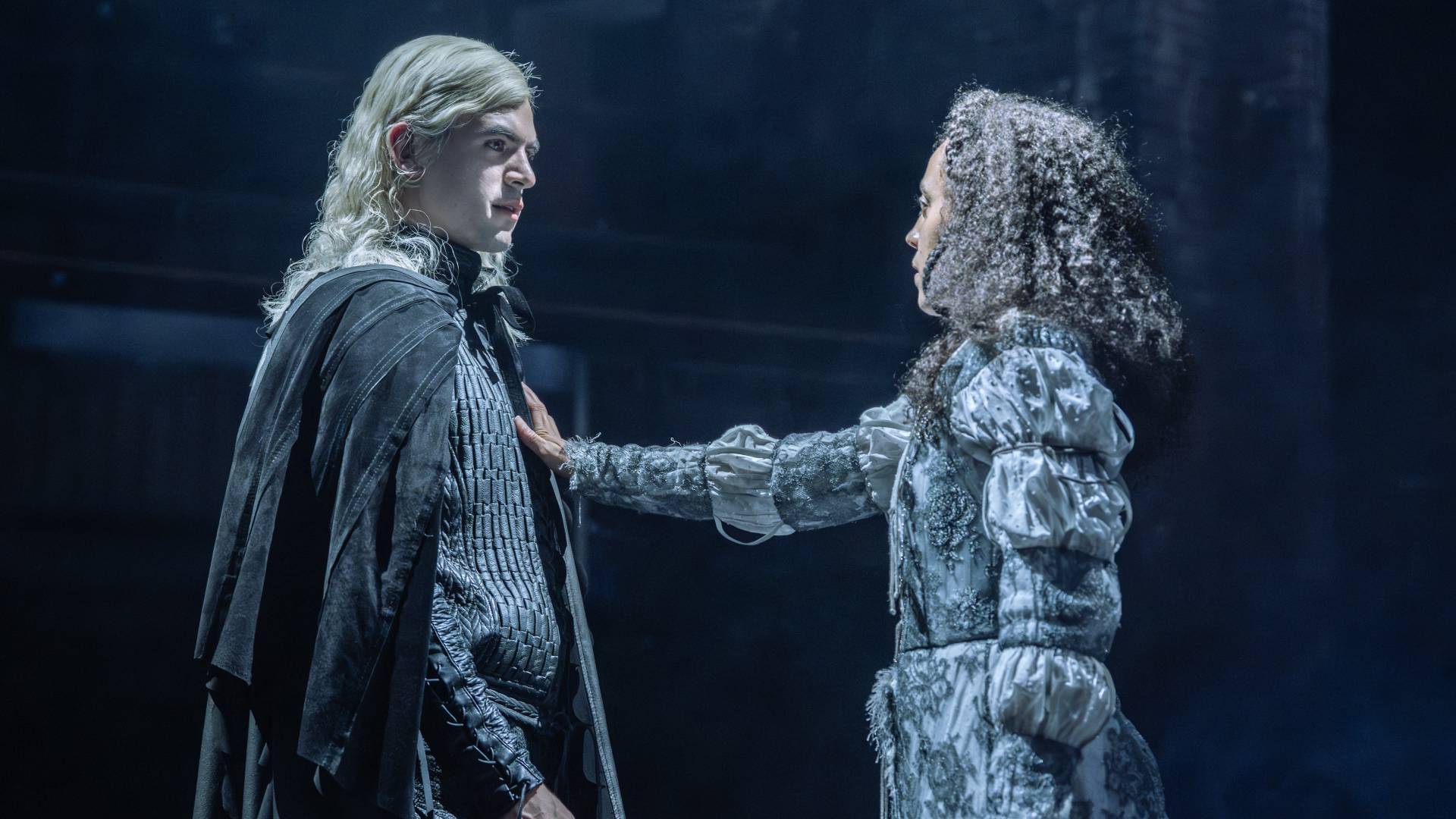
The production opens with breathtaking sensory impact. Rhaegar Targaryen, portrayed with haunting gravity by Noah Ritter, enters astride a massive, intricately crafted horse puppet operated seamlessly by a team of visible puppeteers. The scale is staggering, yet the movement possesses an organic fluidity that immediately commands the room.
Act I focuses heavily on the interpersonal dynamics and intricate court intrigue that defined early seasons of Game of Thrones. Here, Harmony Rose Bremner’s portrayal of Lyanna Stark breathes vibrant life into a character who has historically functioned primarily as a historical footnote or ghost within A Song of Ice and Fire. Bremner’s Lyanna is fiercely independent, chafing against the expected traditions of highborn ladyhood and her betrothal to the boisterous Robert Baratheon.
A standout sequence features Rhaegar asking Lyanna to dance. When Lyanna confesses she is more accustomed to the sword than the step, Rhaegar gracefully incorporates combat footwork into the choreography, giving physical form to the spark of a romance that would ultimately shatter a dynasty.
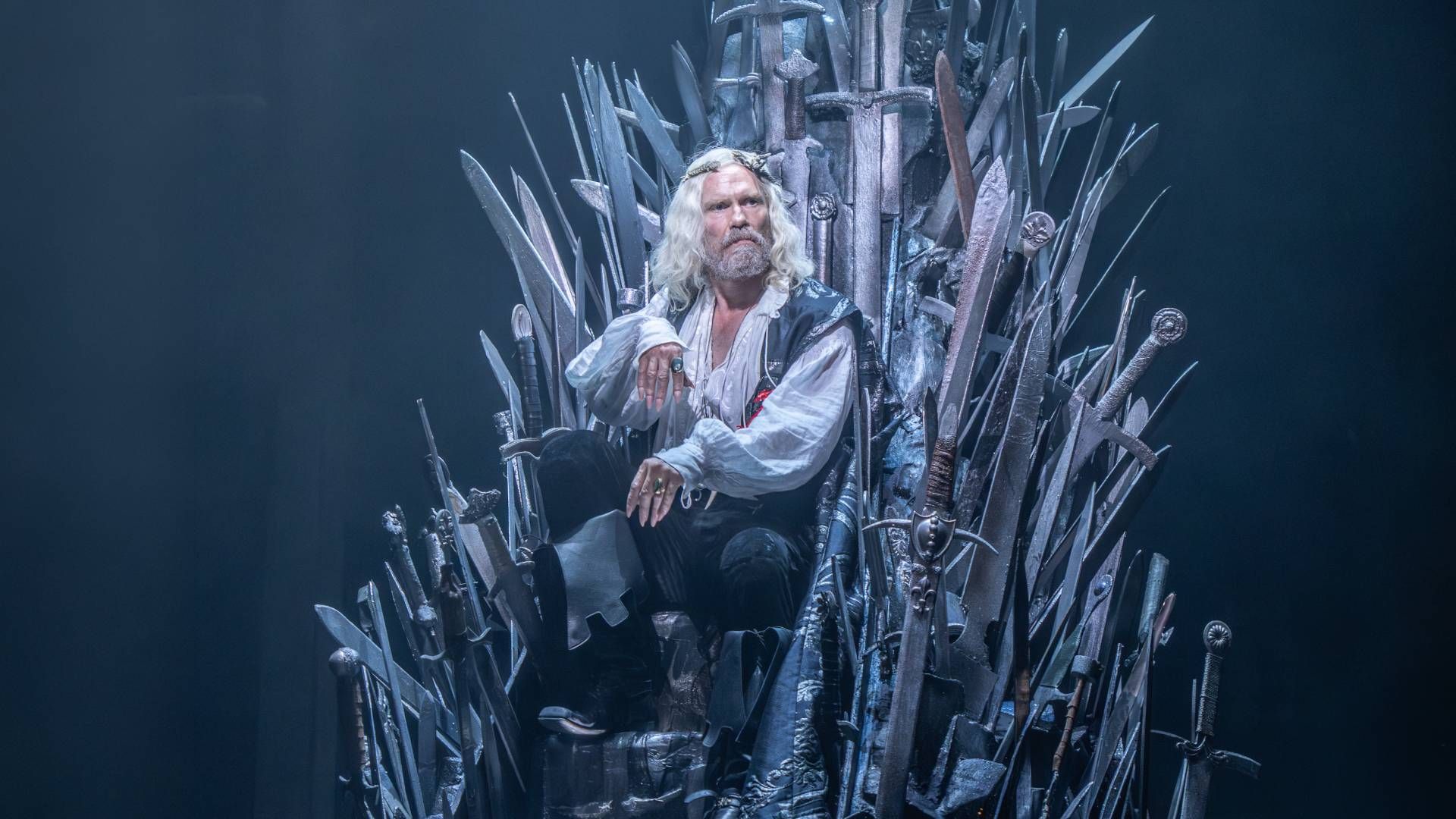
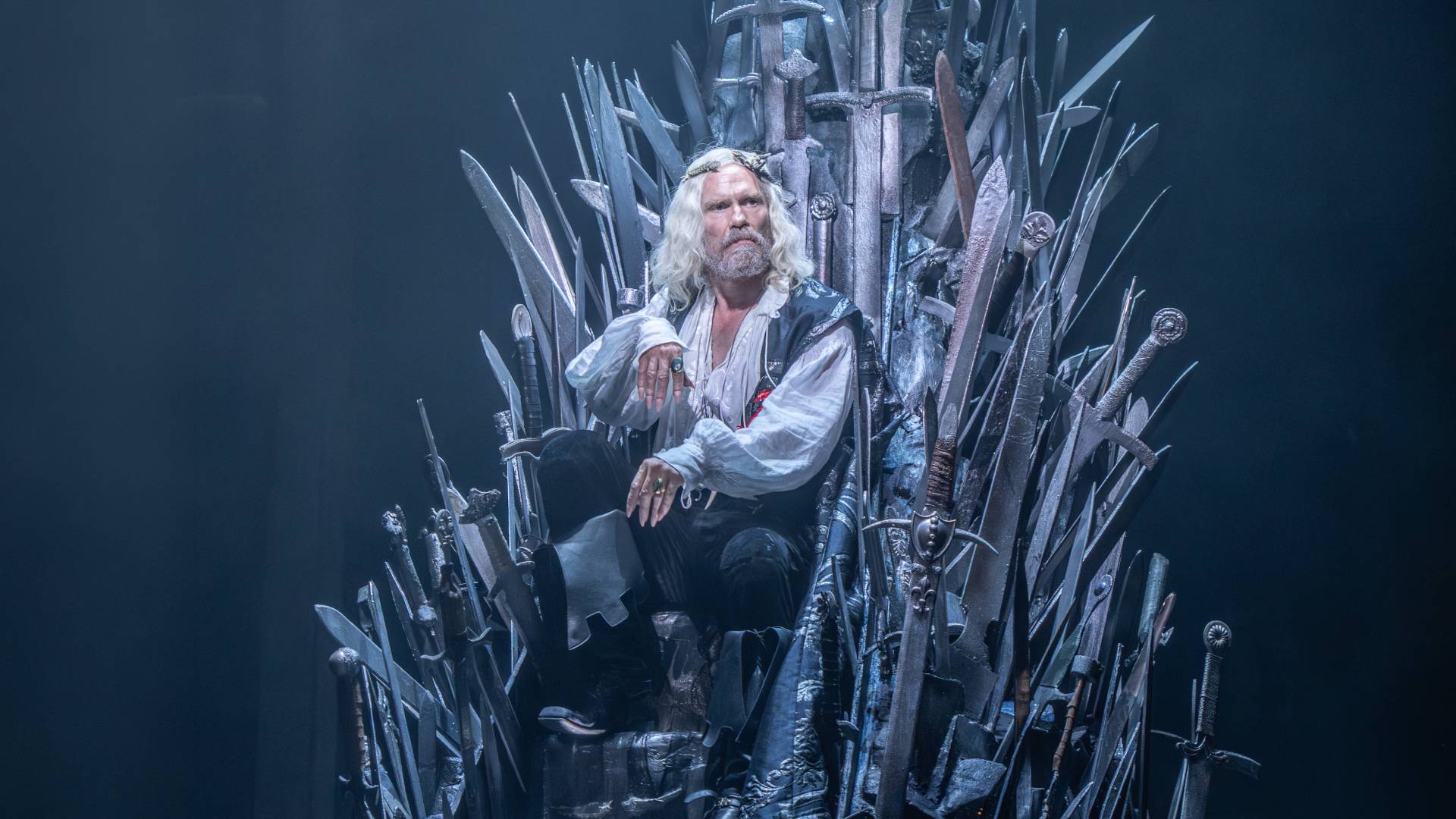
Simultaneously, the production anchors its emotional core in the tragic deterioration of King Aerys II Targaryen. Played with astonishing vulnerability by Michael Shaeffer, the Mad King is a deeply humanized figure. Covered in jagged scars from sitting upon the razor-sharp Iron Throne, with claw-like fingernails and a wild shock of hair, Shaeffer balances caprice and cruelty with a profound, lingering grief. One of the production’s most arresting moments is a quiet, agonizingly tender scene in which Rhaegar trims his father’s hair and nails—a momentary human connection before the storm of revolution breaks.
Act II: The Flames of Robert’s Rebellion
As the narrative pushes past the tourney and into the outbreak of Robert’s Rebellion, Act II broadens its scope, grappling with the logistical realities of staging an all-out civil war. Because a theatrical stage cannot physically encompass the breadth of a continent, the production employs narrative shorthand—utilizing ravens, dispatches, and shifting geographic perspectives to convey the cascading conflict.
While this structural shift occasionally distances the audience from the intimate character work of Act I, the production compensates with breathtaking set-pieces. The fateful clash at the Trident is rendered through stylized, high-impact choreography that leaves spectators breathless. Furthermore, the creative team weaves moments of quiet devastation between the war cries. In one particularly poignant scene, the women of Westeros gather to sing a haunting hymn to the Mother, praying for the survival of their sons and daughters across the warring factions—a sequence that has reportedly drawn visible tears from audiences night after night.
During this tumultuous second act, Maxim Ays’s young Jaime Lannister emerges as a central emotional pillar. Ays portrays an uncommonly innocent, idealistic Jaime whose internal conscience steadily warps and fractures under the horrific demands of his King and the escalating brutality of the war. His final descent toward the fateful moniker of "Kingslayer" is handled with agonizing pacing and theatrical brilliance.
Supporting Context & Metrics
The sheer logistical and artistic scale of Game of Thrones: The Mad King places it in a rare echelon of modern theatrical productions:
Runtime: 3 hours and 40 minutes (including intermission), placing it on par with classical epic stagings such as the RSC’s historical history cycles.
Staging Configuration: Thrust stage layout featuring dual intersecting catwalks, maximizing audience immersion with viewers seated mere inches from the performance area.
Puppetry and Design: Developed in collaboration with leading movement directors, utilizing macro-puppetry for warhorses and detailed heraldic costumery that accurately reflects the distinct houses of Westeros.
Linguistic and Lore Integration: Scripted by Duncan MacMillan with heavy consultation on deep-cut lore, answering long-standing canonical questions regarding the Harrenhal tourney that have puzzled book readers for decades.
Run Dates: Playing exclusively at the Royal Shakespeare Theatre in Stratford-Upon-Avon through September 5, 2026.
Official Statements and Creative Insights
Speaking on the immense challenge of adapting George R.R. Martin’s sprawling epic for the stage, adaptor Duncan MacMillan noted the natural thematic crossover between Westerosi politics and classical drama:
"When you strip away the dragons and the continental scale, the heart of ‘Game of Thrones’ is entirely Shakespearean. It’s about succession, madness, the toxic weight of legacy, and young people crushed beneath the ambitions of their forebears. The stage doesn’t need to show you a thousand ships; it just needs to show you the look in a father’s eye when he realizes his son is ready to take the crown."
Director Dominic Cooke emphasized the production’s commitment to physical storytelling and actor-audience proximity:
"We didn’t want to hide behind digital projections or cinematic tricks. Westeros needed to feel tactile, sweaty, dangerous, and immediate. When a horse moves through the center of the audience, or when steel rings out two feet from a spectator’s seat, you aren’t just watching history—you’re trapped in it."
Future Outlook and Cultural Impact
As Game of Thrones: The Mad King continues its extended run in Stratford-Upon-Avon, industry analysts and theatre critics are already eyeing its trajectory beyond Warwickshire. Given the immense global appetite for intellectual properties tied to George R.R. Martin’s universe—bolstered by ongoing television projects like House of the Dragon and A Knight of the Seven Kingdoms—industry insiders are heavily speculating regarding a potential transfer to London’s West End and Broadway.
Furthermore, fans unable to make the geographical trek to the Royal Shakespeare Theatre have voiced an overwhelming demand for a professional multi-camera recording or live cinematic broadcast, a trend increasingly common for elite theatrical productions.
For now, however, Stratford-Upon-Avon holds exclusive domain over the Iron Throne. The Mad King proves definitively that fantasy storytelling does not require endless multi-million-dollar CGI budgets to achieve epic resonance. By grounding cosmic tragedy in visceral, human performances within the hallowed halls of the RSC, the production has set a brilliant new gold standard for page-to-stage adaptations.
For any dedicated follower of Westeros, enduring the journey to the birthplace of Shakespeare to witness the fall of the Targaryens is not merely recommended—it is an absolute mandatory pilgrimage.