The Invisible Force: How Voice and Performance Capture Star Devora Wilde Unknowingly Conquered the Gaming Industry
Executive Overview
In the modern landscape of interactive entertainment, the barrier between cinematic storytelling and video game performance grows increasingly porous. Behind the faces and voices of some of the most celebrated digital characters in recent memory lies a hidden army of classically trained actors, stunt coordinators, and motion-capture specialists. Among them, Devora Wilde has quietly cemented her status as one of the most prolific and versatile talents in the medium.
Widely recognized and adored by global audiences for her commanding, breakout performance as Lae’zel—the fierce Githyanki warrior affectionately dubbed the internet’s favorite "hot gith girlfriend"—in Larian Studios’ critically acclaimed Baldur’s Gate 3, Wilde’s footprint across the gaming sphere extends far beyond the Forgotten Realms. From high-fantasy epics and dystopian sci-fi landscapes to survival horror and grimdark tactical shooters, her voice and physicality breathe life into dozens of digital entities.
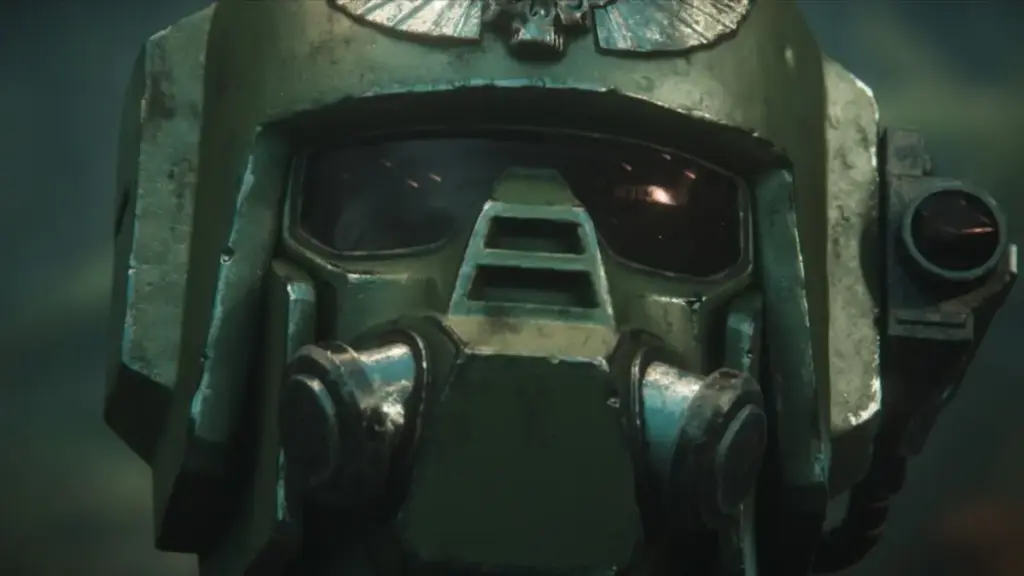
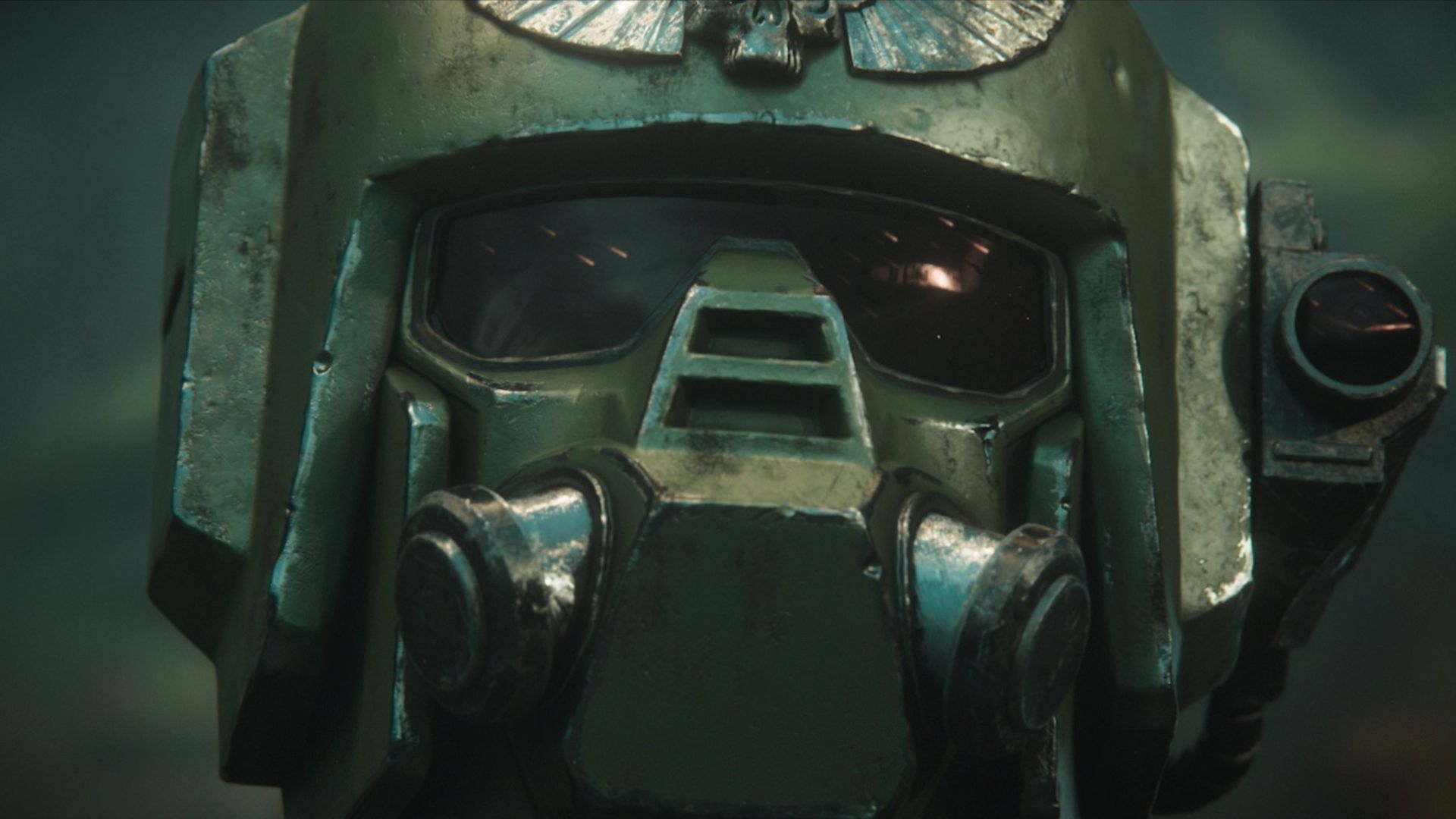
Yet, as the industry grapples with the complexities of secretive development cycles, non-disclosure agreements (NDAs), and codenamed projects, a fascinating reality has emerged: even top-tier performers can find themselves starring in major blockbuster titles without their immediate knowledge. In a recent, revealing retrospective interview with IGN, Wilde detailed the surreal experience of discovering her own secret inclusion in Saber Interactive’s massive hit Warhammer 40,000: Space Marine 2—a realization that arrived only after fans flooded her social media channels with congratulations.
This deep dive examines Wilde’s expansive portfolio, the labyrinthine behind-the-scenes world of video game casting and secrecy, her extensive contributions to the ever-expanding Warhammer intellectual property, and what these hidden credits reveal about the modern conditions of AAA and indie game development.
Detailed Chronology: Uncovering the Accidental Cameo in Space Marine 2
The journey of an actor in contemporary video game production is rarely linear. Studios routinely operate under maximum security protocols, utilizing project codenames, dummy scripts, and isolated recording booths to prevent leaks from piercing the veil before a strategic marketing reveal. For Wilde, these industry-standard security measures culminated in a moment of genuine surrealism following the launch of Warhammer 40,000: Space Marine 2.
The Ignorance of Stardom
When Space Marine 2 launched to critical and commercial acclaim, players immediately dove into its visceral campaign, dissecting every line of dialogue, audio log, and environmental narrative piece. Almost immediately, fans began reaching out to Wilde across various platforms, showering her with praise for her role in the game.
Her initial reaction was pure confusion.
"I started getting comments when the game came out, ‘Oh, you’re in Space Marine 2!’ I was like, ‘No, I’m not. What is that?’" Wilde recalled during her interview with IGN.
In an industry where actors can record lines for multiple projects across several years—often stepping into sterile sound-booths for brief, disconnected sessions with little to no contextual framing—it is remarkably easy for a role to slip from memory. To verify the claims, Wilde was forced into an impromptu digital forensics mission. She combed through her archives, cross-referenced past contract emails, attempted to match mysterious project codenames with actual retail releases, and searched for audio files that might jog her memory.
The definitive proof arrived not from her talent agency or the developer, but from a fan on Twitter (now X) who sent her a direct clip of the performance in question.
Decoding the Audio Log
Wilde’s contributions to Space Marine 2 were multifaceted, showcasing her chameleon-like vocal range. Rather than voicing a primary protagonist or a central cinematic villain, she stepped into the boots of the Imperium’s less glamorous, yet vital, inhabitants. Her roles included voicing a robotic servo-skull—a floating cybernetic skull housing the lobotomized brain of a human servant—and a Cadian soldier whose tragic final transmissions are discovered by players as collectible audio logs scattered across hazardous warzones.
Listening to the recovered audio clip provided the final, undeniable validation.
"I was like, ‘Oh, that’s me. I’m an audio log,’" she laughed, reflecting on the realization that she had become an immortalized piece of environmental storytelling within one of the year’s biggest action games.
This phenomenon is not isolated to Space Marine 2. Wilde experienced a similar revelation while auditioning for Konami’s psychological horror masterpiece, Silent Hill 2 remake. Tasked with rigorous motion-capture and stunt work during auditions and early production phases, she remained in the dark about the game’s true identity until certain pieces of dialogue triggered a sense of deja vu, prompting her to research the script online and connect the dots.
Supporting Context & Metrics: The Sweeping Scope of Devora Wilde’s Career
To understand Wilde’s impact on the industry, one must look beyond a single breakout role and examine a resume that spans diverse genres, engines, and production scales. Her career trajectory reflects the maturation of performance capture as a legitimate, demanding dramatic art form.
A Multitude of Digital Personas
Wilde’s credits read like a curated list of the most anticipated and discussed titles in modern gaming:
- Baldur’s Gate 3 (Larian Studios): As Lae’zel, Wilde delivered a masterclass in character progression, transforming a rigid, dogmatic Githyanki zealot into a nuanced, deeply loyal companion capable of profound vulnerability. Her performance earned critical acclaim and a dedicated global fandom.
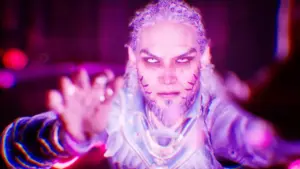
- Total War: Warhammer 3 (Creative Assembly): Stepping into the grand strategy arena, Wilde brought regal authority and chilling power to Tzarina Katarin Bokha, the Ice Queen of Kislev.
- Warhammer 40,000: Darktide (Fatshark): Demonstrating her versatility within the grimdark sci-fi universe, she provided the authoritative voice option for the female Arbitrator, enforcing imperial law with icy precision.
- Adepta Sororitas Animation: Penitence (Warhammer TV): Extending her presence beyond interactive gaming into animated narrative shorts, she embodied the fanatical devotion of a Sister of Battle.
- Upcoming and Notable Projects: Her upcoming slate showcases her commitment to diverse projects, including roles in tactical fantasy RPG Solasta 2, the highly anticipated time-bending action game Clair Obscur: Expedition 33, Pearl Abyss’s open-world epic Crimson Desert, cooperative multiplayer title Split Fiction, and tactical shooter Red Solstice 2: Survivors.
The Accidental Warhammer Veteran
With multiple credits spanning fantasy (Total War) and sci-fi (Space Marine 2, Darktide, Penitence) iterations of Games Workshop’s iconic intellectual property, Wilde has unintentionally cornered the market on Warhammer voice acting.
Despite her extensive contributions to the lore, her entry into the universe was entirely organic, driven purely by casting directors recognizing her ability to project authority, grit, and emotional depth.
"It just so happens that I’ve done a lot of Warhammer stuff," Wilde noted. "And I never realized how vast the universe is, genuinely."
Official Statements & Industry Insights
Wilde’s candid revelations shed light on the structural realities of modern game development. The relationship between performance artists and game developers is governed by extreme confidentiality, creating an environment where actors frequently navigate a fog of war regarding the products they help build.
Industry analysts and voice-acting unions have long pointed out the challenges of the "blind recording" model. When actors are denied script context, character backgrounds, or even the title of the game, it requires an immense level of technical skill and trust between the performer and the voice director. Actors must rely entirely on immediate voice direction—often translating abstract prompts like "react to an unseen monstrosity" or "deliver a final transmission while dying of radiation poisoning"—without knowing the broader narrative stakes.
Yet, as Wilde’s experience demonstrates, this disconnect can occasionally lead to delightful, surreal moments of discovery. When an actor’s work is integrated seamlessly into a massive sandbox world like Space Marine 2, the final product acts as a surprise gift delivered months or even years after the initial recording session concluded.
Future Outlook: The Evolving Role of Performance Capture Artists
As video games continue to push cinematic boundaries, the demand for elite performance-capture and voice talent will only intensify. Projects like Clair Obscur: Expedition 33 and Crimson Desert signal an industry standard where nuanced emotional delivery and physical authenticity are paramount to a game’s commercial and critical success.
For Devora Wilde, the immediate future points toward an ever-expanding horizon of digital characters. Having transitioned from a respected stage and screen actress to a titan of interactive entertainment, her accidental cameo in Space Marine 2 serves as a testament to her ubiquity. She is no longer just the face of a single iconic RPG companion; she is a foundational pillar of modern game audio and performance.
As studios continue to tighten security around upcoming blockbusters, the likelihood of actors accidentally discovering their own secret roles remains high. But for fans and players alike, uncovering a hidden Devora Wilde performance has transformed into a delightful Easter egg—a reminder that behind the towering Space Marines, cybernetic skulls, and alien warriors stands one of the industry’s most dedicated and multi-talented artists, leaving her indelible mark on the digital worlds we explore.