By Sebastian Santabarbara Updated: August 7, 2026 | 7 min read
Executive Overview
The retro-gaming landscape has long been defined by hardware boundaries, platform exclusivity, and the unyielding walls that once separated bitter console-era rivals like Nintendo and Sony. For decades, the notion of experiencing Nintendo’s flagship intellectual property—Pokémon—running natively on a Sony platform was nothing short of heretical. Yet, the relentless ingenuity of the homebrew community has continuously dismantled historical barriers.
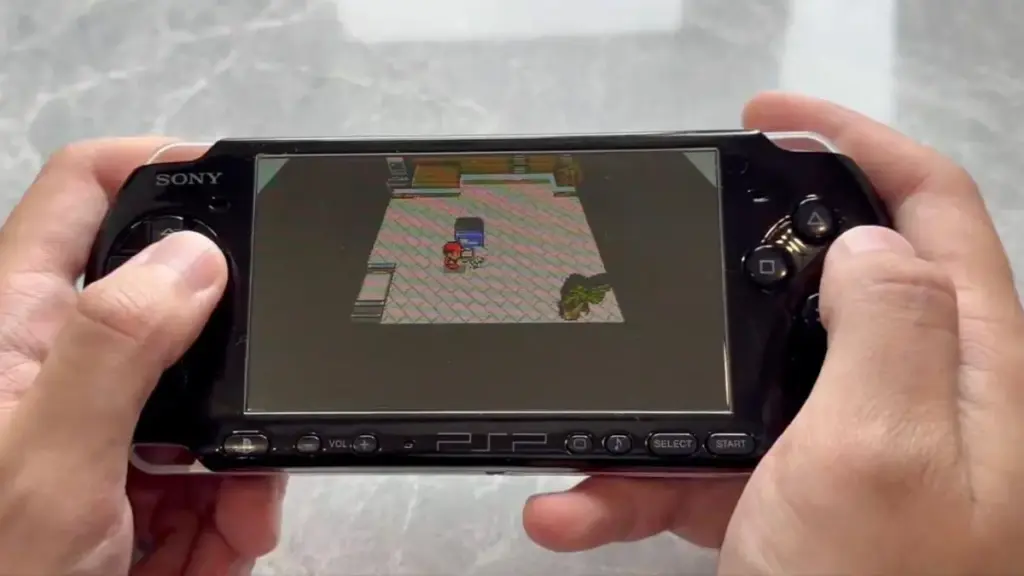
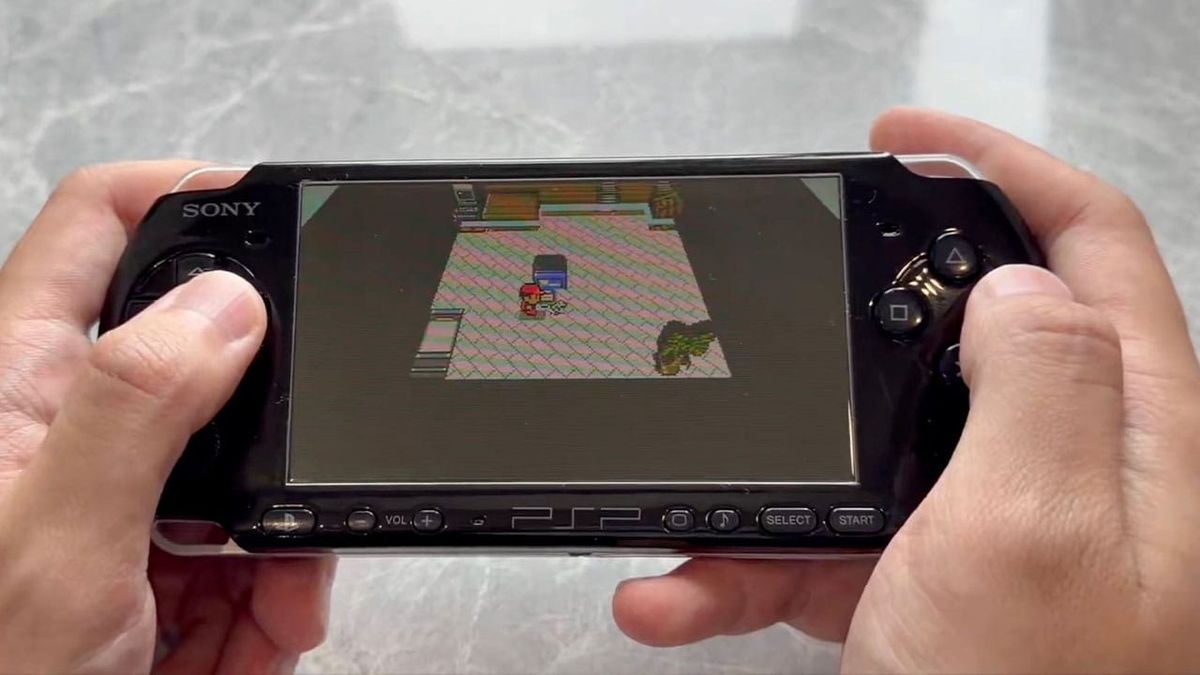
In a development that has sent shockwaves through the emulation and retro-modding ecosystems, classic 1990s Pokémon has been successfully ported to run natively as a 3D experience on the Sony PlayStation Portable (PSP).
This astonishing feat is the result of a collaborative triumph bridging multiple distinct technologies. By synthesizing Dramatic Shape’s innovative Lua Voxel Mod, the architectural blueprints of the gen1recomp project, and a newly engineered Rust runtime known as PocketJS, developers have managed to bypass traditional emulation entirely. Instead of running via an interpreter or a virtual machine, this version of Pokémon executes directly on the PSP’s aging MIPS architecture, rendered in a striking, fully realized 3D voxel space.
However, this technological milestone does not arrive without controversy. While the visual and architectural achievements are undeniable, code repositories reveal AI-assisted development tools—specifically Anthropic’s Claude—among the credited contributors. This intersection of low-level systems programming and generative AI highlights a rapidly shifting paradigm in software development, sparking debate over code reliability, purity, and the future of retro-engineering.
Detailed Chronology: From Pixel Sprites to Portable Voxel Worlds
To understand the magnitude of this achievement, one must retrace the technological path that led to the intersection of 90s handheld RPGs and Sony’s 2005 media-centric portable console.
1. The Foundation: Generation 1 Recompilation (gen1recomp)
The genesis of this port traces back to static recompilation efforts within the retro community. Projects like gen1recomp focused on taking original Game Boy ROMs—specifically Pokémon Red, Blue, and Yellow—and translating Z80 assembly code into modern, high-level C or C++ source code. By breaking down the original game logic, memory maps, and rendering loops, developers unlocked the ability to compile the core game engine for modern desktop architectures, stripping away the need for traditional hardware emulation.
2. The Visual Transformation: Dramatic Shape’s Voxel Mod
While recompilation solved the execution puzzle, it left the original 2D top-down perspective intact. Enter creator Dramatic Shape, who engineered an extensive Lua-based Voxel Mod. This modification transforms flat sprite-based environments, characters, and monsters into three-dimensional voxel geometry. Suddenly, the cramped grid-based towns of Kanto gained depth, casting shadows and rendering volumetric environments that reimagined how 90s sprite art could inhabit a 3D rendering pipeline.
3. The Bridge: PocketJS and Native PSP Execution
The final and most complex piece of the puzzle was porting this newly minted 3D experience to hardware that predates modern web and scripting runtimes. The PocketJS team stepped in to bridge this gap, developing a custom Rust runtime tailored specifically for the PSP hardware.
By leveraging the PocketJS runtime alongside Dramatic Shape’s voxel engine, the project bypassed the immense overhead typically required to run interpreted code on a 333 MHz handheld. The result is a native PSP executable (.prx / EBOOT format) that interfaces directly with the hardware’s graphics pipeline, pushing polygons in a manner Nintendo engineers in 1996 could scarcely have imagined.
Supporting Context & Metrics: Hardware Constraints vs. Modern Innovation
To fully appreciate what has been accomplished, one must analyze the stark contrast between the hardware running the code and the demands of the software stack itself.
Metric / Specification
Sony PlayStation Portable (PSP-1000 / 3000)
Modern Retro Handheld Comparison (e.g., ANBERNIC RG Vita)
Release Year
2004–2008
Modern Era (2024–2026)
CPU Architecture
MIPS R4000-based (Sony Allegrex @ 333 MHz)
ARM Cortex Quad-Core / Multi-GHz
System RAM
32 MB to 64 MB
1 GB to 4 GB+
Graphics API / Engine
Proprietary Hardware Geometry Engine
OpenGL ES / Vulkan
Rendering Methodology
Native PSP hardware acceleration via PocketJS runtime
Software/Hardware emulation wrappers
The Memory Wall
The primary constraint of the PSP has always been its restrictive memory footprint. Original PSP models shipped with a mere 32 MB of RAM, which was doubled to 64 MB in later iterations (PSP-2000 and onward). Running a recompiled game engine while simultaneously parsing voxel geometry data and executing a Rust-based runtime within a 64 MB ceiling is an exercise in extreme memory optimization.
Every asset must be carefully streamed and garbage-collected to prevent out-of-memory crashes. The fact that the PocketJS team achieved stable execution on this architecture stands as a testament to low-level engineering prowess.
Official Statements and Community Reception
The release of the port immediately drew widespread attention across social media platforms, capturing the fascination of retro enthusiasts, programmers, and hardware modders alike.
Announcing the breakthrough via X (formerly Twitter), the PocketJS team stated:
"Yes, you can now play the Nintendo Pokémon as a native Sony PSP game! This is done by our new Rust runtime referencing the awesome Lua Voxel mod (by @DramaticShape) and the gen1recomp project."
The response from the community was a mixture of utter disbelief and nostalgic euphoria. For a generation of gamers who grew up hiding under bedsheets with a Game Boy Color illuminated only by a worm light—while simultaneously casting envious glances at friends wielding Sony’s sleek, widescreen PSP—seeing these two iconic gaming lineages merge feels like an alternate timeline made manifest.
The AI Controversy: "Vibe-Coding" and Code Integrity
Despite the celebratory tone surrounding the visual and technical milestone, a notable point of friction emerged during code repository audits. Public documentation and contributor logs revealed that Claude, an advanced generative AI assistant developed by Anthropic, was listed as a contributor to the project.
This revelation has injected a cautionary note into an otherwise triumphant narrative. The retro-modding community—traditionally built on meticulous, human-driven reverse engineering, assembly tracing, and hard-won algorithmic breakthroughs—now faces the reality of AI-assisted "vibe-coding."
While artificial intelligence can dramatically accelerate boilerplate generation, translation tasks, and runtime bindings, it is notoriously prone to introducing subtle, hard-to-diagnose bugs in low-level memory management. Given the fragile nature of native ports running on constrained vintage hardware like the PSP, experts advise caution. Memory leaks, stack overflows, and undefined behavior lurking deep within AI-generated runtime bindings could easily manifest as catastrophic crashes many hours into an extended playthrough.
Future Outlook: What’s Next for Vintage Recompilation?
The successful deployment of a 3D voxelized Pokémon port on the PlayStation Portable signals a broader, accelerating trend in the retro gaming ecosystem: Static Recompilation (Recomp) is the future of preservation.
For years, emulation was viewed as the definitive endpoint for playing legacy software on modern or cross-platform devices. However, emulation inherently carries a performance tax, requiring a host system significantly more powerful than the original hardware to interpret instructions accurately.
Static recompilation flips this paradigm on its head. By translating old assembly into native binaries for target platforms—whether that target is a modern PC, an Android phone, or a nearly twenty-year-old handheld console like the PSP—games run with native efficiency, unlocking higher framerates, graphical enhancements, and total platform liberation.
Where Does the Community Go From Here?
Expansion to Other Franchises: With the success of gen1recomp and custom runtimes like PocketJS, we are likely to see early 3D translations applied to other legendary 8-bit and 16-bit titles, pushing vintage hardware far beyond its original design specifications.
Refining AI and Human Collaboration: The presence of Claude in this repository highlights an industry-wide transition. As AI tools become normalized in software development, the community must establish ethical and technical frameworks to balance rapid AI prototyping with the rigorous bug-testing required for legacy hardware optimization.
Hardware Accessibility: For those eager to test the limits of their old hardware, the complete tutorial, source files, and compilation guides remain publicly accessible via the official GitHub repositories (pocket-stack/pocket-voxel).
Whether viewed as a monumental engineering triumph, a surreal fever dream of cross-platform collaboration, or a warning sign about the rise of AI-assisted codebases, one thing is certain: the walls separating yesterday’s gaming giants continue to crumble, one recompiled binary at a time.