
Expanding Horizons: Valve Deploys SteamOS 3.8.25 Beta with Expanded Handheld Support and Crucial Steam Machine Firmware Fixes
Executive Overview
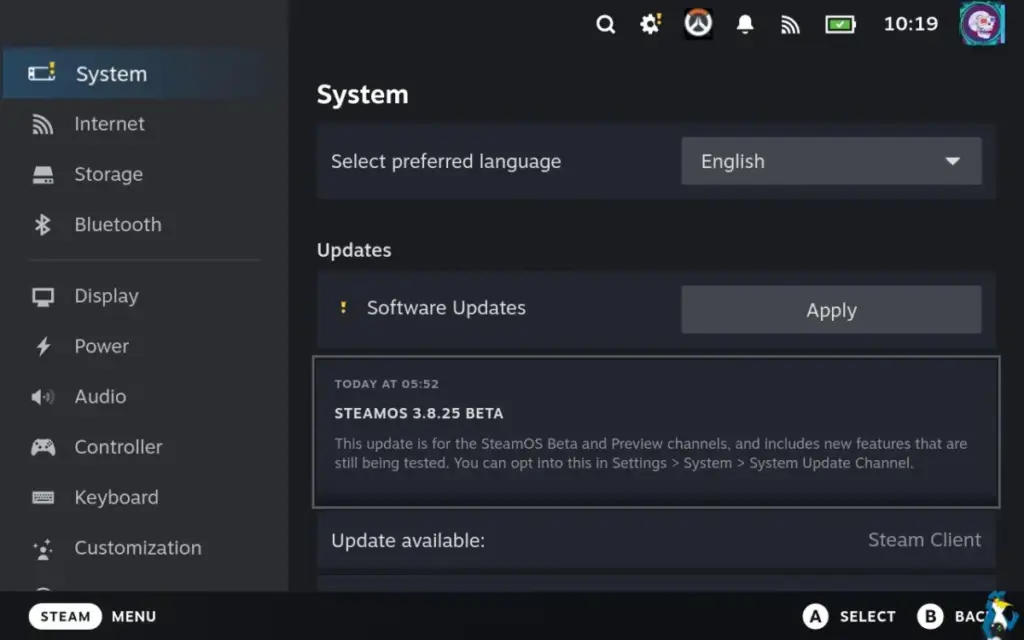
Valve has officially released SteamOS 3.8.25 Beta, marking a substantial and highly anticipated update for the company’s expanding ecosystem. While software iterations for SteamOS are frequent, this particular release represents a notable leap forward, introducing a robust slate of system-level improvements, comprehensive audio adjustments, critical power-state fixes for the Steam Machine, and crucial infrastructural upgrades for the Steam Frame Wireless Adapter.
Most importantly, this beta build accelerates Valve’s multi-platform hardware strategy. SteamOS 3.8.25 actively extends compatibility to an impressive array of third-party handheld gaming PCs and alternative hardware configurations—including devices from MSI, AYANEO, OneXPlayer, and Konkr. As the lines continue to blur between dedicated console-like ecosystems and standard PC hardware architectures, Valve’s operating system is increasingly positioning itself as the universal standard for portable PC gaming.
For enthusiasts eager to test these updates, the process requires a manual opt-in through the Steam client settings, though Valve has implemented flexible firmware update paths to ensure user-friendliness even within an experimental branch. This comprehensive report explores the depths of the SteamOS 3.8.25 Beta, evaluating its technical ramifications, hardware compatibility expansions, known behaviors, and the strategic trajectory of Valve’s Linux-based gaming OS.
Detailed Chronology and Update Mechanics
The rollout of SteamOS 3.8.25 Beta commenced via Valve’s official Steam update channels, drawing immediate attention from the Linux gaming community and hardware developers alike. Because this software package is currently residing in the experimental Beta update branch, it is not automatically pushed to the general user base.
To access the build, users must navigate through their device settings:
$$textSettings longrightarrow textSystem longrightarrow textSystem Update Channel longrightarrow textBeta$$
The decision to gate these features behind a manual opt-in reflects standard software deployment protocols, shielding casual users from potential instability while inviting power users and early adopters to stress-test the environment.
Flexible Firmware Strategies: The "Update and Revert" Method
One of the most noteworthy logistical nuances of the 3.8.25 Beta deployment concerns hardware firmware persistence—specifically regarding the Steam Machine Firmware 108 update. Addressing long-standing user anxiety about trying out beta builds only to become "trapped" in an unstable ecosystem, Valve developer Pierre-Loup Griffais clarified the mechanics via social media platform Bluesky.
According to Griffais, users can temporarily opt into the SteamOS 3.8.25 Beta to fetch and apply the newer system firmware (such as Firmware 108), and subsequently revert their system software channel back to the Stable branch if desired. The updated firmware will persist on the hardware level, allowing users to benefit from critical low-level bug fixes—such as the much-requested Steam Machine sleep-state resolutions—without forcing them to endure potential beta software bugs in their day-to-day gaming sessions. This user-centric flexibility demonstrates Valve’s evolving understanding of hardware-software interplay, mitigating the friction traditionally associated with beta testing cycles.
Supporting Context and Ecosystem Metrics
To fully appreciate the significance of SteamOS 3.8.25 Beta, one must examine the broader historical and strategic context of Valve’s operating system. What began as a proprietary Debian-based OS designed to power the short-lived Steam Machines of the mid-2010s has successfully morphed into SteamOS 3 (Holo), driven by the monumental success of the Steam Deck.
The Rise of Universal Handheld Linux
While the Steam Deck remains the gold standard and primary reference hardware for SteamOS, Valve has made no secret of its ambition to eventually license and distribute SteamOS to third-party manufacturers. The inclusion of explicit support for non-Valve devices in the 3.8.25 Beta is not merely an incidental addition; it is a vital milestone in a multi-year engineering roadmap.
The update introduces specialized profiles, driver packages, and kernel adjustments for an array of competitive devices flooding the portable PC market:
- MSI Claw 8 EX AI+ and MSI Claw: Bringing sophisticated compatibility to Intel Core Ultra-powered handheld ecosystems.
- AYANEO Pocket S2: Expanding integration into AYANEO’s densely populated ecosystem of high-end form factors.
- Konkr FIT: Integrating niche, community-driven hardware architectures into the broader SteamOS pipeline.
- OneXPlayer Configurations: Accommodating the diverse display, control, and performance profiles characteristic of OneXPlayer’s hardware catalog.
Technical Pillars of the 3.8.25 Release
While the full, granular changelog for SteamOS 3.8.25 spans multiple sub-categories, the structural categories outlined in the release notes emphasize four distinct pillars of improvement:
- General System Stability: System-wide refinements targeting background resource management, UI responsiveness, and desktop-mode reliability.
- Steam Machine Firmware 108: Direct intervention addressing low-level power states, ACPI interactions, and persistent sleep/resume failures that plagued previous iterations.
- Advanced Audio Routing: Fine-tuning of PipeWire and PulseAudio configurations to ensure seamless peripheral switching, Bluetooth codec stability, and reduced latency across integrated and external sound cards.
- Non-Valve Hardware Support Layers: Injection of custom input mapping routines, power-scaling governors, and telemetry hooks designed to run smoothly on non-Deck chipsets (AMD Ryzen Z-series, Intel Core Ultra, and alternative handheld controllers).
Official Statements and Developer Insights
The transparency surrounding the SteamOS 3.8.25 Beta has largely been championed by Valve’s engineering team through developer channels and official patch documentation.
Addressing the community via Bluesky, Pierre-Loup Griffais highlighted the hardware-agnostic nature of the firmware updates bundled into the beta package. By confirming that firmware updates—such as Steam Machine Firmware 108—remain intact even if a user downgrades their OS branch back to Stable, Valve has effectively lowered the barrier to entry for diagnostic testing. Developers and advanced users can now safely isolate whether performance regressions are tied to the operating system layer or the underlying device firmware.
Furthermore, official documentation from the Steam Store update page emphasizes that SteamOS 3.8.25 is "a bit of a bigger one," signaling that Valve’s engineering bandwidth is currently heavily invested in polishing the OS for both legacy form factors and upcoming hardware partnerships.
Industry analysts have noted that Valve’s steady, methodical rollout of non-Valve hardware compatibility points toward an inevitable commercial release of SteamOS as a standalone installable operating system for any PC gamer. By stress-testing these drivers in a controlled beta environment across divergent architectures (such as the shift between AMD APUs and Intel Core Ultra processors), Valve is actively building a robust hardware abstraction layer (HAL) capable of rivaling Windows 11 in the handheld gaming space.
Future Outlook: What Lies Ahead for SteamOS?
As SteamOS 3.8.25 moves through its beta lifecycle and marches toward a stable public release, several key questions and expectations loom large for the PC gaming community:
1. The Commercial Release of Standalone SteamOS
The ultimate horizon for SteamOS is its widespread availability as a free, downloadable operating system for generic desktop rigs and third-party handhelds. While current builds require varying degrees of community workarounds or specific OEM partnerships to install cleanly on non-Steam Deck hardware, updates like 3.8.25 bring Valve incrementally closer to a friction-free "Install SteamOS on Any PC" reality.
2. Competition in the Handheld Ecosystem
With Windows 11 heavily criticized for its resource-heavy footprint, lack of native controller-first navigation, and cumbersome battery management on portable devices, a streamlined Linux-based alternative like SteamOS presents an existential threat—and a welcome relief—to the handheld market. As devices like the MSI Claw 8 EX AI+ and AYANEO units receive optimized SteamOS support, consumers will soon have genuine choices regarding their handheld operating systems.
3. Community Feedback and Ongoing Iteration
Valve relies heavily on user telemetry and bug reports submitted through its official discussion boards and GitHub repositories. The success of the Steam Machine sleep fixes and the stability of the Steam Frame Wireless Adapter in 3.8.25 will depend heavily on how the community interacts with this beta build over the coming weeks.
Gamers and technical enthusiasts experiencing specific bugs—or conversely, celebrating long-awaited fixes—are encouraged to voice their experiences within the Steam Community forums and developer channels. As Valve continues to refine its software pipeline, the dream of a unified, highly optimized, and open portable gaming ecosystem grows ever closer to complete realization.