Unearthing the Genesis of Pain: A Lost 2007 Prototype Reveals the First-Person Origins of Demon’s Souls
Executive Overview
To millions of passionate action-role-playing game enthusiasts worldwide, 2009 stands as a monumental watermark in modern gaming history: the debut of Demon’s Souls on the PlayStation 3. Developed collaboratively by FromSoftware and Sony’s now-defunct Japan Studio, the title birthed a genre. It introduced a punishing, uncompromising design philosophy defined by crumbling Gothic fortresses, oppressive dark fantasy aesthetics, and a level of difficulty capable of driving even seasoned players to utter despair.
Yet, long before Demon’s Souls became a cultural phenomenon—and decades before FromSoftware conquered the industry with Dark Souls, Bloodborne, and the open-world masterpiece Elden Ring—the project was an uncertain gamble. It was an experimental collaboration struggling to find its identity within the shifting landscape of seventh-generation console development.
Recently, well-known video game preservationist and archival researcher Lance McDonald brought to light a significant piece of industry history: a previously lost prototype presentation assembled by Japan Studio in 2007. Showcased initially at an internal conference designated Gameshare 4, this archival artifact provides an extraordinary, rare glimpse into the infancy of Demon’s Souls.
The presentation reveals startling design directions that never survived into the retail release. Most notably, it features an optional first-person perspective reminiscent of FromSoftware’s 1994 cult classic King’s Field, alongside cut enemies, conceptual blueprints, and early infrastructural philosophies. Crucially, these findings demonstrate that the DNA of modern soulslike design was already taking shape years before the PlayStation 3 release, marrying technological ambition with a deliberate, haunting multiplayer philosophy.
Detailed Chronology: Piecing Together the 2007 Prototype
The Pre-Dark Era and Gameshare 4
To understand the gravity of this 2007 prototype, one must contextualize the state of FromSoftware during the mid-2000s. Long before the studio achieved mainstream global recognition, it was primarily recognized by dedicated hobbyists as the creator behind niche, slow-paced dungeon crawlers like King’s Field and Shadow Tower.
Archival notes uncovered in McDonald’s deep-dive reveal that when Sony’s Japan Studio introduced the early version of Demon’s Souls at Gameshare 4 in 2007, they explicitly marketed FromSoftware to internal stakeholders by leaning on their legacy as the architects of the "real-time 3D classic" King’s Field. At this stage, the project was far from the polished, atmospheric action-RPG it would eventually become. It was a conceptual pitch designed to convince corporate executives that a dark, atmospheric medieval fantasy could find an audience on the burgeoning PlayStation 3 hardware.
[1994: King's Field Released]
       │
       ▼
[2007: Gameshare 4 Prototype] ──► (First-person mode tested; early wasteland aesthetics)
       │
       ▼
[2009: Demon's Souls Launch]  ──► (Shift to third-person standard; asynchronous multiplayer finalized)
       │
       ▼
[2011-2022: Modern Era]       ──► (Dark Souls, Bloodborne, Elden Ring refine the formula)
The First-Person Experiment
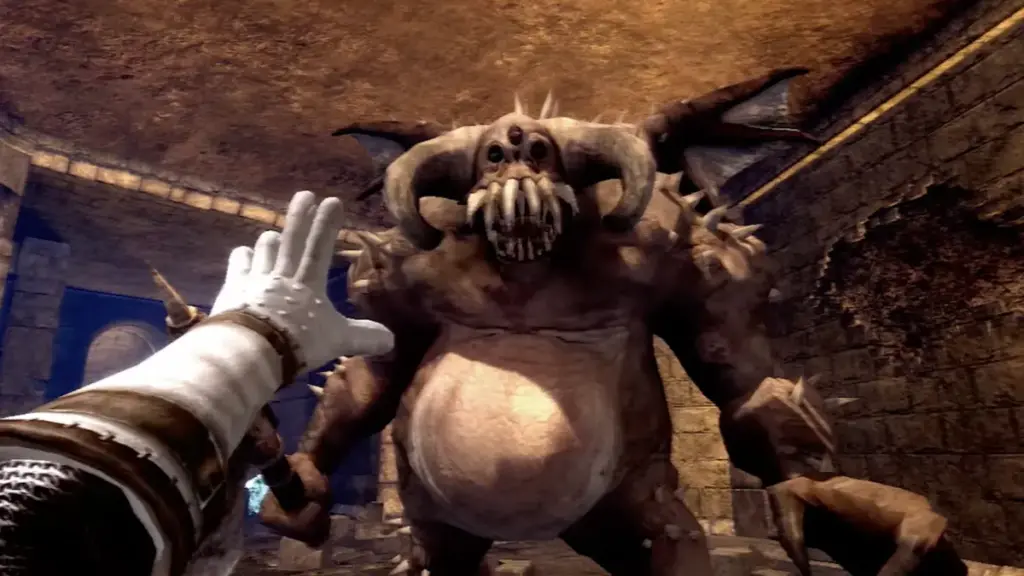
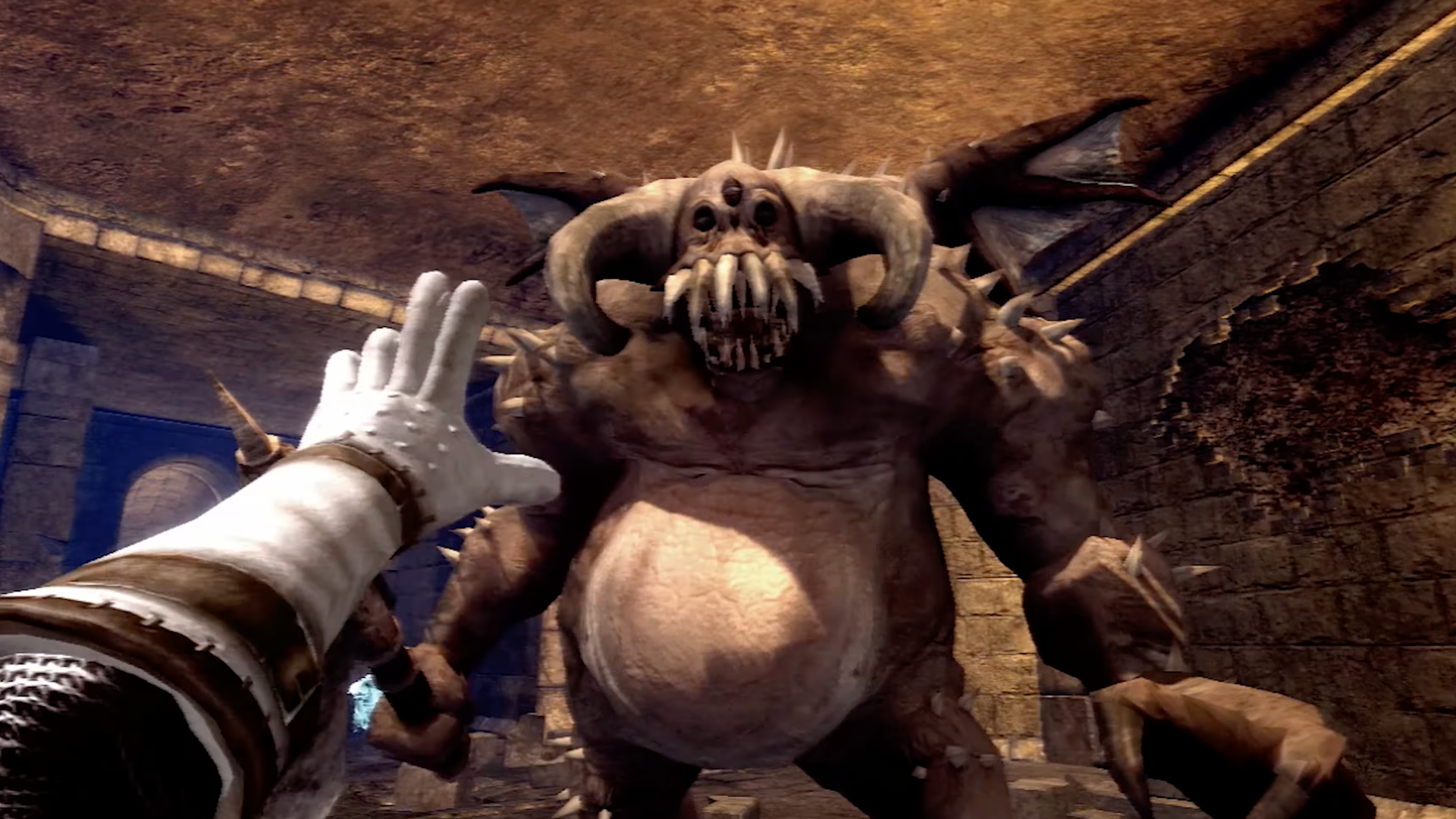
Perhaps the most striking revelation from the 2007 presentation video is the inclusion of an optional first-person perspective. While the final 2009 release of Demon’s Souls strictly utilized a third-person camera—a vital adjustment for spatial awareness during intense melee combat and stamina management—the early prototype experimented with putting the player directly behind the eyes of their avatar.
In video footage of the prototype, a player character navigates cramped corridors and squares off against gargantuan bosses directly from a first-person viewpoint. This design choice served as a direct mechanical bridge to FromSoftware’s roots in King’s Field. Facing towering, scaly abominations with your character’s face practically resting against their monstrous, heaving bellies fundamentally altered the psychological horror of the encounter. It amplified claustrophobia, obscured peripheral vision, and made every boss engagement feel vastly more personal, terrifying, and overwhelming.
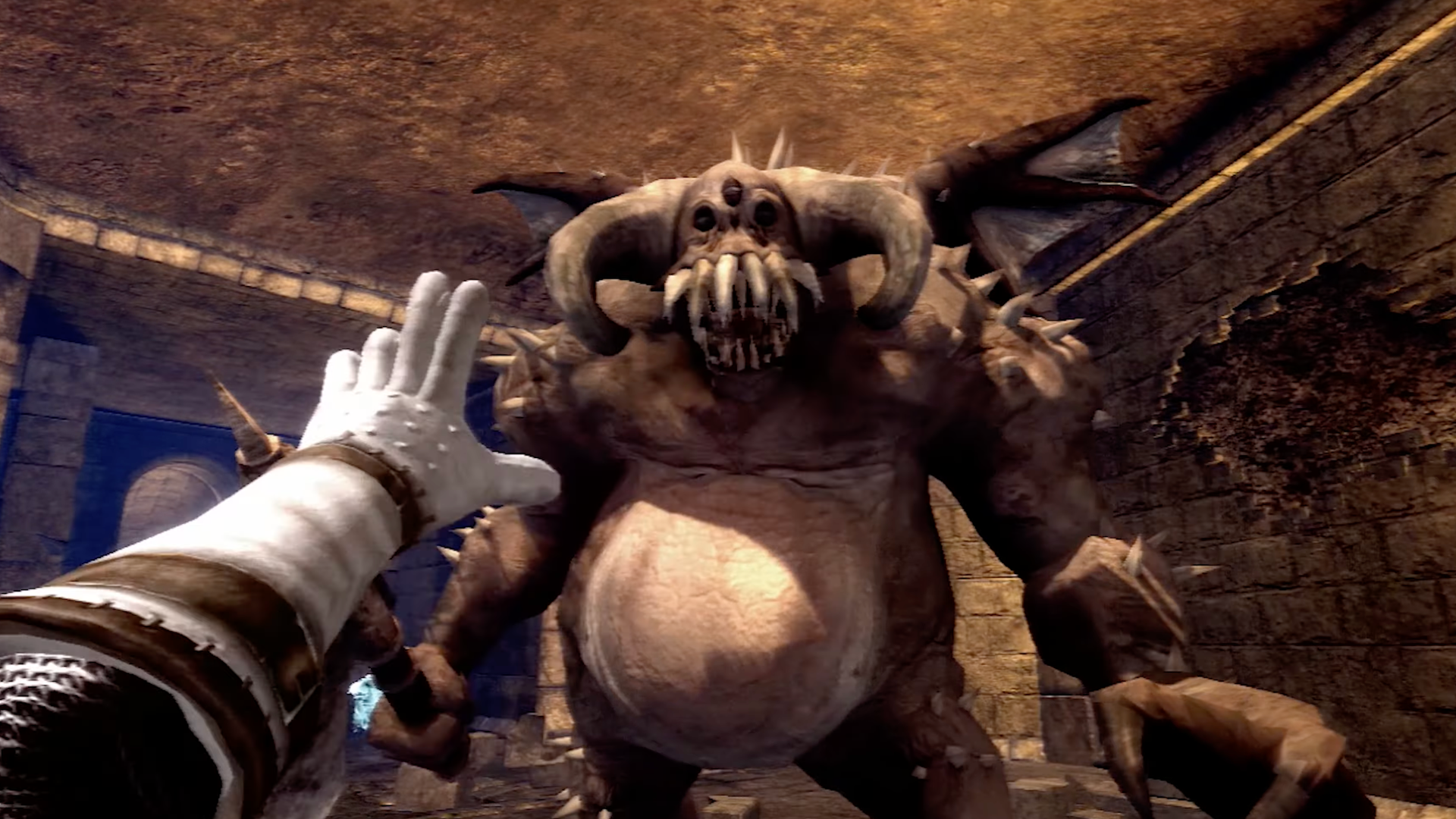
Ultimately, the development team abandoned the first-person configuration, likely recognizing that precision-based melee combat, rolling mechanics, and tactical shield management required the situational awareness that only a detached third-retail camera could provide. Nevertheless, its presence in the 2007 prototype highlights an era of trial and error where the studio was still actively figuring out how to translate its heritage into a new generation of gaming.
Scrapped Fauna and Photorealistic Ambitions
The 2007 presentation also showcased what Japan Studio proudly touted at the time as "photorealistic quality"—a buzzword of the early PS3 era. While graphics have evolved exponentially since, the archival footage displays bleak, ash-choked expanses, jagged rock formations, and unsettling mutations that captured a raw, desolate mood.
Several enemies featured in the prototype presentation failed to transition into the final product. Most notably, archival footage highlights a bizarre serpent knight sporting an exaggerated, undulating neck and oversized boots. This creature, alongside other discarded character models, suggests that the game’s early lore and aesthetic leaned even further into surreal, high-fantasy body horror before being streamlined into the distinct gothic-medieval melancholy that defined Boletaria.
Supporting Context & Metrics: The Philosophy of Connection
Rejecting the MMO Paradigm
Beyond raw visual assets and camera angles, the 2007 Japan Studio presentation provides fascinating insight into the psychological and structural framework governing the game’s online connectivity. During the mid-2000s, the massively multiplayer online (MMO) genre was exploding in popularity, dominated by massive time sinks like World of Warcraft.
Japan Studio’s internal documentation took a firm stance against traditional MMO structures. To illustrate the perceived pitfalls of contemporary online gaming, the presentation features a literal screengrab from the famous South Park World of Warcraft episode ("Make Love, Not Warcraft"), utilizing it as a satirical "stereotype image for MMO RPG gamers." The developers criticized traditional MMOs for demanding unfeasible time investments from players, while simultaneously dismissing strictly offline single-player RPGs as creatively and socially limiting.
The Birth of Asynchronous Multiplayer
This ideological middle ground birthed the revolutionary asynchronous multiplayer system that remains the crown jewel of the Soulsborne franchise. Japan Studio and FromSoftware recognized that players wanted to feel a sense of shared community without the administrative headaches, subscription fees, or toxic noise of traditional chat-based MMORPGs.
The 2007 notes explicitly emphasize the psychological balance of the game’s network architecture: while a player traverses a solitary, hostile world, they are never truly alone. This philosophy materialized in the iconic mechanics that fans cherish today:
- Bloodstains: Witnessing the final tragic moments of fallen players via spectral replays.
- Message Systems: Leaving cryptic, helpful, or malicious warnings on the ground for fellow travelers.
- Phantom Summons: Inviting transient allies into your world to conquer insurmountable boss encounters.
By merging deep solitude with quiet, anonymous camaraderie, the developers engineered a brand-new emotional dynamic in gaming—one that successfully traded traditional exposition for atmospheric empathy.
Official Statements and Archival Insights
The resurrection of this lost presentation is largely thanks to the meticulous work of data miners and gaming historians like Lance McDonald. By cataloging abandoned assets, cut dialogue, and forgotten design documents, researchers like McDonald continue to illuminate the chaotic, iterative reality of game development.
In analyzing the newly surfaced material, industry analysts and long-time fans have drawn direct conceptual lines from the 2007 prototype to FromSoftware’s modern catalog. For instance, early concept art found within the presentation depicts an open, grassy field dominated by a massive circular stone formation. The visual layout bears an uncanny resemblance to the Stonesword Key boss arenas found in the verdant expanses of Limgrave in Elden Ring.
Similarly, early concept illustrations portraying a gnarled dragon trapped within a subterranean pit, bathed in the soft, ambient glow of red magma, serve as a direct ancestor to iconic later encounters like the Dark Souls Demon Firesage or the notorious Demon’s Souls Flamelurker.
As McDonald and fellow archivists pore over the presentation’s text notes, a central design thesis echoes clearly through the decades: Demon’s Souls was engineered to make players feel isolated and fragile, yet inextricably bound to a larger, struggling collective.
Future Outlook
The rediscovery of the 2007 Gameshare 4 prototype does more than simply satisfy the curiosities of hardcore gaming historians; it provides a vital educational lens through which we can view the iterative nature of creative genius.
As FromSoftware continues to cement its legacy as one of the most influential development houses of the 21st century, looking backward at their early missteps, experiments, and discarded concepts offers profound reassurance. It demonstrates that genre-defining masterpieces are rarely born fully formed; instead, they are forged through years of relentless trial, error, technical adaptation, and visionary risk-taking.
For the community, artifacts like the first-person Demon’s Souls prototype serve as a reminder of what could have been, while deepening appreciation for what ultimately was achieved. As players continue to dissect every frame of archival footage, the message from the development floor of 2007 remains as potent as ever: even in the darkest, most desolate digital dungeons, you are never truly walking alone.