Cracking the Code: A Comprehensive Guide to Solving the Beachside Number Puzzle in Panic’s Big Walk
Executive Overview
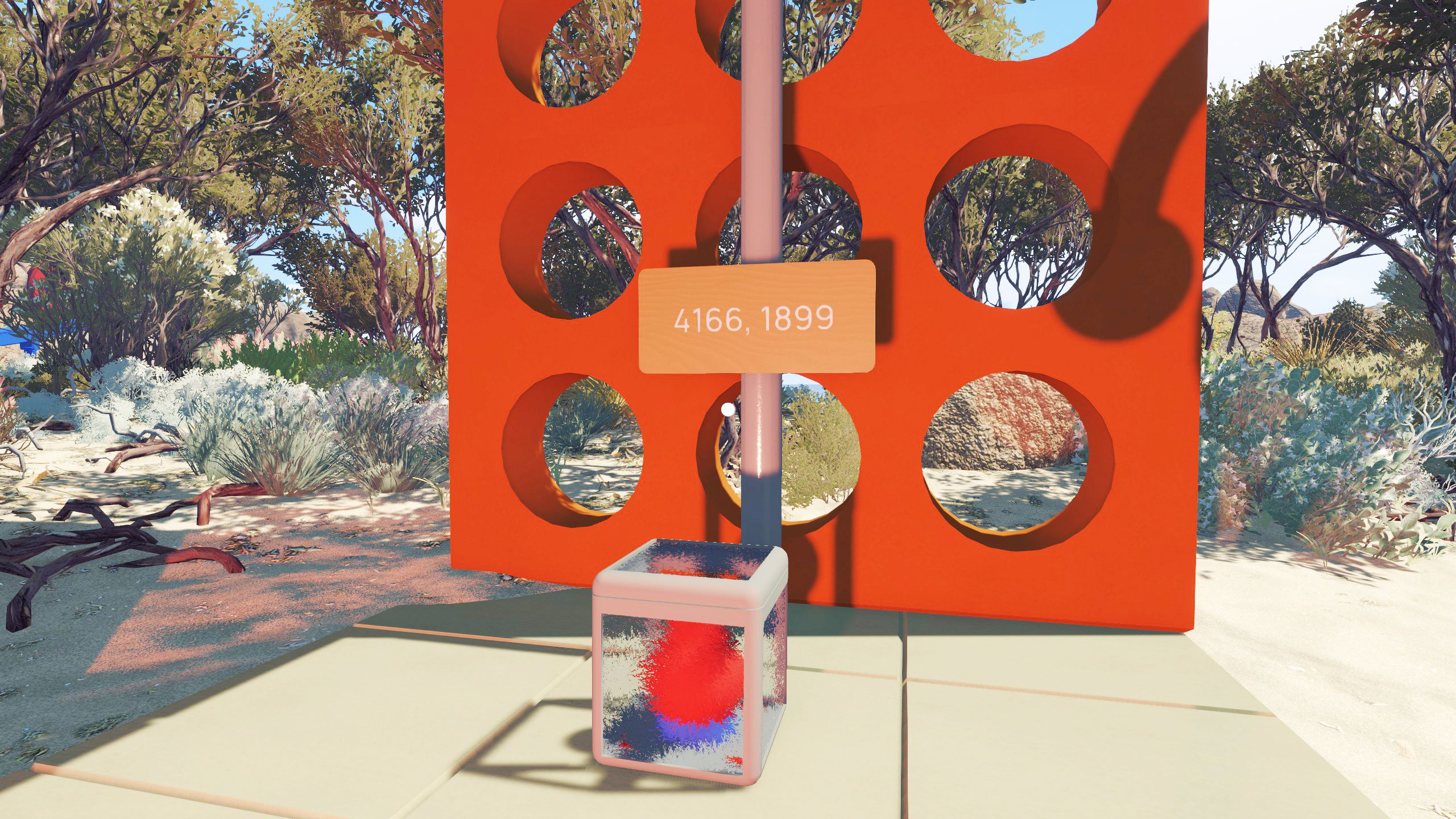
Cooperative puzzle adventures have long relied on communication, spatial reasoning, and synchronization between players to deliver rewarding gameplay loops. In Panic’s Big Walk, these design philosophies reach a clever zenith, particularly through environmental riddles that require both macroscopic exploration and microscopic observation. Early in the game’s sprawling, whimsically surreal island setting, players inevitably stumble upon a frustratingly enigmatic obstacle near the coastline: a frosted glass container safeguarding an oblong, highly coveted prize affectionately dubbed by the community as a "nubbin."
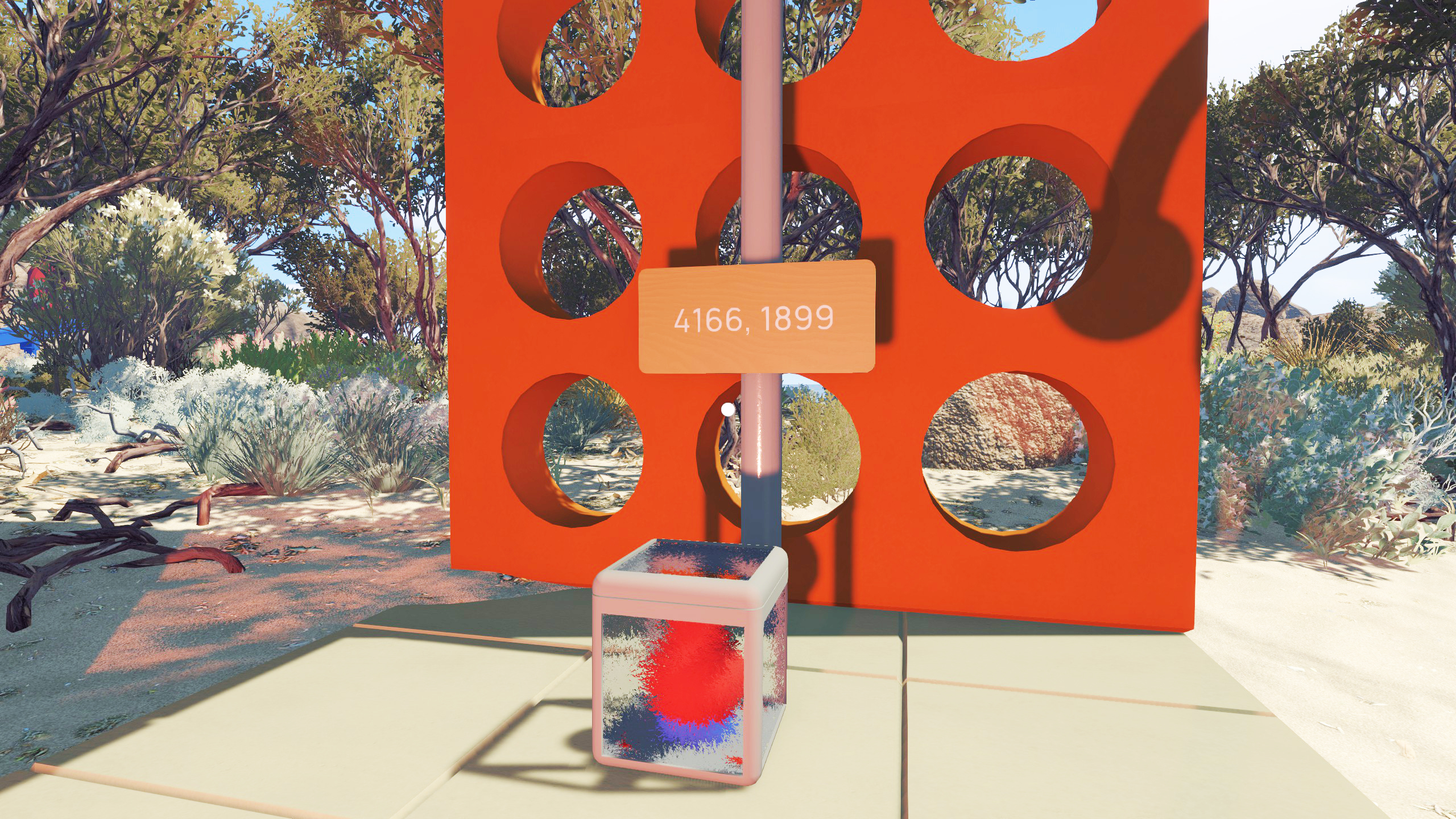
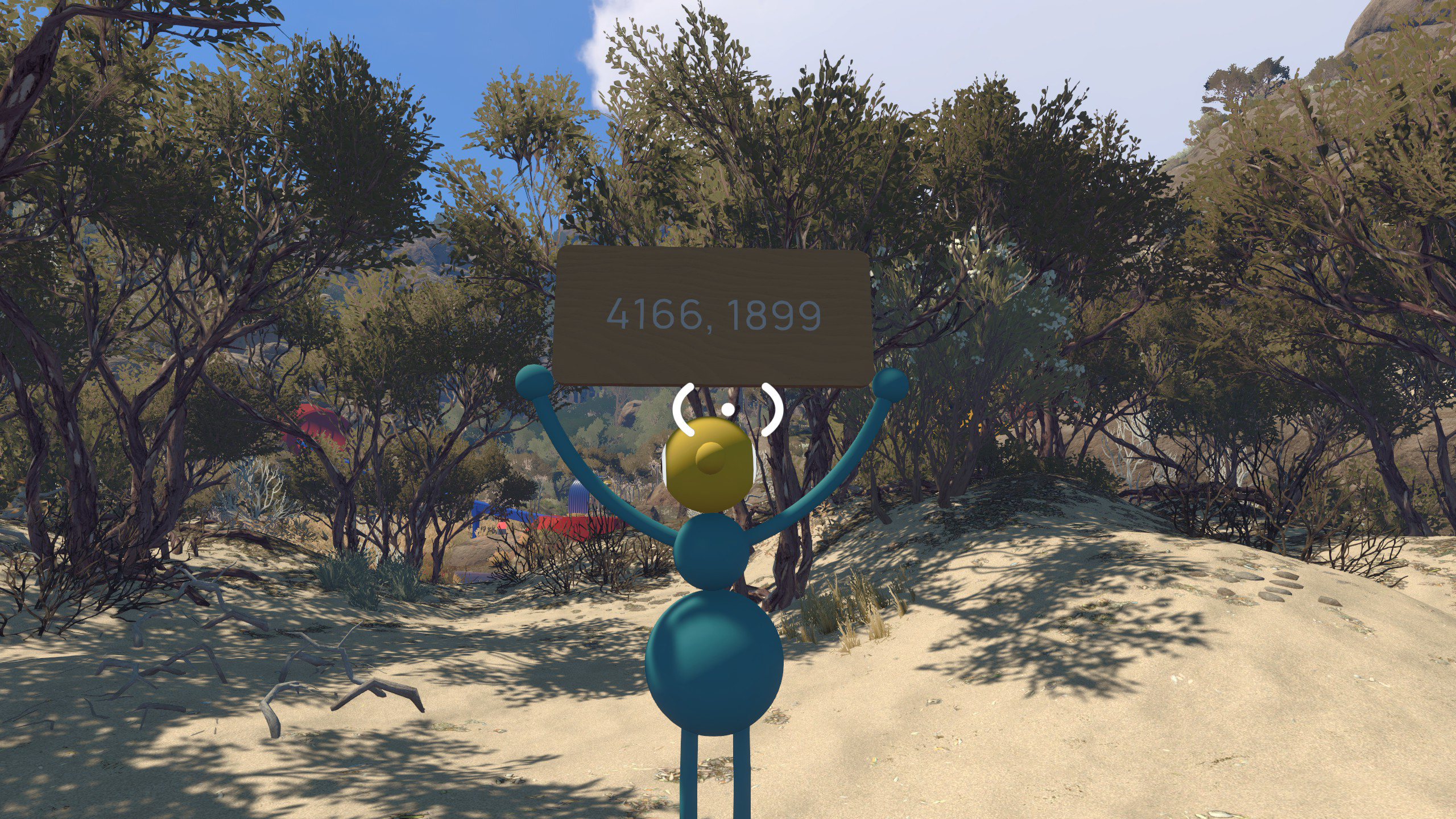
Suspended immediately above this prize container is a simple sign bearing two seemingly arbitrary four-digit numbers. For newcomers, this setup presents an immediate wall. The container is locked tight, the button required to open it is nowhere in sight, and the cryptographic significance of the numbers—4166 and 1899—remains entirely opaque.
Far from being an arbitrary design roadblock, this puzzle serves as a masterclass in progressive game design. It bridges the gap between early-game tutorial mechanics and mid-game navigational tools. Solving it requires more than just brute-force guessing; it demands that players master the island’s cartography, coordinate systems, and cooperative communication tools. This guide provides an exhaustive, authoritative breakdown of the puzzle, offering carefully tiered hints, detailed chronological steps, navigational mechanics, and strategic insights to ensure your team unlocks the nubbin and deepens its collaborative synergy.
Detailed Chronology: From First Encounter to Final Unlock
Navigating the mysteries of Big Walk requires patience and structural progression. Approaching the beachside number puzzle too early in your journey is a recipe for frustration. To successfully claim the nubbin, players must progress through a distinct chronological sequence of milestones.
Phase 1: The Initial Discovery and Premature Stumps
When you first explore the shoreline shortly after completing the introductory tutorial puzzles, the beachside structure presents an impenetrable barrier. You will notice the frosted glass container locking away the nubbin and the hanging sign displaying the coordinates. At this stage, attempting to look for the activation button is entirely futile. The mechanics required to interpret the numbers have not yet been unlocked, and the physical area housing the trigger mechanism remains closed off or poorly understood.
Phase 2: Advancing the Core Narrative and Red Tower
The golden rule of early-game Big Walk progression is knowing when to walk away. Rather than banging your head against the beachside puzzle, your team should pivot toward primary exploration. Your immediate goal is to complete five standard puzzles scattered across the surrounding environment and successfully conquer the red tower. This milestone is critical: placing five nubbins on the roof of the red tower acts as a massive world-state trigger, unlocking access to the island’s central cartography hub right next to your starting location.
Phase 3: Equipping Navigation Instruments
Once the cartography room is accessible, players gain entry to two vital items that transform how they interact with the island:
- The Map Room and Portable Map: Providing a comprehensive overhead view of the island alongside a foldable map and compass, this tool establishes a grid system based on latitude and longitude coordinates.
- The GPS Device: Located just outside the green tower—situated in the same regional biome that eventually houses the hidden button—this high-tech gadget dynamically displays real-time coordinates on an integrated screen.
Phase 4: triangulation and Cooperative Execution
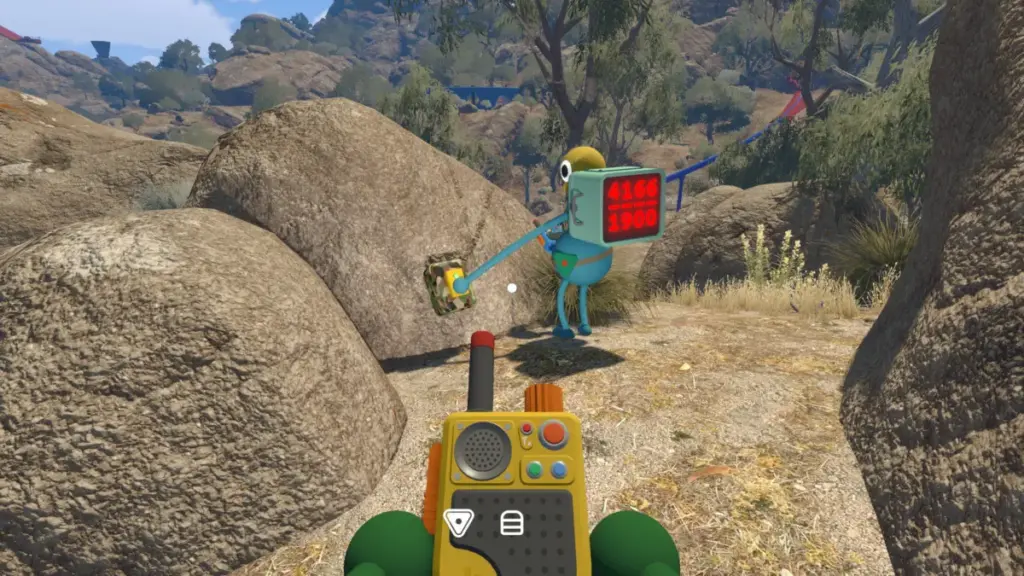
Armed with either the foldable map or the GPS device, players can finally translate the mysterious numbers (4166 and 1899) into actionable spatial intelligence. By establishing coordinates, deploying a team member equipped with walkie-talkies, and successfully locating the camouflaged button behind a rocky outcrop, the team can synchronize their actions. One player depresses the remote button while the other retrieves the liberated nubbin from the frosted container.
Supporting Context & Metrics: Decoding the Numbers
To truly master the mechanics behind the Big Walk beachside puzzle, one must understand how spatial data is encoded within the game’s universe. The numbers 4166 and 1899 are not arbitrary strings of code; they are precise cartographic coordinates corresponding to latitude and longitude lines overlaid on the island’s topography.
Understanding the Grid System
The island’s navigation layout relies on a localized coordinate plane:
- Longitude (X-axis equivalent / Side lines): Represented by base numbers such as 41, these vertical lines measure east-west positioning.
- Latitude (Y-axis equivalent / Top and bottom lines): Represented by base numbers such as 18, these horizontal lines measure north-south positioning.
- Sub-grid Precision: The additional digits (66 and 99) function as fractional increments. They dictate micro-locations within a specific grid sector. For instance,
4166indicates a position roughly two-thirds of the way down from the top boundary of grid sector 41, while1899points to a location pushed nearly to the eastern edge of sector 18.
Tool Comparison Matrix
| Tool | Location Found | Primary Function | Advantage | Disadvantage |
|---|---|---|---|---|
| Foldable Map & Compass | Starting Hub (Unlocked via Red Tower) | Displays overall grid layout and major landmarks. | Gives a macro perspective of the entire island at a glance. | Requires manual visual estimation for precise fractional coordinates. |
| GPS Device | Exterior of the Green Tower | Dynamically displays current real-time coordinates on a digital screen. | Offers active feedback; tells you instantly if you are getting closer or further. | Requires reaching the green tower/mid-game areas before it can be acquired. |
| Walkie-Talkies | Standard Starting Equipment | Long-range verbal communication between separated players. | Essential for timing the synchronized button press and container unlock. | None; vital for all cooperative interactions. |
Official Developer Insights & Design Philosophy
The development team at Panic has consistently emphasized that Big Walk is engineered explicitly to foster human connection through shared digital discovery. In developer commentary surrounding the game’s puzzle architecture, designers noted that traditional video game waypoints and intrusive minimaps were intentionally discarded in favor of diegetic exploration tools—objects that exist naturally within the game world, such as physical compasses, folded paper maps, and rugged handheld GPS units.
The beachside number puzzle serves as an intentional pedagogical tool. Early-game frustrations are purposefully engineered to encourage players to look beyond their immediate surroundings, consult with one another, and experiment with newly acquired gear. By forcing players to physically hold a GPS device on their backpack or interpret grid lines on a folding map, the game transforms navigation from a passive interface task into an active, communicative cooperative experience.
Furthermore, developers highlighted the inclusion of multiple pathways to solve the same problem—such as choosing between map-based triangulation and active GPS tracking—as a core pillar of player freedom. Whether a team prefers the analog charm of paper cartography or the technological feedback loop of a digital readout, both methods validate the players’ deductive reasoning.
Future Outlook: The Evolution of Cooperative Puzzles in Big Walk
As Big Walk continues to capture the imagination of puzzle enthusiasts and co-op gamers alike, the discovery of the beachside number puzzle sets a high benchmark for what players can expect from future content updates and expansions.
The positive reception of diegetic navigation puzzles signals a clear appetite for mechanics that discourage solo "wiki-crawling" and instead promote organic communication over voice chat or walkie-talkies. Moving forward, the community anticipates that subsequent biomes and endgame towers will introduce even more complex coordinate systems, multi-tiered puzzle dependencies, and environmental hazards that require split-second team coordination.
For developers aiming to craft memorable multiplayer experiences, Big Walk provides a vital blueprint: do not hand the player the answer; instead, give them the tools, teach them how to read the world, and let the joy of collaborative discovery do the rest. Whether you are a lone explorer or part of a tightly knit squad, cracking codes like 4166 and 1899 proves that the true reward isn’t just the prize inside the container—it’s the shared journey taken to reach it.