Navigating the Ink: How a Simple Menu Prompt Sparked a Support Wave and Led to Splatoon Raiders’ Version 1.1.1 Update
Executive Overview
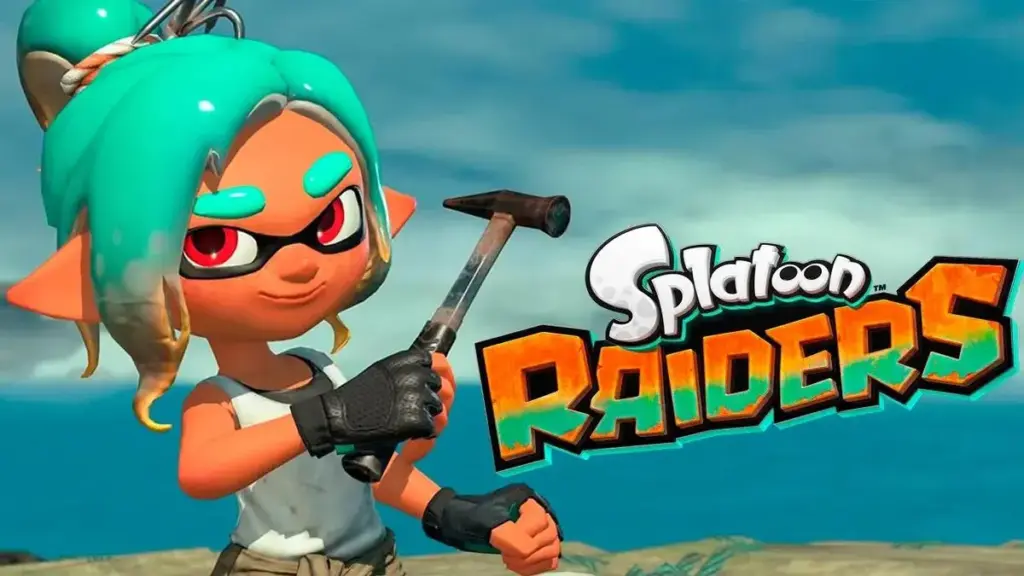
The launch of a major tentpole franchise title is always a high-stakes, meticulously choreographed affair. When Nintendo unleashed Splatoon Raiders on the Nintendo Switch 2 last month, it arrived amid a tidal wave of critical acclaim and fervent anticipation. Eschewing a traditional mainline numerical entry for the time being, Nintendo opted to take the beloved cephalopod shooter franchise in a daring new stylistic and mechanical direction. The resulting title quickly dominated physical and digital sales charts, capturing the imaginations of both longtime veterans and franchise newcomers.
Yet, even the most polished, critically adored video game launches are rarely immune to unforeseen user-experience friction points. Shortly after release, a surprisingly pervasive issue began bubbling across social media platforms, dedicated fan forums, and customer service desks. Players progressing through the game’s core loop were encountering a specific progression hurdle aboard the Hideout Ship—one centered entirely around upgrading their Tanks and releasing the infamous "tank limiter." Due to a subtle ambiguity in the user interface design, thousands of players erroneously concluded that their save files had been catastrophically "soft-locked," triggering a flurry of confused panic online and an unprecedented wave of direct inquiries to Nintendo’s customer support division.
What followed is a fascinating case study in modern game development, UI/UX communication, and rapid post-launch iteration. Initially attempting to stem the tide of confusion through a targeted social media PSA on X (formerly Twitter), Nintendo ultimately decided that a structural fix was required. The deployment of the Version 1.1.1 update for Splatoon Raiders completely revamps the interaction logic, removing the requirement to hold down a button entirely. Beyond resolving this infamous menu hiccup, the fresh patch addresses lingering stability issues, including a peculiar crash linked to the Nintendo Switch 2’s advanced touchscreen capabilities. This report provides a comprehensive examination of the Splatoon Raiders launch phenomenon, the anatomy of a soft-lock panic, the swift corporate response, and what this episode reveals about the evolving expectations of modern game design.
Detailed Chronology: From Launch Day Buzz to the Version 1.1.1 Patch
The Honeymoon Phase and the Hideout Ship
In late July 2026, Splatoon Raiders dropped onto the Nintendo Switch 2 to a rapturous reception. Reviewers praised its inventive blend of cooperative tactical combat, atmospheric world-building, and slick traversal mechanics. Players eagerly dove into the campaign and multiplayer suites, spending hours exploring the maritime environments, customizing gear, and testing out the new arsenal.
As players naturally progressed past the opening hours of the game, their journeys inevitably led them to the central hub area: the Hideout Ship. Serving as the logistical and narrative heartbeat of Splatoon Raiders, the Hideout Ship is where players manage their resources, coordinate missions, and, crucially, enhance their combat capabilities. Central to this progression system is the Tank upgrade mechanic.
By collecting specialized skill points through successful excursions, players could unlock various tiers of passive and active boosts for their primary gear. However, reaching the upper echelons of these upgrade trees required a milestone action: releasing the tank limiter. Once a player accumulated a specific threshold of skill points, the interface would present them with the option to remove this limiter, ostensibly opening the floodgates to higher-tier upgrades and granting a profound sense of empowerment.
The Anatomy of a "Soft-Lock" Panic
Despite the overall fluidity of the user interface, a specific friction point materialized at this exact progression crossroads. Releasing the tank limiter required the player to execute a "long press"—specifically, holding down the ‘A’ button for a designated duration while hovering over the prompt.
In the high-speed, hyper-responsive world of modern action games, players are conditioned to expect immediate feedback from button presses. A single click confirms a purchase; a single click selects a menu option; a single tap triggers a dialogue progression. Unfortunately, the visual affordance communicating the "hold to confirm" mechanic in Splatoon Raiders was subtle—some critics argued it was dangerously easy to miss amid the vibrant UI overlays.
When players simply tapped the ‘A’ button as they had thousands of times before, nothing happened. The limiter remained stubbornly in place, the advanced upgrades stayed locked, and the game offered no overt error message explaining why the action failed.
Within days of the game’s release, social media feeds began lighting up with anxious queries. "Is my game bugged?" "Did I break my save file?" "How do I get past the tank limiter?" The panic snowballed into whispers of a game-breaking soft-lock. To thousands of players who had invested dozens of hours into their playthroughs, the prospect of being permanently barred from the end-game progression loop felt like a catastrophic failure of quality assurance. The psychological impact of a perceived soft-lock cannot be understated; it instantly sours an otherwise stellar experience, transforming a moment of triumph into acute frustration.
Nintendo’s Triage: From Social Media PSA to Code-Level Resolution
As the volume of customer support tickets mounted, Nintendo’s localized service divisions recognized that an informal online consensus wouldn’t be enough to quell the rising tide of confusion. The sheer volume of inquiries forced the company’s customer service handle on X to issue a direct, public clarification. The post carefully walked players through the mechanics, explicitly reminding them that they needed to press and hold the ‘A’ button for a brief duration to trigger the limiter release.
While the social media advisory successfully placated a segment of the player base, internal telemetry and support metrics likely revealed that the underlying design friction remained an unacceptable barrier to entry. For a company renowned for its frictionless, intuitive "Nintendo polish," leaving a core upgrade path dependent on an easily misunderstood input mechanism was a blemish worth erasing entirely.
Enter the Version 1.1.1 update, scheduled for release on August 6, 2026. Eschewing the temporary fix of better text tutorials or brighter UI highlights, Nintendo opted for a definitive code-level alteration. With the deployment of Ver. 1.1.1, the requirement to hold down the ‘A’ button to release the tank limiter has been entirely excised. A simple, instantaneous button press now suffices, aligning the mechanic with player muscle memory and eliminating any potential for confusion.
Supporting Context & Metrics: UI/UX Friction in the Modern Era
To fully appreciate why a seemingly minor button-hold requirement caused such a widespread uproar, one must examine the broader context of user interface (UI) and user experience (UX) design in contemporary gaming, particularly within Nintendo’s ecosystem.
The Legacy of "Nintendo Polish"
Nintendo has historically set the gold standard for intuitive game design. From the directional pad on the NES to the touchscreen integration of the Nintendo DS and the motion controls of the Wii, the company’s philosophy has largely revolved around transparency, immediate feedback, and minimal cognitive load. Players expect Nintendo games to be so inherently understandable that manuals have become historical relics.
When a Nintendo-published title—even one operating within an evolved spin-off franchise like Splatoon Raiders—violates this unwritten contract of intuitive design, the friction feels jarring. A player encountering a dead end in a game they trust to guide them effortlessly will often blame the software before blaming their own reading comprehension. This creates a psychological magnification of the issue, turning a minor oversight into a major talking point.
The Switch 2 Hardware Transition and Touchscreen Quirks
Compounding the menu confusion was the hardware context of the Nintendo Switch 2. As a generational leap forward, the Switch 2 introduced expanded processing power, advanced display tech, and more robust capacitive touchscreen capabilities. Splatoon Raiders heavily utilizes these new hardware features, allowing for seamless transitions between traditional controller inputs and touch-based menu navigation.
Interestingly, the Version 1.1.1 patch notes reveal that the menu issue was not the only quirk targeted by developers. The update also addresses a rare, highly specific crash that could occur when players used the Switch 2 touchscreen to swirl around the atmospheric fog during the game’s startup sequence. While this visual flourish was a neat demonstration of the console’s hardware capabilities, its interaction with the game’s engine occasionally triggered memory leaks or unexpected exception errors.
The fact that Nintendo bundled the tank limiter fix alongside touchscreen stability patches underscores a critical reality of modern game development: hardware ecosystems are increasingly complex, and player behaviors across hybrid input methods (buttons, analog sticks, touch panels) present a vast matrix of potential edge cases that even rigorous pre-release testing can struggle to fully map.
Official Statements and Developer Insights
While formal post-mortem retrospectives from Nintendo’s internal development studios are typically saved for industry-specific developer conferences like CEDEC or GDC, the rollout of the Version 1.1.1 update speaks volumes about the studio’s reactive agility.
In the initial advisory distributed via official channels, Nintendo representatives emphasized their commitment to monitoring player feedback in real-time. The rapid turnaround from launch-day social media murmurs to a fully deployed patch—roughly three weeks—highlights an agile deployment pipeline capable of pivoting quickly when user-experience bottlenecks threaten community goodwill.
Industry analysts tracking the release have noted that Nintendo’s willingness to fundamentally alter a mechanical interaction (rather than merely adding a tooltip or loading screen hint) demonstrates a rare humility in modern AAA development. Too often, developers double down on intentional design choices, insisting that players simply need to "git gud" or pay closer attention. By removing the hold-to-confirm requirement entirely, Nintendo tacitly acknowledged that the original design choice created unnecessary friction and chose to prioritize frictionless player progression over rigid adherence to an initial artistic vision.
Future Outlook: What Splatoon Raiders Means for the Franchise’s Evolution
The minor storm in a teacup surrounding the tank limiter in Splatoon Raiders is ultimately a footnote in what is shaping up to be one of the most successful platform transitions in recent memory. By stepping away from the predictable cadence of a mainline Splatoon 4 and instead exploring the cooperative, narrative-driven mechanics of Raiders, Nintendo has injected vital new energy into a universe that risk becoming creatively stagnant.
As the dust settles on the Version 1.1.1 update, the outlook for Splatoon Raiders remains exceptionally bright. The swift resolution of the Hideout Ship menu confusion has effectively neutralized the only significant community complaint leveled at the title, leaving critics and fans free to focus on the game’s stellar mechanical depth, inventive level design, and vibrant multiplayer engagement.
Looking forward, this episode serves as an instructive lesson for both Nintendo and the wider gaming industry regarding the delicate balance between modern complexity and classic accessibility. As consoles like the Nintendo Switch 2 continue to push the boundaries of hybrid hardware, developers must remain hyper-vigilant about how players interact with UI elements across diverse control schemes.
For the legions of players currently scouring the maritime depths of Splatoon Raiders, the road ahead is now entirely clear—both metaphorically and literally. With the tank limiter hurdle permanently removed and system stability shored up, the community can dive back into the ink with total confidence, leaving behind the phantom fears of soft-locks and embracing the chaotic, colorful world Nintendo has so masterfully crafted.