Nintendo Switch 2 Smashes Milestone: Liftoff Sales Surpass the GameCube in Record Time
Executive Overview
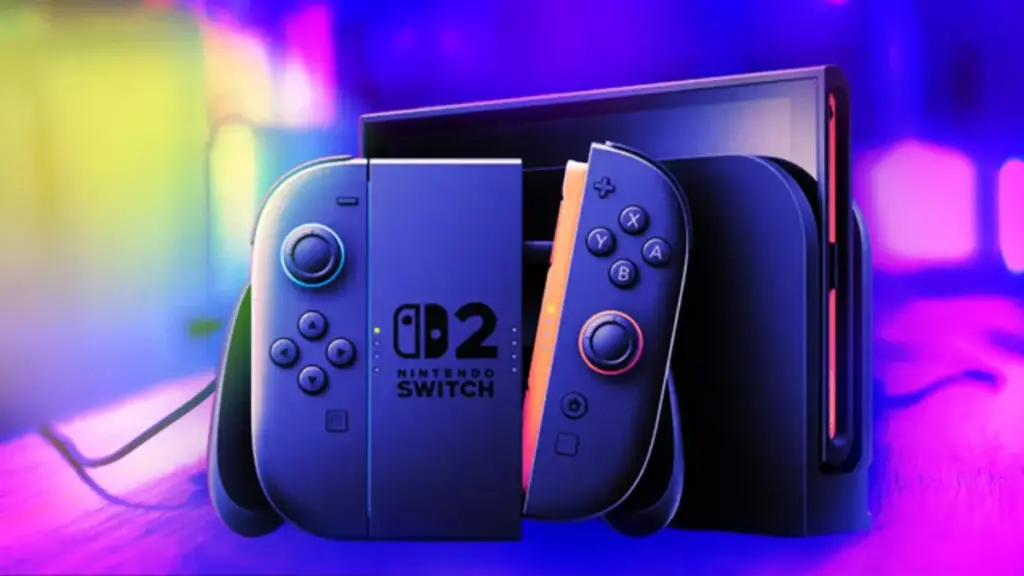
In the fast-paced and hyper-competitive landscape of the modern video game industry, few milestones capture the public imagination quite like the meteoric rise of a brand-new hardware platform. Nintendo, a company with a storied history of both staggering triumphs and occasional commercial miscalculations, has once again proven its uncanny knack for hardware reinvention. According to official financial documentation released by the Kyoto-based gaming giant, the Nintendo Switch 2 has officially reached a staggering 23.68 million units sold globally since its launch in June 2025.
This monumental achievement arrives just over a year into the console’s lifecycle, marking a velocity of adoption that has caught even seasoned industry analysts by surprise. Most notably, this current sales figure means the Nintendo Switch 2 has officially eclipsed the entire lifetime sales tally of the iconic, cult-classic Nintendo GameCube, which closed its historical ledger at 21.74 million units worldwide.
The ramifications of this milestone extend far beyond a mere historical trivia point about corporate legacy. It underscores a profound validation of Nintendo’s transitional strategy, proving that consumer appetite for an upgraded hybrid platform—tailored with modern fidelity, backwards compatibility, and refined ergonomics—remains virtually insatiable. As the industry parses through the company’s latest financial reports, the narrative surrounding the Nintendo Switch 2 is no longer just about a successful launch; it is about the establishment of a new hardware juggernaut capable of outperforming historical console generations in a fraction of their lifespan.
Detailed Chronology: The Road from Rumor to Retail Supremacy
To truly understand the weight of the Nintendo Switch 2’s current triumph, one must retrace the meticulous, years-long buildup that preceded its arrival in June 2025. For the better part of a decade, the original Nintendo Switch dominated global gaming charts, eventually creeping toward the stratosphere of historical sales records alongside titans like the PlayStation 2 and Nintendo DS. However, as technological horizons expanded and third-party developers began pushing the limits of aging mobile architecture, the industry’s gaze inevitably shifted toward the horizon: What comes next?
The Pre-Launch Era: Anticipation and Speculation (2023–2024)
Long before official hardware was showcased, the games industry was consumed by whispers, leaks, and developer-kit rumors regarding Nintendo’s successor system. Whispers from hardware component suppliers and patent filings pointed toward a more powerful, magnetically docked system equipped with modern upscaling capabilities. Consumers grew restless, yet Nintendo maintained a disciplined silence, allowing the original Switch to coast through its twilight years on the back of heavy-hitting first-party titles like The Legend of Zelda: Tears of the Kingdom.
The June 2025 Genesis
When Nintendo finally pulled back the curtain and deployed the console to retail shelves in June 2025, the response was instantaneous and overwhelming. Global launch day queues spanned city blocks, and major online retailers experienced immediate stock depletion. Unlike the supply-chain-plagued launches of previous generations, Nintendo orchestrated a robust distribution pipeline, though demand consistently outstripped supply during the crucial summer and autumn windows.
[June 2025: Global Launch] ──> [Late 2025: Holiday Surge] ──> [Mid 2026: 23.68M Milestone]
        │                              │                              │
  Immediate Sell-Outs          Surpasses 15M Units           Beats GameCube Lifetime
The Software Engine and Firmware Iterations
Hardware hardware alone does not a platform make; the software ecosystem must sustain the momentum. The months following the launch saw a steady stream of optimized software, punctuated by high-profile releases and iterative system software updates. As recently as August 2026, Nintendo has actively fine-tuned the user experience—such as pushing out updates to address specific legacy emulation quirks (including recent patches for Xenoblade Chronicles series data and GameCube app optimizations)—demonstrating a proactive approach to hardware and software maintenance that has endeared the platform to core and casual gamers alike.
Supporting Context & Metrics: Analyzing the GameCube Benchmark
Comparisons in the gaming industry are frequently drawn between contemporary hardware and past legends, but the juxtaposition of the Nintendo Switch 2 and the Nintendo GameCube offers a fascinating study in contrasting corporate eras, market conditions, and consumer behaviors.
The GameCube Legacy: A Cult Classic Underdog
Released globally between 2001 and 2002, the GameCube was celebrated for its powerhouse architecture, compact design, and an extraordinary roster of critically acclaimed first-party masterpieces—including Super Smash Bros. Melee, Metroid Prime, The Wind Waker, and Pikmin. Despite its technical prowess and legendary software library, the GameCube faced fierce competition from Sony’s indomitable PlayStation 2 and Microsoft’s disruptive market entry with the original Xbox. It ultimately finished its commercial run at roughly 21.74 million units sold, a respectable figure that nonetheless left it trailing behind its historical peers.

The Switch 2 Velocity Factor
When evaluated against this historical baseline, the velocity of the Nintendo Switch 2 is nothing short of breathtaking. Reaching 23.68 million units sold in roughly 14 months means the Switch 2 has accomplished in slightly over a year what took the GameCube an entire generation—approximately six to seven years—to achieve.
| Metric / Feature | Nintendo GameCube (2001–2007) | Nintendo Switch 2 (2025–Present) |
|---|---|---|
| Form Factor | Traditional Home Console (Mini-Disc) | Hybrid (Portable & TV Docked) |
| Lifetime Sales | 21.74 Million | 23.68 Million (Achieved in ~14 months) |
| Market Landscape | Highly fragmented (PS2 dominance) | Unified ecosystem with direct legacy continuity |
| Software Distribution | Physical Optical Media Exclusively | Hybrid Physical Media + Robust Digital Infrastructure |
This disparity highlights a structural shift in how modern consumers consume entertainment. The hybrid nature of the platform—allowing seamless transitions between high-definition living room play and portable handheld gaming—broadens its demographic appeal exponentially. Furthermore, the modern gaming market is vastly larger, more globalized, and culturally integrated than it was at the turn of the millennium.
Official Statements and Corporate Strategy
The confirmation of these milestone figures came directly via Nintendo’s latest financial disclosures and corporate briefings published in August 2026. Leadership within the company has expressed cautious optimism, attributing the rapid adoption rate to a combination of strategic software lineups, robust hardware availability, and a smooth generational transition plan.
In corporate statements accompanying the financial reports, Nintendo executives emphasized the importance of maintaining software momentum. Rather than treating the Nintendo Switch 2 as a completely isolated ecosystem, the company has heavily leveraged backward compatibility and cross-generation software enhancements. This strategy has drastically reduced the traditional "dry spells" that often plague new console launches, ensuring that early adopters always have a robust library of both native next-generation experiences and enhanced legacy titles to explore.
Furthermore, Nintendo’s leadership continues to balance commercial aggressiveness with corporate social responsibility. Alongside financial announcements regarding hardware milestones, the company has actively engaged in philanthropic endeavors—such as committing significant financial relief funds to earthquake recovery efforts in regions like Kumamoto—cementing its cultural footprint as a stable, community-oriented corporate citizen.
Future Outlook: What Lies Ahead for the Platform?
As the Nintendo Switch 2 settles comfortably past its initial launch phase and sets its sights on broader horizons, the central question for industry watchers is no longer if the console will succeed, but how high its ceiling truly is.
Software Horizons and Third-Party Support
The immediate future of the platform relies heavily on the upcoming software pipeline. Having already established a massive installed base of over 23 million users in record time, the platform has become an increasingly attractive destination for third-party publishers and independent developers alike. The install base critical mass incentivizes major studios to port large-scale modern titles and develop exclusive experiences tailored specifically to the console’s enhanced hardware capabilities and unique control schemes.
Hardware Evolution and Market Penetration
Looking further down the road, hardware iterations—such as potential revisions focused on battery efficiency, display technology, or specialized bundles—will likely play a role in sustaining sales momentum through upcoming holiday seasons. As the original Nintendo Switch slowly cedes its remaining market share, the Switch 2 is well-positioned to capture migrating users seamlessly, thanks to integrated account systems and cloud save architectures.
Conclusion
Surpassing the lifetime sales of the GameCube in just over a year is a watershed moment for the Nintendo Switch 2. It validates Nintendo’s hardware philosophy, rewards consumer trust in backward compatibility and hybrid design, and establishes a formidable foundation for the years to come. As developers continue to unlock the system’s potential and millions of new players unbox their consoles worldwide, the Nintendo Switch 2 is cementing its place not just as a worthy successor, but as one of the defining hardware platforms of its generation.