
Culinary Combat in the Depths: An In-Depth Look at Abyss Kitchen

Executive Overview
The survival action genre is saturated with titles that demand relentless combat, twitch-reflex parrying, and endless waves of mindless monster slaughter. From dark fantasy souls-likes to top-down bullet hells, the core fantasy has remained largely unchanged: pick up a weapon, swing it until everything is dead, and repeat. However, indie developers are continuously searching for clever subversions to inject fresh blood into aging templates. Enter Abyss Kitchen, a unique survival action game that flips the traditional combat dynamic on its head.
In Abyss Kitchen, players are cast not as the legendary frontline warriors cleaving through hordes of darkness, but as the indispensable culinary backbone of the expedition. While your AI or co-op companions handle the heavy lifting of frontline combat—slashing through aggressive monsters and defending your perimeter—your true battlefield is the harvest. Armed primarily with a trusty bow for self-defense and ranged support, your primary objective is to hack away at towering blades of grass, harvest organic materials, butcher fallen foes, and frantically whip up gourmet dishes under extreme pressure.
By combining real-time resource management, tactical crafting, and cooperative battle formations, Abyss Kitchen offers a refreshing twist on traditional survival mechanics. Originally showcased to eager crowds at the renowned Hyper Japan festival, the title has officially launched on Steam, inviting players worldwide to test their multitasking mettle. This comprehensive review and investigative overview explores the mechanics, strategic depth, and unique appeal of one of the most inventive survival titles of the year.
Detailed Chronology: From Concept to Convention Floor and Steam Launch
The journey of Abyss Kitchen from an ambitious design concept to a fully realized Steam release represents the classic trajectory of modern indie game development: high-concept innovation meeting grassroots exposure.
Phase 1: Conceptualization and Prototyping
The core premise of Abyss Kitchen was born out of a desire to address a common trope in role-playing and survival games: the overworked, under-appreciated support class. While many games allow players to heal or buff teammates from afar, very few translate the logistical nightmare of field cooking into a high-stakes, fast-paced action game. The development team set out to create a title where victory is dictated not by DPS (damage per second) alone, but by macro-management, spatial awareness, and timely sustenance.
Prototypes focused heavily on the rhythm of the gameplay loop:
- Harvesting: Gathering raw materials from environmental obstacles like dense flora and defeated creature remains.
- Processing: Managing a portable cooking station amidst a chaotic battlefield.
- Buffing: Distributing meals to frontline fighters to turn the tide of difficult encounters.
- Defense: Utilizing ranged bow attacks to pick off stray enemies threatening the kitchen setup.
Phase 2: The Hyper Japan Showcase
A pivotal milestone in the game’s public awareness campaign occurred at Hyper Japan, the UK’s premier celebration of Japanese culture, food, and entertainment. Positioned among bustling exhibition floors and enthusiastic convention-goers, the playable demo of Abyss Kitchen served as an immediate crowd-pleaser.
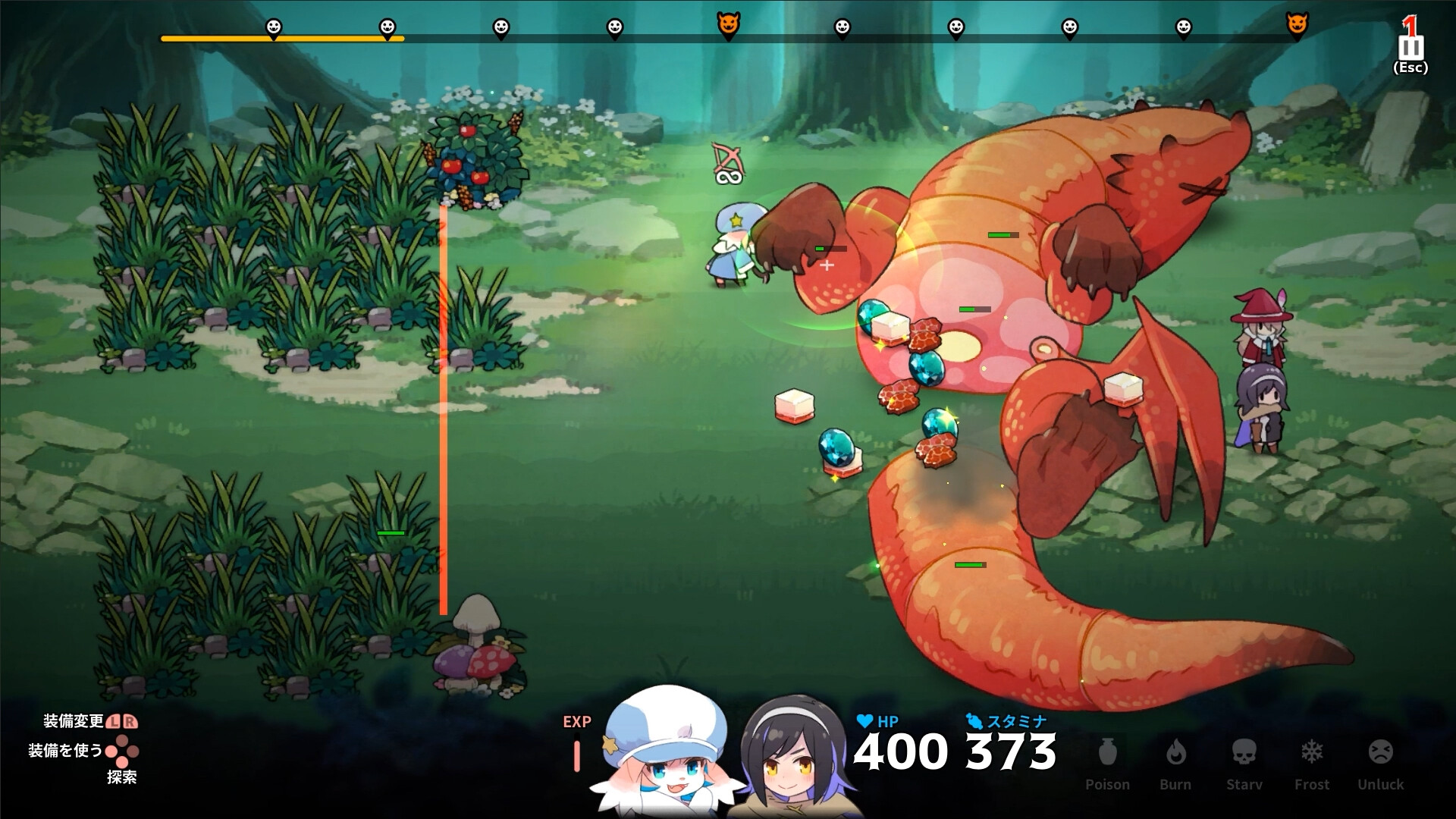
The convention environment proved to be the ultimate stress-test for the game’s accessibility and cooperative charm. Attendees passing by were instantly drawn to the colorful, chaotic juxtaposition of intense monster combat juxtaposed with frantic cooking animations. Solo players and groups huddled around demo stations, shouting orders across the virtual kitchen: "We need HP recovery now!" or "Clear those grass blades, I’m out of ingredients!" The positive reception at Hyper Japan provided the developers with invaluable player feedback, helping fine-tune the game’s balancing, controls, and UI responsiveness ahead of its official release.
Phase 3: The Steam Release and Beyond
Following the positive buzz generated at convention circuits, Abyss Kitchen officially launched its digital storefront presence on Steam. The release marks the beginning of its lifecycle as an accessible indie title for PC gamers looking for something outside the standard combat-heavy survival loop. With the community now diving into the game’s depths, the developers are poised to monitor player metrics, expand content updates, and refine the chaotic culinary ecosystem.
Supporting Context & Metrics: Redefining the Survival Genre
To truly understand the innovation behind Abyss Kitchen, one must examine the current landscape of the survival action genre and the specific mechanical balance the game strikes.
The Survival Action Ecosystem
Traditional survival games—ranging from Don’t Starve to Valheim—incorporate crafting and cooking as foundational pillars of progression. However, in these games, cooking is typically a preparatory activity performed in the safety of a base camp between excursions. Players forage during the day, return home, cook meals in a secure environment, and consume them before the next major expedition.
Abyss Kitchen radically alters this temporal flow by forcing players to cook in active combat zones. There is no safe base camp; the kitchen is mobile, hazardous, and situated right in the thick of the fray. This introduces a high-pressure multitasking element reminiscent of frantic kitchen simulators (such as Overcooked), but infused with the grim aesthetics and survival mechanics of an action RPG.
Core Gameplay Metrics and Mechanics
- Resource Conversion Rate: Every obstacle in the environment—from overgrown vegetation to the carcases of vanquished beasts—yields specific organic components. Players must quickly categorize these drops to determine whether they belong in a defensive stew, an offensive elixir, or a healing poultice.
- Buff Specialization: The culinary output directly influences party performance across multiple statistical axes:
- HP Recovery Dishes: Essential for sustaining teammates who absorb the brunt of monster aggression.
- Attack Power Boosts: Targeted meals that elevate the offensive output of frontline fighters, allowing them to slice through larger enemy waves more efficiently.
- Mobility and Utility Buffs: Specialized recipes designed to help the team navigate dense enemy formations and reposition quickly.
- Formation Mechanics: While the chef operates primarily from the rear, absolute isolation is a death sentence. The game incorporates a dynamic formation system. If enemies break through the frontline, the entire party—including the chef—must cluster together to erect a defensive barrier. Failing to maintain this tactical cohesion results in overwhelming enemy swarms breaking through and obliterating the party.
Official Insights & Design Philosophy
Speaking on the creative philosophy driving Abyss Kitchen, early playtest observations and developer notes highlight a desire to foster genuine cooperative interdependency among players.
Too often in multiplayer action games, support roles feel marginalized or reduced to passive skill cooldown watchers. Abyss Kitchen elevates the support player to the epicenter of party survival. Without the chef constantly scavenging, butchering, and plating meals under duress, the frontline warriors inevitably succumb to attrition.
"We wanted to design a game where the person holding the spatula is just as important—and feels just as heroic—as the person swinging the broadsword," notes an early design overview from the development team. "Survival isn’t just about how hard you hit; it’s about how well you sustain your team when the abyss pushes back."
This philosophy extends to the inclusion of the player’s ranged bow weapon. While combat is not the primary focus, the developers recognized that sitting entirely idle while waiting for ingredients to cook would lead to pacing issues. Giving the chef a bow ensures they remain active participants in the skirmish, capable of sniping stray threats, interrupting enemy spellcasters, or clearing minor nuisances before they reach the cooking station.
Future Outlook: What Lies Ahead for Abyss Kitchen?
As Abyss Kitchen establishes its footprint on Steam following its successful exhibition run at Hyper Japan, the horizon looks rich with potential. The fusion of fast-paced arcade cooking mechanics with tactical survival action opens up numerous avenues for future expansion.
Potential Expansion Vectors
- New Culinary Regions & Biomes: Future updates could introduce distinct environmental zones—such as volcanic trenches, icy caverns, or toxic swamps—each featuring unique flora, native fauna, and specialized recipes that require exotic cooking techniques.
- Expanded Multiplayer Integration: While the game thrives on cooperative dynamics, deepening lobby systems, online matchmaking, and role specialization (e.g., dedicated sous-chefs, foragers, and archers) could elevate the title into an esports-adjacent party game.
- Advanced Recipe Crafting Systems: Introducing more complex, multi-stage culinary recipes could test the communication limits of co-op teams, rewarding high-level coordination with game-breaking buffs.
Final Verdict
Abyss Kitchen proves that innovation in indie gaming often stems from taking two completely unrelated mechanics—survival monster hunting and restaurant-style time management—and smashing them together with conviction. By demanding that players balance the blade with the frying pan, the game delivers an engaging, stressful, and deeply rewarding experience.
Whether you are looking to test your multitasking limits with friends or simply tired of standard hack-and-slash routines, Abyss Kitchen offers a flavorful breath of fresh air. Available now on Steam, it is a culinary expedition well worth undertaking.