
The Great Hardware Crunch: Navigating the Storm of Rising Component Costs, Digital Shifts, and the Future of Gaming
Executive Overview
The video game industry finds itself at a historical crossroads. For decades, the foundational economic model of console gaming relied on a predictable, deflationary hardware curve: as manufacturing lines matured and silicon components became more efficient, consoles dropped in price over their lifecycle, expanding their audience and driving software sales to new heights. Today, that time-tested paradigm has completely inverted.
Driven by global macroeconomic pressures, soaring demand for enterprise artificial intelligence infrastructure, lingering supply chain bottlenecks, and volatile geopolitical trade policies, the cost of manufacturing modern gaming hardware has skyrocketed. Industry giants like Nintendo, Sony, and Microsoft have been forced into unprecedented price hikes across their console ecosystems, while hardware manufacturing costs threaten to push next-generation systems—such as the rumored PlayStation 6 and Microsoft’s Xbox Project Helix—toward a daunting $1,000 price point.
Compounding these hardware woes are structural shifts in consumer habits. The transition away from physical media is accelerating at an alarming rate, underscored by Sony’s recent announcement to sunset physical disc production for new games by 2028. Simultaneously, the industry faces an unprecedented demographic challenge: the traditional pipeline of younger players transitioning into the console ecosystem is stuttering, raising critical questions about long-term market sustainability.
Yet, amidst this turbulence, industry leaders maintain a cautiously optimistic outlook. Speaking recently with The Game Business, Unity Technologies CEO Matthew Bromberg argued that current industry pressures, while extreme, are fundamentally temporary aberrations. Pointing to upcoming generational blockbusters like Grand Theft Auto, a vibrant development community, and the promise of a technological renaissance over the next decade, Bromberg suggests that the best years of interactive entertainment are still ahead. This report investigates the multifaceted crises facing modern gaming hardware, analyzes the macroeconomic factors reshaping the market, and weighs the stark warnings of market analysts against the visionary optimism of industry leaders.
Detailed Chronology: How the Console Market Reached a Tipping Point
To understand how the gaming industry arrived at its current predicament, one must trace the compounding disruptions that have rattled global supply chains over the past five years.
The Pandemic Shockwaves and Early Supply Crises (2020–2022)
When the PlayStation 5 and Xbox Series X|S launched in late 2020, they arrived in the middle of a global pandemic that paralyzed manufacturing hubs and exposed the fragility of international logistics. While consumer demand for home entertainment reached historic highs, the semiconductor industry faced severe fabrication bottlenecks. Automated assembly lines slowed, shipping containers became scarce, and components like advanced system-on-chips (SoCs) and power management integrated circuits were severely backlogged.
Rather than seeing prices drop as the consoles aged, manufacturers faced rising baseline costs. Scalpers dominated the retail landscape, and consumers struggled simply to secure units at MSRP.
The AI Boom and the Battle for Silicon (2023–2024)
As pandemic-era restrictions faded, the tech landscape underwent a tectonic shift with the explosive growth of generative artificial intelligence. Tech giants poured hundreds of billions of dollars into constructing massive AI data centers. These facilities rely on the exact same cutting-edge silicon fabrication nodes—particularly advanced sub-7nm and sub-5nm processes pioneered by Taiwan Semiconductor Manufacturing Company (TSMC)—that power modern gaming consoles and high-end graphics cards.
Furthermore, the proliferation of memory-hungry consumer and enterprise devices triggered severe RAM and VRAM shortages. High-bandwidth memory (HBM) and high-density GDDR modules became heavily contested commodities. With AI infrastructure offering tech conglomerates astronomical profit margins, component suppliers naturally pivoted their allocation priorities toward enterprise clients, leaving consumer gaming hardware competing in an increasingly expensive bidding war for raw materials.
Trade Wars and Regulatory Pressures (2024–Present)
Adding geopolitical fuel to the fire, shifting trade policies and the implementation of aggressive import tariffs—notably advanced under the Trump Administration in the United States—introduced massive unpredictability into hardware pricing. Consoles assembled overseas faced steep import duties upon entering major Western markets.
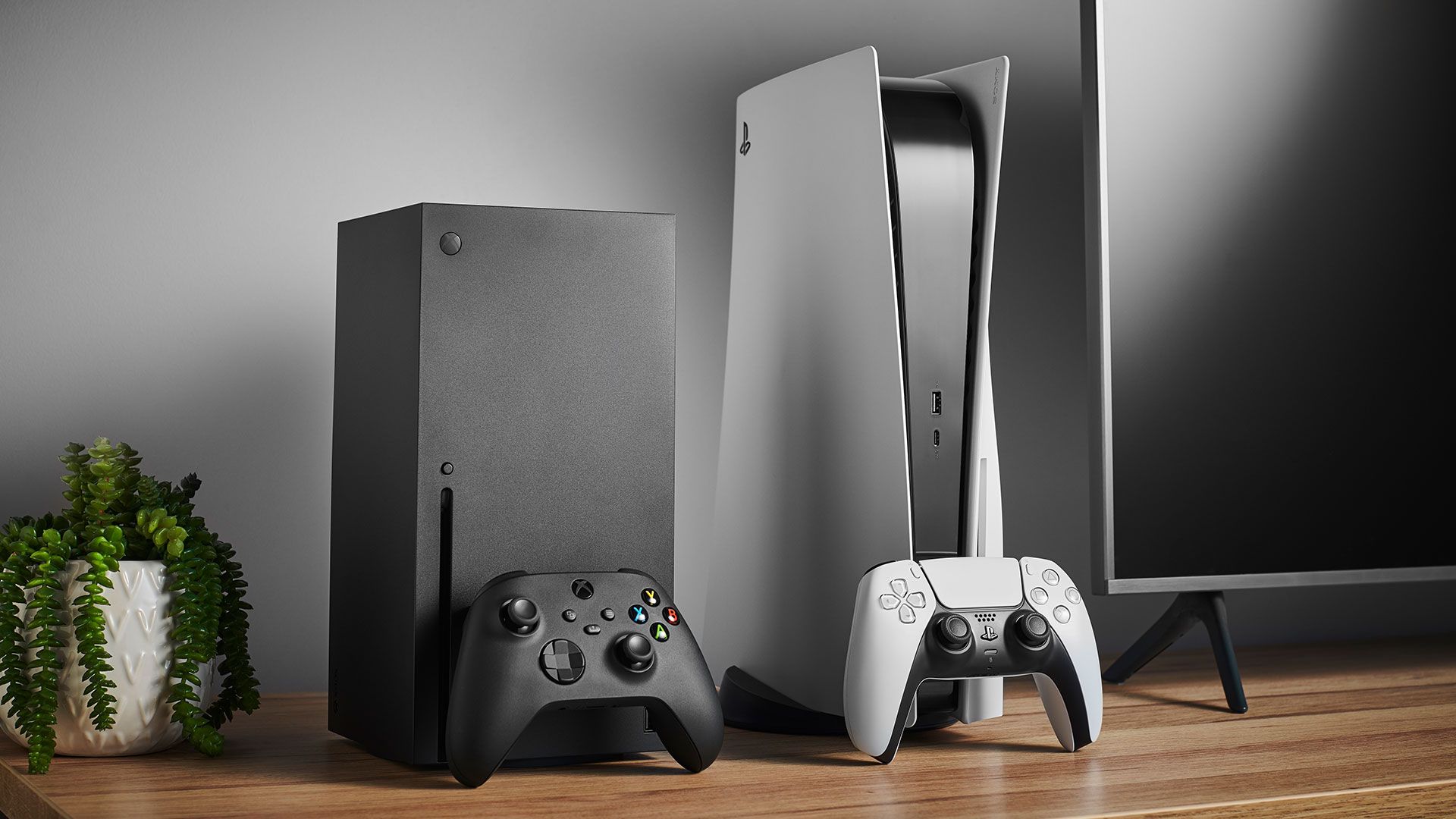
Faced with shrinking profit margins on hardware sales—which traditionally operate at or near a loss at launch, subsidized by software licensing fees—manufacturers had no choice but to break historical convention. Nintendo, PlayStation, and Microsoft all enacted mid-cycle price increases across various global regions, a deeply unpopular move that signaled the death knell of the traditional generational pricing model.
Supporting Context & Metrics: The Anatomy of a $1,000 Console Generation
The financial implications of these converging pressures are laid bare in recent market research and industry forecasts. Hardware analysts tracking the trajectory of prospective next-generation systems—such as the hypothetical $1,000 price points for the PS6 and Xbox Project Helix—have painted a grim statistical picture of what such costs could mean for market penetration.
The Sales Impact of Premium Pricing
According to recent independent market analysis, if next-generation consoles launch at a $1,000 price tag, their cumulative five-year sales figures could plummet by up to 40% compared to the remarkably successful trajectory of the current PlayStation 5 generation.
| Metric / Indicator | Current Generation (PS5 / Xbox Series X | S) | Projected Next-Gen ($1,000 Launch Scenario) |
|---|---|---|---|
| Launch Price Range | $399 – $499 | $899 – $1,000+ | |
| Component Pressure | Moderate to High (Post-Pandemic) | Extreme (AI Data Centers & Advanced RAM) | |
| 5-Year Sales Projection | Baseline Standard | Estimated 40% Reduction vs. Baseline | |
| Physical Media Status | Phasing out; digital transition underway | Largely or entirely digital-only | |
| Primary Cost Driver | Foundry capacity & logistics | Advanced silicon, ray tracing cores, & VRAM |
Such a steep financial barrier to entry threatens to alienate casual gamers and younger demographics, accelerating a demographic shift where the average age of the console player base continues to tick upward.
The Digital-Only Transition and Physical Media Phase-Out
The escalating cost of physical manufacturing and distribution has catalyzed another seismic shift: the elimination of physical media. PlayStation’s landmark announcement that it will end physical disc production for new games by 2028 marks a watershed moment for the industry.
While publishers champion the transition for its elimination of warehousing, shipping, and retail markup costs, the shift eliminates consumer ownership rights, secondhand markets, and physical preservation. It also reflects a desperate attempt by platform holders to streamline manufacturing overhead and recoup supply chain losses through higher-margin digital storefront ecosystems.
Official Statements: Perspectives from the Top
Despite the prevailing doom and gloom surrounding hardware economics, executive leadership across the tech and gaming sectors offers a more nuanced, albeit polarized, view of the future.
Matthew Bromberg on the "Upside Down" Market
Unity Technologies CEO Matthew Bromberg acknowledges the unprecedented nature of the current hardware crunch, describing the economic reality as "wacky" and noting that it defies historical market rules.
"It’s been a difficult time for console hardware, which is under genuine cost pressure," Bromberg stated in an interview with The Game Business. "It’s unprecedented and it’s wacky. The idea that things get more expensive is the upside down of how it usually works. But that doesn’t mean that great console entertainment isn’t going to be consumed in massive quantities, and we’ll see that with GTA."
Bromberg remains confident that cost pressures are fundamentally cyclical and temporary. He emphasizes that the core value proposition of consoles remains intact, pointing to upcoming cultural behemoths like Rockstar Games’ Grand Theft Auto franchise as proof that system-seller software will continue to drive hardware adoption, regardless of macroeconomic headwinds. Furthermore, Bromberg believes the industry will naturally adapt to recapture younger demographics over time.
The Counter-Perspective: Veteran Anxiety
Not everyone shares Bromberg’s unbridled optimism. Former Sony executives and hardware designers have voiced acute anxiety over the trajectory of hardware specs. The relentless pursuit of photorealism—exemplified by ever-increasing demands for advanced ray tracing, path tracing, and AI-driven upscaling features—has turned hardware design into an expensive arms race.
As one former executive remarked regarding the specter of a $1,000 console: "How much more ray tracing can you put in there?" When the cost of technological advancement outpaces the purchasing power of the average consumer, the entire hardware ecosystem risks stagnation.
Future Outlook: A Renaissance on the Horizon?
Looking ahead over the next decade, the gaming landscape will likely undergo a profound structural transformation. How the industry reconciles rising hardware expenses with mass-market accessibility will dictate its trajectory for years to come.
1. Technological Convergence and Cloud Gaming
As dedicated home consoles face prohibitive silicon and memory costs, cloud streaming infrastructure—bolstered by the very same AI data center expansion currently causing component shortages—may emerge as a vital alternative. By offloading heavy computational rendering to remote server farms, providers could theoretically bypass the need for consumers to purchase expensive local hardware, lowering the barrier to entry for next-generation experiences.
2. Software Innovation Over Pure Hardware Muscle
As Matthew Bromberg notes, the future of gaming may rely less on raw hardware brute force and more on software sophistication, game engine optimization, and immersive design.
"There will be better, more engaging games built over the next ten years than were ever built over the prior ten," Bromberg asserts. "We’re just beginning to scratch the surface of the level of persuasion and the intensity of engagement that we’re going to achieve. It’s crazy to think that the best years of this business are not in front of us."
If game developers can leverage advanced tools—such as AI-assisted asset generation, smarter physics engines, and highly efficient compression algorithms—they may be able to deliver generational leaps in gameplay and storytelling without demanding impossible specifications from local hardware.
3. Navigating the Post-Crisis Era
Ultimately, the video game industry stands at the nexus of technology, economics, and culture. While the immediate horizon is fraught with the perils of inflation, exorbitant silicon pricing, trade wars, and demographic shifts, the underlying demand for interactive entertainment has never been stronger. Whether manufacturers can successfully navigate the storm of hardware manufacturing costs without alienating their core audience will determine if the coming decade delivers the promised gaming renaissance or a sobering contraction of the console market.