Paradox Interactive Breaks the Historical Mold: An In-Depth Look at Afterworld, Its First Original Grand Strategy Setting in Over a Decade
Executive Overview
Paradox Interactive, the undisputed titan of grand strategy gaming, has officially announced a sharp departure from its historical comfort zone. Best known for meticulously modeling centuries of human history through heavyweight franchises like Crusader Kings, Europa Universalis, Victoria, and Hearts of Iron, the Swedish publisher has unveiled Afterworld.
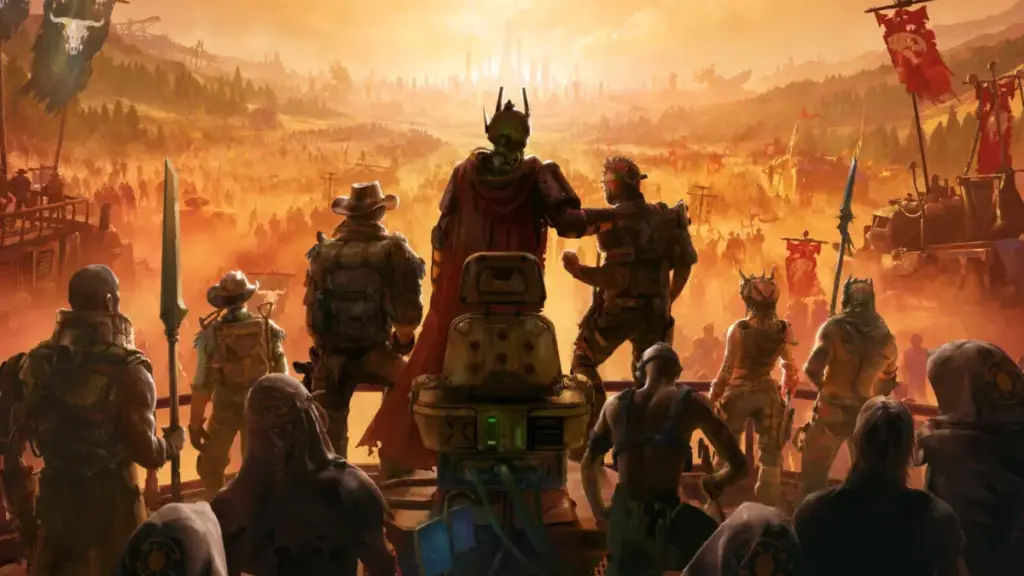
This upcoming title marks a monumental milestone for the studio: it is the first grand strategy game featuring an entirely original, non-historical setting that Paradox has developed in over a decade. Moving away from the archives of medieval Europe, the trading ports of the early modern era, and the industrializing nation-states of the nineteenth century, Afterworld plunges players headfirst into a harsh, procedurally generated post-apocalyptic North America.
Rather than commanding dynasties, parliaments, or colonial empires from the outset, players begin their journey guiding a meager band of struggling survivors. Tasked with navigating radioactive ruins, scavenging for scarce resources, and slowly stitching together the basic fabrics of civilization, the ultimate goal is as ambitious as it is daunting: transform a ragtag group of outcasts into a sprawling, continent-spanning empire.
Combining Paradox’s signature deep systemic simulation with a story-rich, morally complex narrative engine, Afterworld promises to test the geopolitical and humanitarian limits of strategy veterans. Featuring dynamic technology discovery, complex trade and supply lines, generational moral crises, and robust cooperative and competitive multiplayer modes slated for Steam, the title represents a bold new frontier for a developer long defined by its historical fidelity.
Detailed Chronology: From Historical Simulations to the Dustlands
To understand the magnitude of Afterworld, one must examine Paradox Interactive’s recent trajectory. Over the past decade, the publisher has doubled down on historical continuations. The release of Crusader Kings III in 2020 set a new gold standard for role-playing grand strategy, while subsequent entries and expansions in franchises like Europa Universalis and Victoria have solidified the studio’s reputation as the premier architect of interactive history books.
However, behind the scenes, creative ambitions within the development teams have quietly bubbled. For years, fans of the studio speculated whether Paradox would ever return to fictional or speculative world-building—territory it last explored deeply with titles like Magicka (as a publisher), Stellaris (which tackles science fiction grand strategy), or older fantasy experiments. While Stellaris proved that Paradox could build a stellar interstellar simulation, a terrestrial, post-apocalyptic grand strategy game remained an unfulfilled gap in their portfolio.
The conception of Afterworld began years ago as an internal skunkworks project, aiming to answer a compelling design question: What happens when you apply Paradox’s complex population, economic, and political simulation engines to a blank slate where history must be entirely reinvented?
The public unveiling arrived with the official announcement trailer, introducing the world to the blighted landscapes of post-collapse North America. The teaser showcased decaying monuments of modern civilization swallowed by untamed wilderness, hinting at the hazardous terrain and desperate remnants of humanity that populate the map.
Following the reveal trailer, Paradox launched the game’s official Steam page, confirming that Afterworld is deep in development. While a definitive release window has yet to be locked in by the studio, the announcement has immediately positioned the title as one of the most anticipated strategy releases on the horizon.
Supporting Context & Metrics: The Anatomy of Afterworld
To appreciate how Afterworld differentiates itself from historical titles like Crusader Kings 3 or Europa Universalis 5, it is vital to examine its core mechanics, systems, and gameplay loops as detailed by the development team.
1. From Scavenging to Empire Building
The gameplay loop of Afterworld inverts traditional grand strategy conventions. In standard Paradox titles, players inherit established nations, tax bases, and armies. In Afterworld, you start from absolute zero:
- Survival Phase: The game kicks off with a micro-management survival puzzle. Players must lead a small group of survivors through a procedurally generated map, manually scavenging for clean water, edible food, and makeshift shelter against a hostile environment.
- Reclamation Phase: Once basic survival is stabilized, the focus shifts to rediscovering lost technologies. Unlike traditional tech trees that unlock linearly based on time or research points, Afterworld utilizes a dynamic discovery system. Technologies are unlocked organically based on what your scouts unearth while exploring old-world ruins and hazardous terrain.
- Expansion Phase: From a single settlement, players must establish secure convoys and fragile supply lines across dangerous territory, eventually uniting disparate factions under a single, continent-spanning banner.
2. Origin Stories and Narrative Depth
Paradox is billing Afterworld as a "story rich" strategy game. The narrative framework begins at the character and faction selection screen, where players choose distinct origin stories for their survivor group. Options range from desperate refugees forced to flee a failing, deep-earth nuclear bunker to fanatical wayward zealots searching the dustlands for a mythical goddess.
As the group grows, these narrative threads expand, introducing complex socio-political dynamics:
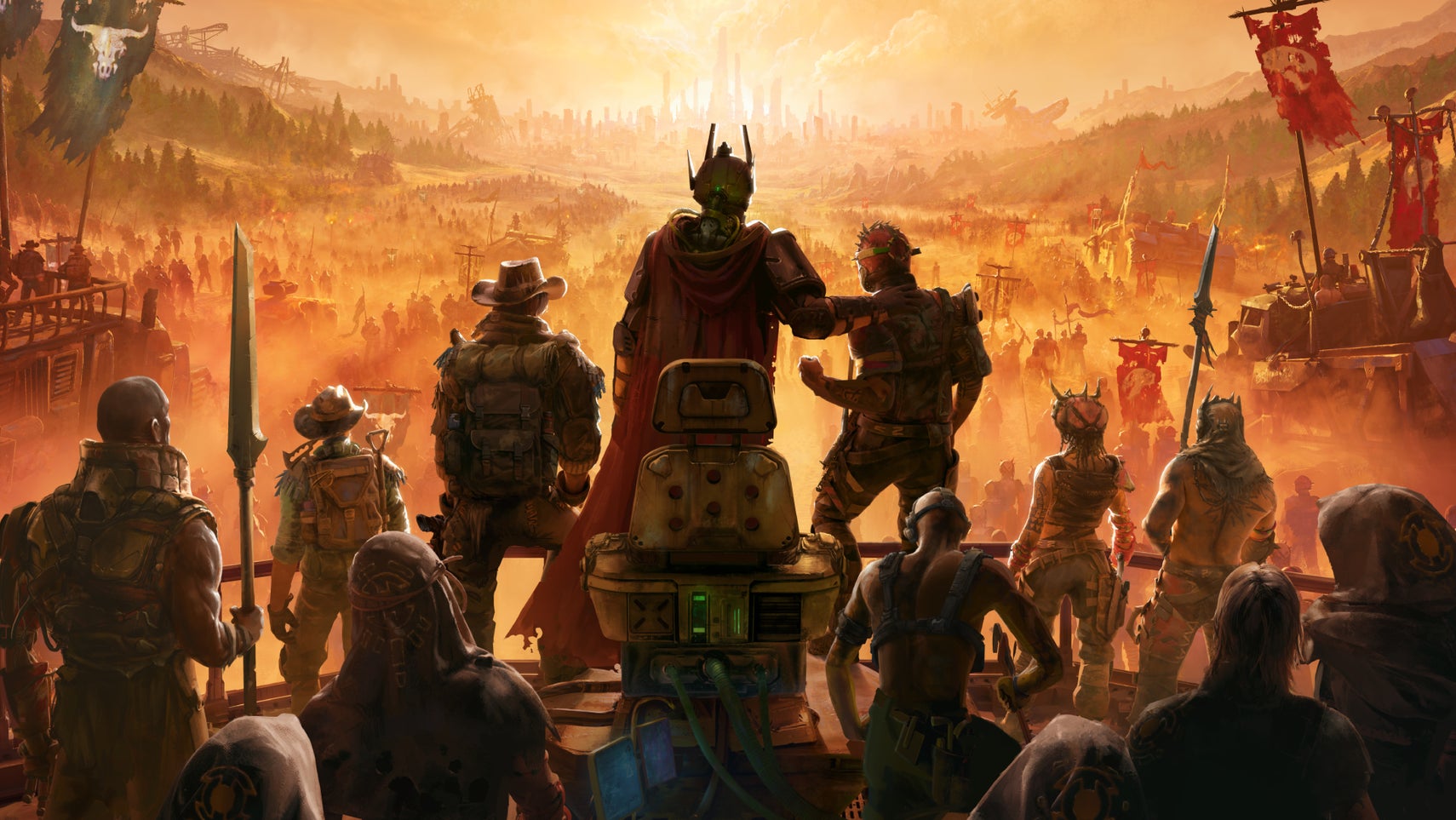
- The Rise of New Religions: Societies trying to make sense of the apocalypse inevitably turn to faith. Players must manage the emergence of dogmatic cults, secular movements, and ideological schisms.
- Mutated and Augmented Populations: Genetic divergence and cybernetic remnants from the old world create deep societal fractures. Do you integrate the mutated and the augmented, or do you purge them? These choices directly impact workforce productivity, social stability, and faction loyalty.
- Immortal Pre-Fall Leaders: Perhaps the most intriguing narrative hook involves discovering immortal leaders from before the Fall. These ancient figures harbor their own distinct visions for who should rightfully rule the ashes of the world—and Paradox has warned that "they will not step aside quietly."
3. Moral Crises and Generational Consequences
True to the publisher’s ethos, Afterworld is designed to be a crucible of difficult choices. Strategic decisions are inextricably tied to moral crises. How do you handle a critical food shortage during a nuclear winter? Do you ration supplies equitably, leading to widespread malnutrition, or feed the military elite to maintain order at the cost of your people’s trust?
Every major decision echoes through generations, shaping the cultural DNA, legal structures, and military doctrine of the emerging empire. Paradox explicitly reminds players that in this unforgiving setting, "a second collapse is always one bad decision away."
4. Multiplayer and Platform Support
Modern grand strategy is as much a social experience as it is a solo endeavor. Paradox has confirmed that Afterworld will feature robust support for both cooperative and competitive multiplayer modes upon its release on Steam, allowing friends to either forge alliances across the wasteland or ruthlessly compete for dominance over the ruins of North America.
Official Statements and Developer Insights
While formal press conferences and deep-dive developer diaries are still rolling out, initial insights shared by Paradox Interactive paint a vivid picture of a studio stepping boldly out of its comfort zone while leaning heavily into its core competencies.
In press materials accompanying the reveal, the development team emphasized the creative liberation of designing an original setting:
"For years, our players have lived out alternate histories, guiding real-world nations through triumph and tragedy. With Afterworld, we wanted to challenge ourselves and our audience by wiping the slate clean. There are no history books to consult, no pre-written scripts to follow. Every law, every border, and every civilization that rises from the dust is entirely up to you."
Addressing the tone of the game, narrative leads have highlighted the tension between hope and nihilism:
"A post-apocalyptic setting can easily fall into flat nihilism, but grand strategy is fundamentally about building, organizing, and looking toward the future. Afterworld is about the sheer tenacity of the human spirit—the stubborn refusal to let civilization die out completely, even when the world itself is actively trying to kill you."
Industry analysts have noted that this move could signal a broader diversification strategy for Paradox Interactive. By applying their legendary depth-of-simulation formulas to speculative fiction, the publisher may open its doors to a wider demographic of gamers who enjoy deep systemic strategy but prefer sci-fi, dystopian, or post-apocalyptic aesthetics over historical accuracy.
Future Outlook: What Lies Ahead for Afterworld
As the gaming community digests the initial announcement trailer, detailed feature lists, and Steam page details, attention now turns to what comes next.
The Road to Release
Paradox has not yet disclosed a release date or a roadmap for closed beta testing. Historically, the studio favors a transparent development cycle characterized by extensive developer diaries posted weekly on forums and Steam, detailing everything from UI design and economic modeling to combat mechanics and procedural map generation. Fans should expect these deep dives to begin rolling out over the coming months.
Potential Challenges and High Expectations
While the concept has generated immense excitement, Afterworld faces unique design challenges:
- Balancing Survival and Grand Strategy: Merging the micro-focused tension of a survival game (like Frostpunk) with the macro-focused diplomacy and conquest of a grand strategy game (like Stellaris or Europa Universalis) requires delicate balancing. If the early-game survival grind is too punishing, it can frustrate strategy veterans; if it’s too brief, the post-apocalyptic atmosphere risks losing its punch.
- Procedural World Generation: Creating a procedurally generated map that feels organic, historically resonant (in terms of old-world ruins), and strategically engaging is notoriously difficult. Paradox will need to prove that its world-generation tools can rival the handcrafted historical maps of its past titles.
Conclusion
Afterworld represents a watershed moment for Paradox Interactive. By stepping away from the familiar historical timelines that built its empire, the studio is gambling on its own systemic prowess—proving that its signature brand of deep, narrative-driven geopolitical simulation can breathe life into a brand-new world. For strategy enthusiasts and post-apocalyptic fiction fans alike, the dustlands of North America are calling, and the race to build the ultimate successor civilization has officially begun.