
Executive Overview
The indie game development landscape has long been defined by unexpected breakout hits that capture the collective imagination of the gaming community. From the rogue-lite obsession sparked by Vampire Survivors to the strategic, dopamine-fueled deck-building frenzy of Balatro, a single visionary design can alter the trajectory of an entire genre almost overnight. Localiter Task Force and developer Offbrand Games have now thrown their hat into this rapidly expanding ring with the global release of Ultrapool, available today on iOS and Android devices.
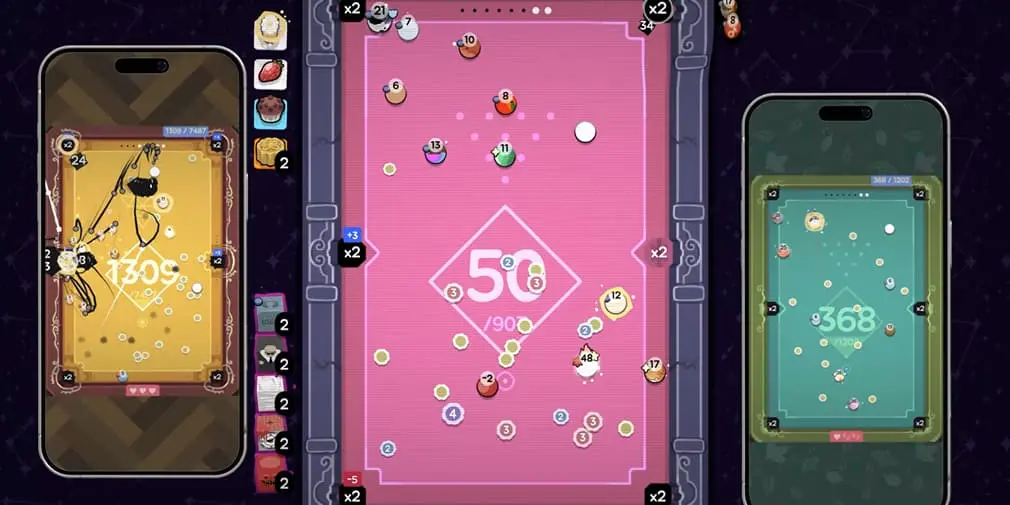
By combining the physics-based geometry of classic bar-room eight-ball with the exponential, math-breaking modifier loops popularized by Balatro, Ultrapool transforms a traditionally slow and deliberate pastime into a high-octane, chaotic arcade experience. Players do not simply sink balls into corner pockets; instead, they cultivate an increasingly absurd arsenal of cue sports equipment, rack up astronomical score multipliers, purchase game-changing upgrades, and manipulate the very fabric of the pool table itself.
While titles like Balatro and Vampire Survivors famously dominated the PC and console markets before eventually finding their way to mobile touchscreens, Ultrapool is breaking the mold by making mobile devices a primary launch destination. This strategic rollout signals a potential paradigm shift for independent developers, proving that complex, highly stylized rogue-like mechanics can be successfully engineered for portable hardware right out of the gate. As the industry continues to digest the lasting influence of poker-roguelikes, Ultrapool stands as a testament to the fact that imaginative gameplay iteration is showing no signs of slowing down.
Detailed Chronology: The Evolution from Billiards to Breakout Roguelike
To understand the mechanics of Ultrapool, one must first trace the lineage of the modern rogue-like phenomenon. The journey that brought Offbrand Games to the release of Ultrapool is rooted in a broader industry-wide movement toward rule-breaking gameplay loops that reward player experimentation, compounding mathematical scaling, and immediate trial-and-error feedback.
The Genesis of the "Balatro Effect"
When Balatro launched, it fundamentally rewired how players thought about traditional games of chance. By wrapping standard poker hands in an intoxicating blanket of tarot cards, spectral artifacts, and Joker modifiers that broke the rules of mathematics, it birthed a self-contained subgenre. Gamers worldwide found themselves chasing the high of an infinite score multiplier, watching simple pairs and full houses scale into the millions.
Independent developers quickly recognized the underlying philosophy of this success: take a universally understood, rules-bound human pastime—whether it be poker, solitaire, or chess—and inject it with wild, unpredictable rogue-like variables.
Offbrand Games Enters the Cue Sports Arena
Enter Offbrand Games, a studio that saw potential not in cards, but in felt, chalk, and cues. Recognizing that the geometry of billiards shares a fundamental mathematical relationship with trajectory-based puzzle games and score multipliers, the development team set out to engineer Ultrapool.
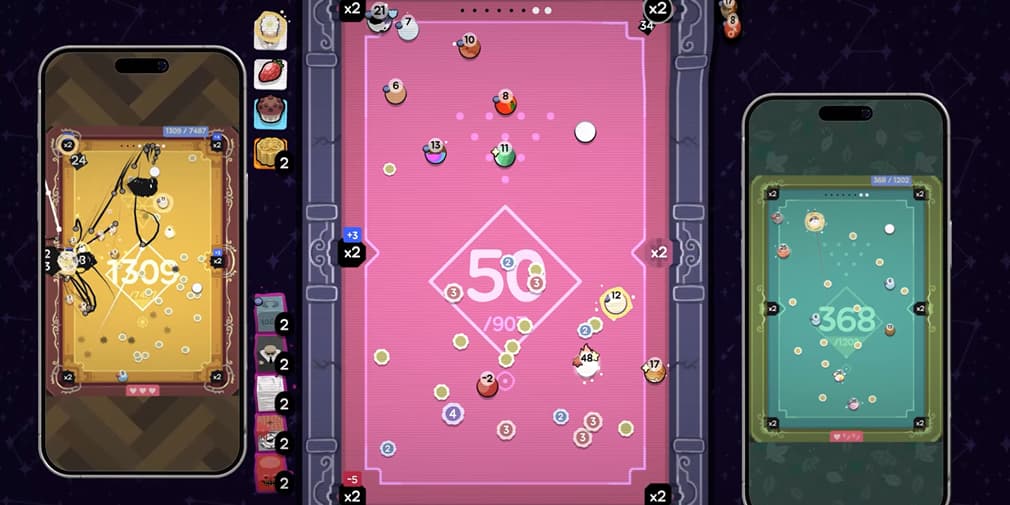
The development cycle focused heavily on maintaining the tactile satisfaction of sinking a ball while systematically layering on chaotic modifiers. Early prototypes tested at conventions and online demos established the core gameplay loop:
- The Setup: Players approach a standard-looking pool table layout with basic equipment.
- The Execution: Sinking balls triggers baseline scores and builds foundational momentum.
- The Escalation: As players progress, the table begins to mutate. Modifiers, special ball types, and environmental anomalies enter the mix.
- The Break: The game shatters its own rules, allowing for screen-clearing combos, explosive physics reactions, and exponential financial growth within the game’s economy.
From Concept to Mobile Reality: The iOS and Android Launch
The culmination of this development pipeline arrived today with the simultaneous release of Ultrapool on both iOS and Android. Eschewing the traditional "PC first, mobile later" pipeline that hindered the early momentum of giants like Balatro and Vampire Survivors, Offbrand Games opted for a mobile-forward approach. This ensures that players looking for quick, highly replayable sessions can access the chaos directly from their smartphones, bridging the gap between desktop-grade rogue-like depth and mobile-friendly accessibility.
Supporting Context & Metrics: Mechanics, Meta-Progression, and the Mobile Market
What separates a shallow gimmick from a lasting indie darling is the depth of its mechanics. Ultrapool avoids being a one-note novelty by introducing sophisticated systemic layers that reward long-term mastery, strategic thinking, and creative improvisation.
Breaking Down the Mechanics: Balls, Squares, and Cocktails
At first glance, Ultrapool mimics the familiar visual language of a sports simulator. However, the illusion shatters almost immediately upon your first successful break.
- The Exponential Arsenal: Rather than sticking to the standard solid and striped balls of traditional eight-ball, players rapidly build an absurd inventory of specialized spheres. Each ball type carries unique properties—some split upon impact, others generate currency on contact with the cushions, and a few alter the gravitational pull of the table.
- Table-Altering Squares: Beyond the balls themselves, the playing surface is populated by dynamic squares that actively modify gameplay parameters. Landing a shot through or near these zones can multiply your score, alter ball trajectories, or trigger screen-shaking visual effects.
- The Bartender’s Cocktail System: Perhaps the most innovative feature introduced in Ultrapool is the ability to consult the in-game bartender. Players can request custom cocktails crafted by mixing two distinct ball types together. This fusion mechanic results in entirely new, hybrid entities that possess the combined traits of their parent components, opening up near-infinite combinatorial possibilities for high-score optimization.
| Feature | Traditional Pool | Ultrapool Mechanics |
|---|---|---|
| Objective | Sink designated balls in numerical/categorical order | Maximize score multipliers via chaotic chain reactions |
| Equipment | Standard cue, chalk, 15 balls, cue ball | Dynamic inventory, mutating balls, hybrid cocktail creations |
| Environment | Static felt table with standard pockets | Mutable table surfaces populated by modifying squares |
| Pacing | Slow, calculated, turn-based precision | Fast-paced, explosive, combo-driven arcade action |
The Mobile Ecosystem and the Legacy of Vampire Survivors
To fully appreciate the significance of Ultrapool landing on mobile platforms on day one, one must examine the current state of mobile gaming economics. For years, mobile storefronts were viewed by hardcore indie developers as secondary markets—ports to be outsourced long after a PC version had run its course.
However, titles like Vampire Survivors shattered those preconceptions. By proving that frantic, touch-friendly gameplay loops could captivate millions of mobile users without requiring complex controller setups, Vampire Survivors set a new benchmark for portable indie success.
Ultrapool inherits this philosophical baton. Its touch-and-drag mechanics translate naturally to mobile screens, allowing for intuitive shot adjustments that feel right at home on iOS and Android. By choosing a mobile-native release strategy, Offbrand Games is capitalizing on a hungry demographic of gamers who are actively searching for deep, non-predatory, premium-style experiences on their phones.
Official Statements and Hands-On Impressions
The reception to Ultrapool during its preview phases and early demonstrations has generated significant buzz within the indie gaming community. Critics and industry insiders alike have praised Offbrand Games for steering clear of lazy cloning and instead offering a genuine evolution of the concepts laid down by Balatro.
Critical Reception and Hands-On Insights
Early reports from industry reviewers who spent time with the Ultrapool demo have highlighted the game’s uncanny ability to induce the "just one more run" syndrome.
"Overall, it’s good to see the ideas set out by Balatro being taken, twisted and iterated upon to create something wholly new." — Pocket Gamer Hands-On Analysis
Reviewers have noted that while the visual aesthetics and structural DNA of Ultrapool proudly wear their inspirations on their sleeves, the tactile nature of physics-based pool mechanics gives the game an identity all its own. Calculating bank shots while factoring in rogue-like modifiers creates a unique mental puzzle that feels distinct from card-based deck-building.
The Developer Perspective
While Offbrand Games has kept official press statements focused on the fluid rollout of the game, the design philosophy embedded within Ultrapool speaks volumes about the studio’s ethos. By encouraging players to experiment wildly—mixing cocktails, stacking bizarre ball attributes, and breaking the traditional rules of billiards—the developers have signaled a commitment to unadulterated, chaotic fun over rigid simulation.
The industry is watching closely to see how this design philosophy resonates with a broader audience. If Ultrapool can capture the viral lightning-in-a-bottle momentum of its predecessors, it could cement Offbrand Games as a major player in the burgeoning tactical-arcade rogue-like space.
Future Outlook: The Next Wave of Genre-Bending Indies
As Ultrapool makes its official debut on iOS and Android, its release serves as a litmus test for the future of mobile-first indie development.

What’s Next for Ultrapool?
With the game now live in the hands of the public, the immediate focus for Offbrand Games will shift toward community feedback, balance patches, and potential content expansions. In the rogue-like space, longevity is everything. Games like Balatro and Vampire Survivors maintained their cultural relevance through steady streams of updates, hidden secrets, and community-driven discoveries. If Ultrapool can cultivate a dedicated community of high-score chasers and secret hunters, its mobile-first foundation could yield long-term dividends.
The Broader Impact on the Indie Ecosystem
Beyond the success of a single title, Ultrapool points toward a maturing indie ecosystem where developers are no longer afraid to cross-pollinate seemingly unrelated genres. We are moving into an era where traditional sports, board games, and classic pastimes are treated as blank canvases for high-concept mathematical chaos.
Furthermore, the decision to prioritize mobile deployment from day one may encourage other independent studios to rethink their platform strategies. As portable hardware continues to grow more powerful—and as audiences increasingly demand deep, satisfying gameplay experiences they can take on the go—mobile platforms are shedding their reputation as secondary afterthoughts.
For now, the cue is in your hand, the table is set, and the modifiers are waiting. Whether Ultrapool will permanently cement itself alongside the titans of the rogue-like genre remains to be seen, but one thing is certain: the bar-room game of pool will never look the same again.