The Duskbloods network test was more popular than Elden Ring: Nightreign test
Executive Overview
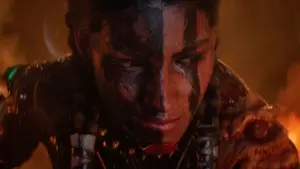
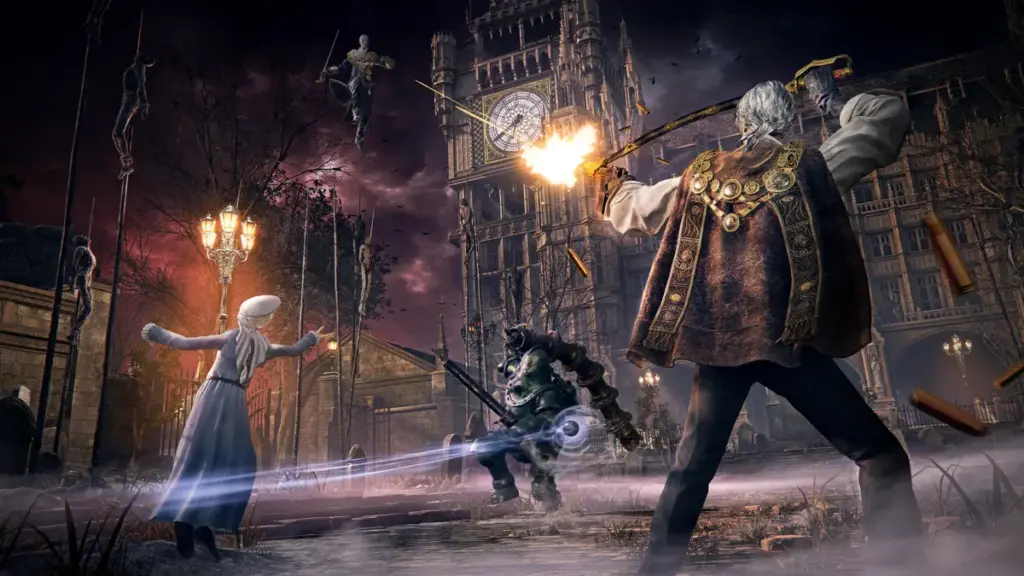
In a surprising turn of events that has caught even veteran developers off guard, FromSoftware’s upcoming multiplayer-focused title, The Duskbloods, has officially shattered internal expectations. According to producer Yasuhiro Kitao, the closed network test for The Duskbloods attracted a higher volume of applicants than the network test for Elden Ring: Nightreign.
What makes this milestone remarkable is the platform it calls home: Nintendo’s next-generation hardware, widely referred to as the Nintendo Switch 2. Industry analysts and developers alike initially approached the console’s ecosystem with cautious curiosity, weighing the uncharted user base of a fresh hardware launch against established, multi-platform giants like the PlayStation 5, Xbox Series X/S, and PC.
However, The Duskbloods—which reportedly began development on the original Nintendo Switch architecture as early as 2021—has completely upended those early hesitations. By capturing an unprecedented number of playtest applicants, FromSoftware’s latest project signals not only enduring consumer confidence in the studio’s multiplayer design philosophy but also a remarkably robust and eager early adopter base for Nintendo’s successor hardware. This report examines the implications of these staggering metrics, the history of the project’s development, and what this momentum means for the future of cooperative and competitive action RPGs on Nintendo platforms.
Detailed Chronology: From Concept to Community Outpouring
To understand the magnitude of The Duskbloods‘ early success, it is vital to trace the project’s timeline and the strategic rollout that led to this unprecedented wave of player interest.
Genesis on the Original Switch (2021)
Development on The Duskbloods did not begin in the current generation. Insider reports and developer retrospectives reveal that the title quietly entered production on Nintendo Switch hardware as far back as 2021. For FromSoftware—a studio historically celebrated for pushing high-end PC and home console hardware to its limits with titles like Dark Souls, Bloodborne, Sekiro: Shadows Die Twice, and Elden Ring—adapting their signature demanding gameplay, intricate environmental design, and atmospheric storytelling to handheld-hybrid architecture was an ambitious undertaking.
Throughout its early phases, the development team worked within the constraints of the original Switch. However, as Nintendo’s hardware roadmap evolved, the studio was granted an early look at the company’s next-generation console, the Nintendo Switch 2. According to team members, the transition to the new hardware was met with immense relief and excitement, allowing the developers to realize their artistic and technical vision without the performance bottlenecks that would have inevitably restricted a legacy-gen release.
The Hardware Reveal and Network Test Announcement
As the gaming industry spent years speculating on Nintendo’s next move, official details regarding the Switch 2 finally emerged, accompanied by confirmation that The Duskbloods would anchor a portion of the system’s early third-party software lineup.
Capitalizing on this momentum, FromSoftware announced a closed network test designed to stress-test server infrastructure, balance mechanics, and gather telemetry data from a live player base. Closed network tests are standard operating procedure for the studio, serving as both a technical necessity and a marketing catalyst. Historically, these tests generate healthy, targeted excitement among hardcore fans. Yet, even with FromSoftware’s stellar reputation, few predicted the absolute deluge of applications that would follow.
The Record-Breaking Application Window
When the application portal for The Duskbloods closed, internal tallies revealed that the raw number of hopeful participants had surpassed those recorded during the pre-release phase of Elden Ring: Nightreign. For a studio whose brand is currently operating at an all-time high following the global phenomenon of Elden Ring, outperforming any metric related to that historic intellectual property is a monumental achievement—let alone doing so on a brand-new, unproven console platform.
Supporting Context & Metrics: Analyzing the Nightreign vs. The Duskbloods Phenomenon
To properly contextualize Yasuhiro Kitao’s remarks from the recent Famitsu live stream, it is necessary to examine the unique circumstances surrounding both Elden Ring: Nightreign and The Duskbloods.
The Nightreign Precedent
When FromSoftware initiated testing for Elden Ring: Nightreign, the industry was already acutely aware of the monolithic cultural footprint left by the base 2022 masterpiece, Elden Ring. However, Nightreign introduced specific cooperative and multiplayer hooks that deviated slightly from traditional solo-focused experiences.
According to Kitao, many members of the gaming public initially approached Nightreign’s early network test with a degree of hesitation. Because the project leaned heavily into cooperative multiplayer structures, a segment of the audience adopted a "wait-and-see" approach. They opted to sit out the initial technical trial, only to dive in enthusiastically after launch once word-of-mouth confirmed the title’s high quality and addictive loop. Consequently, while Nightreign enjoyed immense post-launch success, its pre-release network test application numbers reflected a more cautious consumer base.
The Switch 2 Factor and Consumer Psychology
The Duskbloods, conversely, benefited from a completely different psychological profile among consumers. Kitao noted that the development team fully expected lower initial engagement simply due to the "newness" of the Nintendo Switch 2 hardware. Whenever a manufacturer transitions to a new generation, the active installed user base naturally resets to zero. Traditional wisdom suggests that early hardware adoption curves start slow, building momentum only as system sellers and price drops take effect.
However, consumer behavior appears to have shifted. Gamers who missed out on the early testing phases of previous FromSoftware multiplayer initiatives—and subsequently watched those titles become massive cultural touchstones—were determined not to make the same mistake twice.
Furthermore, the enthusiastic word-of-mouth surrounding Nightreign’s eventual triumph retroactively educated the player base. Consumers realized that FromSoftware’s network tests are not merely dry technical trials, but exclusive, highly sought-after preview events for some of the industry’s most compelling multiplayer sandboxes. As a result, applicants flooded the registration portals for The Duskbloods, eager to secure a firsthand glimpse of both FromSoftware’s next creative venture and the capabilities of Nintendo’s next-generation hardware.
Official Statements and Developer Insights
The revelation came directly from FromSoftware producer Yasuhiro Kitao during a broadcast hosted by the prominent Japanese gaming publication Famitsu. Speaking candidly about the studio’s ongoing projects, Kitao addressed the surprising metrics head-on.
"We were actually very surprised that the number of applicants for the network test for The Duskbloods was greater than those for Elden Ring: Nightreign," Kitao stated during the live stream.
Elaborating on the studio’s internal discussions regarding the hardware landscape, he continued:
"Nintendo Switch 2 is of course new hardware and speaking in terms of number of users… well… for the Nightreign playtest I feel that many people overlooked it initially because it was multiplayer, but went on to play it after launch and really enjoyed it.
So I think that this time we received applications from many people who felt that maybe this time they’d try and participate in the network test."
These remarks highlight a mature understanding of consumer habits by FromSoftware’s leadership. Rather than attributing the spike solely to hardware hype, Kitao and his team recognized a fundamental behavioral shift: the gaming community has learned to trust FromSoftware’s multiplayer design implicitly, transforming what was once a niche interest into a premier gaming event.
Future Outlook: What The Duskbloods Means for FromSoftware and Nintendo
The unprecedented demand for The Duskbloods network test casts a long, positive shadow over the future of both FromSoftware and Nintendo’s hardware ecosystem.
A New Era of Third-Party Support on Nintendo Platforms
Historically, Nintendo consoles have faced an uphill battle when attempting to secure major, mature-rated, third-party AAA titles at launch. While the original Nintendo Switch achieved staggering commercial success through innovative first-party software and brilliant indie curation, heavy-hitting, technically demanding action RPGs were frequently absent or relegated to cloud-streaming solutions.
The fact that The Duskbloods—a high-fidelity, mechanically complex FromSoftware title—is not only running natively on the Nintendo Switch 2 but is also generating record-breaking pre-release engagement demonstrates a paradigm shift. It proves beyond a shadow of a doubt that Nintendo’s new hardware possesses the technical chops to attract core, hardcore gamers who demand uncompromised performance and sophisticated gameplay.
Balancing Multiplayer and Single-Player Ambitions
It is also worth noting how The Duskbloods fits into FromSoftware’s broader corporate and creative strategy. While the studio has doubled down on cooperative and multiplayer-adjacent titles like Nightreign and The Duskbloods, studio leadership—including director Hidetaka Miyazaki—has concurrently expressed a keen desire to return to deep, immersive single-player experiences in the near future.
The overwhelming success of The Duskbloods network test proves that FromSoftware does not need to choose between community-driven multiplayer and solitary artistic mastery; their audience is large enough, and loyal enough, to support both concurrently across an increasingly diverse array of gaming platforms.
Final Takeaway
As the closed network test dates for The Duskbloods draw nearer, all eyes in the video game industry will be fixed on the performance, stability, and reception of the title. If the sheer volume of applicants is any indicator of the game’s ultimate trajectory, FromSoftware and Nintendo have a massive collaborative hit on their hands. For players, it means that the boundary-pushing dark fantasy experiences they love are no longer confined to traditional high-end boxes—they are officially ready for the future of hybrid gaming.