Executive Overview
In the rapidly evolving landscape of independent puzzle development, titles that successfully bridge the gap between creative freedom and structured mechanical constraints are increasingly rare. Enter Fantasketch, an upcoming PC and digital-platform puzzle game that reinvents drawing-based mechanics through a lens of artistic charm, spatial physics, and strategic resource management. While mobile app stores are historically saturated with derivative physics-draw titles that rely on repetitive loops and intrusive monetization, Fantasketch distinguishes itself through thoughtful level design, a vibrant hand-drawn aesthetic, and deep mechanical layers that elevate it far above casual novelty.
Recently showcased to enthusiastic crowds at the prominent cultural and gaming festival Hyper Japan, the title has captured the attention of both casual puzzle enthusiasts and hardcore strategy gamers alike. Rather than simply tracing lines to guide an object from point A to point B, Fantasketch requires players to manifest active and dormant entities with distinct chromatic properties, leverage the physical states of "sleeping" shapes as structural bridges or ramps, and manage finite paint pools to manipulate complex environments.
Though developer timelines remain tightly guarded with no official release date yet confirmed, the title is currently available for wishlisting on Steam. This comprehensive preview explores the mechanical underpinnings of Fantasketch, analyzes its hands-on reception at Hyper Japan, examines the broader indie puzzle market context, and looks forward to what players can expect when the full game eventually launches.
Detailed Chronology and Hands-On Genesis
The public origin of Fantasketch as a tangible, playable experience trace back to its recent deployment on the convention floor at Hyper Japan. For attendees navigating the bustling exhibition halls filled with Japanese pop culture, culinary arts, and innovative digital creations, the Fantasketch demo station offered a welcome moment of cerebral engagement.
The Hyper Japan Demo Experience
Observers and players at the Hyper Japan booth were immediately struck by the game’s visual presentation. Unlike sterile, clinical puzzle interfaces, Fantasketch greets the player with an aesthetic reminiscent of a living sketchbook. The demonstration build featured a curated selection of introductory and mid-tier puzzles designed to ease players into the core loop while gradually introducing advanced mechanics.
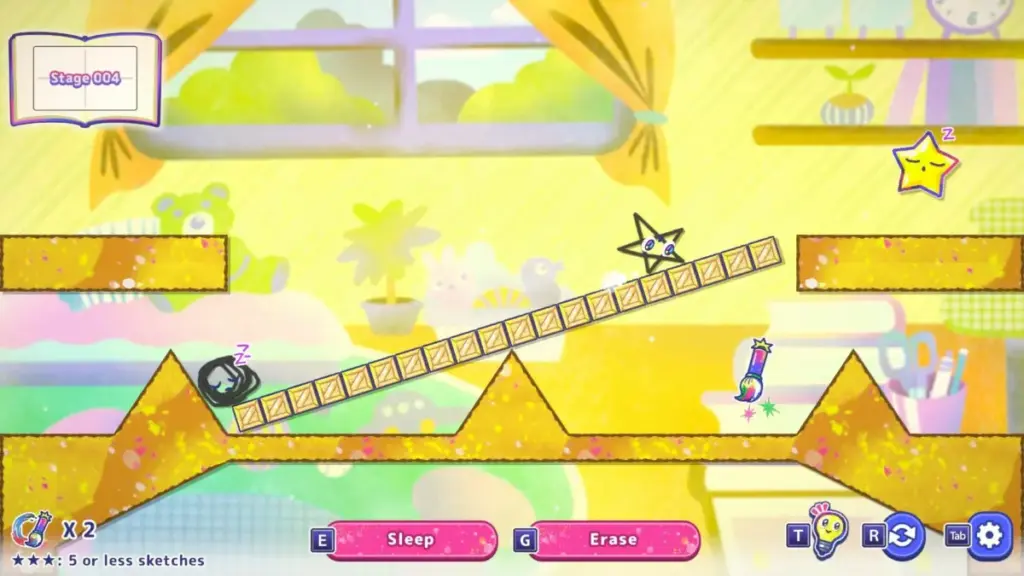
- The Initial Phase (Freeform Creation): Upon entering a level, players are greeted with a specific spatial puzzle—often featuring obstacles, chasms, or locked pathways—and a blank canvas. The primary interaction begins with drawing a shape.
- The Iterative Workflow: If a drawing fails to achieve its intended purpose, players are not heavily penalized. They can choose to instantly reset the board or draw an entirely new shape, leaving the previous creation "asleep" on the field.
- The Awakening of Spatial Physics: This mechanic of leaving behind sleeping entities quickly emerged as the cornerstone of advanced puzzle-solving during the demo sessions. Players quickly realized that idle shapes do not simply disappear; they persist as physical objects within the game world.
According to players who spent time with the demo, mastering Fantasketch requires a shift in mindset. One must think not only as an artist drafting a solution, but as a structural engineer calculating load-bearing slopes and precise bridging angles.
Mechanical Deep Dive: Mechanics, Paint, and Physics
To truly understand why Fantasketch stands out in a crowded genre, one must examine its core gameplay loops, resource constraints, and environmental interaction systems. The game merges drawing mechanics with resource management and deterministic physics in several distinct ways.
The Dynamics of "Sleeping" Creations
In many physics-based drawing games, objects either succeed immediately or vanish upon failure. Fantasketch, however, embraces a philosophy of accumulation. When a drawn shape finishes its initial action or is bypassed for a new creation, it enters a dormant, "asleep" state.
- Structural Utility: Sleeping creations retain their physical properties. They interact with gravity, collision detection, and subsequent drawings.
- Precision Timing: If timed correctly, players can stack multiple sleeping creations to form makeshift bridges, counterweights, or protective barriers against environmental hazards.
- Irreversibility: Once a creation is asleep, it generally cannot be re-awakened to perform its original dynamic task again. Consequently, players must plan their sequence of drawings with absolute foresight, treating each stroke as a permanent architectural modification of the level.
Chromatic Mechanics and Resource Management
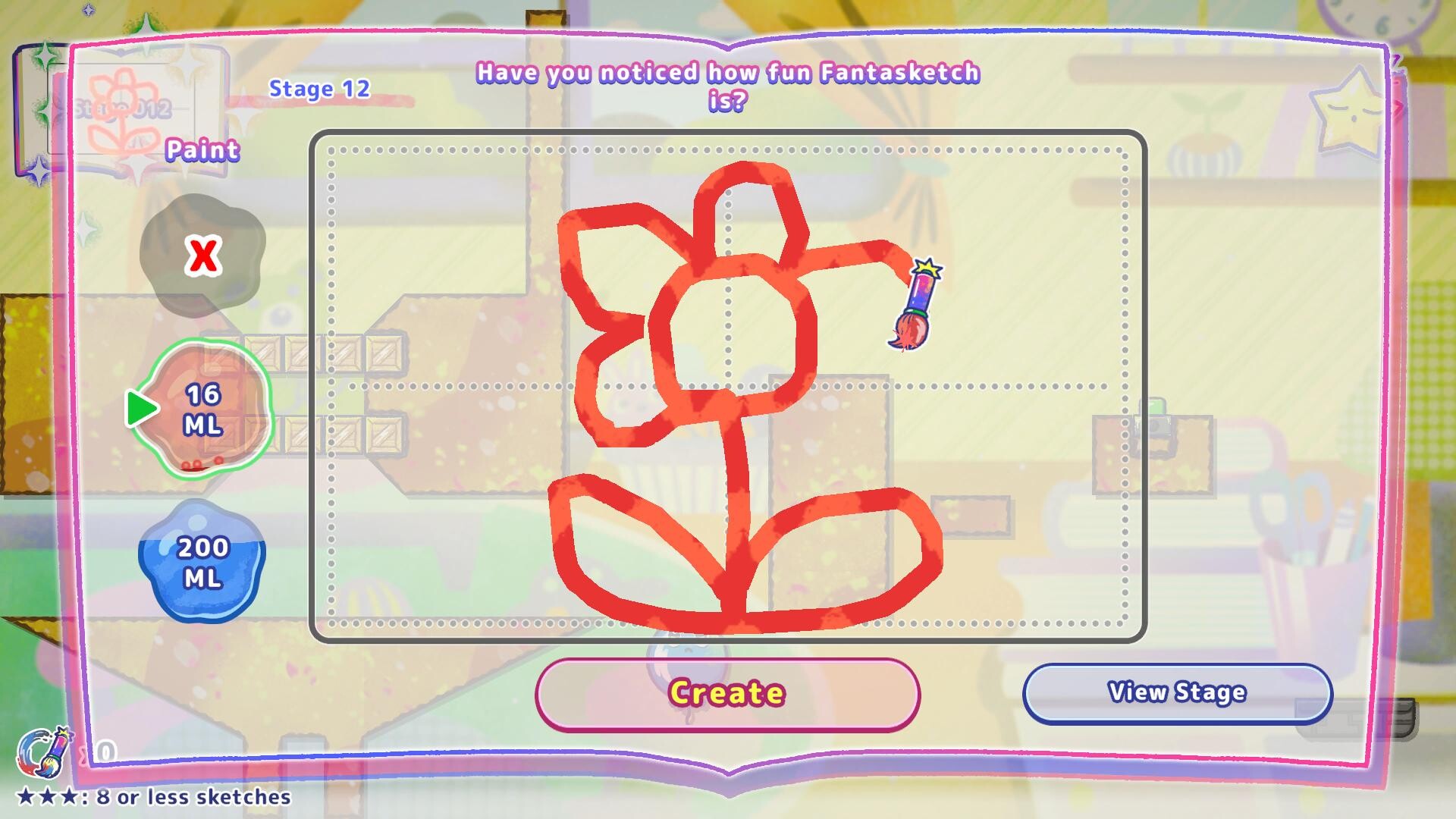
Drawing in Fantasketch is not an infinite resource; it is strictly governed by paint economy. Each level provides specific color palettes and finite quantities of paint. Exhausting a particular color means forfeiting the ability to summon creatures or tools tied to that specific hue.
This limitation transforms the game from a relaxed sketching app into a tactical resource allocator:
- Color as an Ability: Different colors dictate distinct physical behaviors and magical attributes. For example, the introductory red paint allows players to spawn red characters that possess thermal properties.
- The Thermal Interaction: When a red character runs into a barrier such as a wooden box, it incinerates the obstacle. However, this interaction introduces a delightful tactical puzzle: to trigger the combustion effectively, the red character often needs to be in its dormant, sleeping state at the exact point of impact.
- Numerical Vigilance: Players cannot simply spam colorful creations. Keeping a close eye on the remaining paint counter is essential to avoid soft-locking a puzzle halfway through its execution.
Level Progression and Environmental Transformation
As players progress beyond the introductory stages, Fantasketch introduces increasingly complex environmental modifiers. Certain paints possess specialized effects that actively alter the properties of the game world. Manipulating gravity fields, altering surface friction, and navigating dynamic moving obstacles require players to combine their drawing precision with timely execution. The ultimate goal—reaching the level-ending star marker—demands a seamless synthesis of all acquired mechanical knowledge.
Supporting Context, Metrics, and Market Position
The puzzle genre on PC and mobile platforms has long been dominated by two extremes: hyper-casual physics-draw games plagued by intrusive advertisements, and ultra-hardcore logic puzzlers that lack approachable aesthetic charm. Fantasketch occupies a coveted middle ground, appealing to what industry analysts refer to as the "mindful gamer" demographic.
The Evolution of Drawing-Based Puzzles
Drawing mechanics in video games date back decades, finding mainstream success on handheld consoles like the Nintendo DS with titles such as Crayon Physics Deluxe and Max and the Magic Marker. These games proved that players derive immense psychological satisfaction from seeing their own crude or elegant sketches come to life in a physics sandbox.
However, the modern mobile ecosystem diluted this sub-genre, reducing drawing mechanics to simplistic line-drawing prompts used primarily as hooks for mobile app advertisements. Fantasketch serves as a modern antidote to this trend. By injecting high artistic fidelity, robust mechanical depth, and a charming indie soul, the game revitalizes a concept that many veteran gamers assumed had reached its creative ceiling.
Market Reception and Community Engagement
Though formal sales and wishlist metrics are proprietary, early indicators from the Steam platform and convention circuits suggest strong organic interest:
- Wishlist Momentum: Following its prominent preview trailer release and convention demonstrations, the game has seen a steady influx of user wishlists on Steam.
- Demo Impressions: Community feedback gathered from the Hyper Japan floor highlights universal praise for the game’s tactile feel, accessible learning curve, and surprising strategic depth.
- Cross-Demographic Appeal: Because the game relies on visual problem-solving rather than text-heavy instructions, it has successfully resonated with diverse age groups and linguistic backgrounds.
Official Statements and Developer Vision
While the development team behind Fantasketch has maintained a measured and focused approach to public communications, promotional materials and official preview assets offer clear insight into their design philosophy.
In statements accompanying the rollout of their preview trailers and Steam page, the creators emphasize accessibility paired with mastery. The design objective was never to create an impenetrable logic test, but rather to construct an inviting interactive canvas where failure is inherently humorous and experimentation is rewarded.
"We wanted to build a world where your mistakes don’t just vanish—they pile up, literally and figuratively, becoming part of the solution," shared a representative close to the project during the Hyper Japan showcase. "Every stroke of paint should feel deliberate, and every puzzle should offer multiple paths to discovery through creative expression."
This philosophy is reflected in the game’s user interface, which strips away unnecessary HUD elements to keep the player’s focus squarely on the canvas and the unfolding physics engine.
Future Outlook: What Lies Ahead for Fantasketch?
As Fantasketch continues its development cycle toward an eventual PC release on Steam, anticipation within the indie gaming community is steadily building. Several key milestones and questions remain on the horizon:
Potential Platform Expansion
While the game is currently confirmed for Steam, the intuitive nature of drawing mechanics naturally invites speculation regarding potential ports to touch-screen-enabled platforms, such as tablets and handheld gaming PCs like the Steam Deck. Utilizing a stylus or direct touchscreen input could elevate the tactile sensation of drawing these charming characters.
Content Scale and Variety
Future updates from the development team are expected to detail the full scope of the game, including:
- The total number of unique paint colors and elemental abilities.
- The inclusion of advanced environmental biomes beyond the early-game grass and stone backdrops.
- Potential community features, such as custom level sharing or workshop support, which would dramatically extend the longevity of a drawing-based puzzle game.
Conclusion
Fantasketch proves that established mechanics can find new life when executed with genuine artistic vision and meticulous mechanical polish. By turning failed drawings into structural assets, tying elemental powers to finite paint resources, and wrapping the entire experience in a warm, sketchbook-inspired visual style, the developers have crafted a puzzle game well worth watching.
While players must exercise patience while waiting for an official release date, the available demo and Steam wishlist page offer a clear invitation: grab your digital brush, mind your paint supply, and prepare to draw your own path to victory.