RetroArch 1.20.0 Unleashed: Revolutionizing Motion Clarity and Hardware Integration in Retro Emulation
Executive Overview
The landscape of software emulation has reached a fascinating inflection point. For decades, preservationists, enthusiasts, and casual players alike have grappled with a fundamental hardware contradiction: software designed to be displayed on the phosphor-rich, instantaneous-response analog screens of the late 20th century is now predominantly viewed on sample-and-hold digital displays—primarily liquid crystal displays (LCDs) and organic light-emitting diodes (OLEDs). While modern monitors offer staggering resolutions and high refresh rates, they inherently struggle to replicate the motion clarity, persistence profiles, and organic visual artifacts of vintage cathode-ray tube (CRT) monitors.
Enter RetroArch 1.20.0, the latest milestone release from the Libretro team, which launches today with a suite of updates designed to fundamentally bridge this technological gap. Available immediately across a broad spectrum of supported platforms via the official RetroArch Downloads Page, version 1.20.0 is much more than a routine maintenance patch. It introduces groundbreaking visual rendering pipelines and clever physical hardware integrations that redefine what is possible in modern emulation.
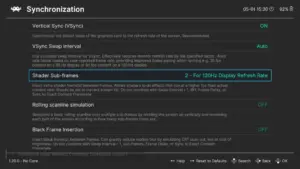
At the heart of this release is the debut of Shader Subframes, a revolutionary CRT beam simulation developed in collaboration by Mark Rejhon of BlurBusters and industry veteran Timothy Lottes, creator of the original FXAA shader and the celebrated crt-lottes filters. This new shader paradigm drastically improves motion clarity on modern, high-refresh-rate panels without the historically unavoidable compromises of traditional black-frame insertion (BFI)—such as severe brightness loss, washed-out color gamuts, and panel-degrading image persistence.
Simultaneously, version 1.20.0 expands RetroArch’s hardware-agnostic reach into the physical environment of the user. Thanks to contributions from developer Jesse Talavera, Linux systems—including portable powerhouses like the Steam Deck—now boast native illuminance (ambient light) sensor support. This feature breathes new life into titles that historically relied on unique hardware gimmicks, such as Konami’s cult-classic Boktai series, allowing players to manipulate virtual solar energy using real-world lighting conditions.
Despite the staggering technical scope of these updates, the Libretro collective remains steadfast in its foundational philosophy. RetroArch continues to be developed entirely for the benefit of its users. Eschewing the modern gaming industry’s ubiquitous monetization strategies, the project remains stubbornly free of in-app advertisements, monetization software development kits (SDKs), and paywalled features. To sustain this user-first ethos, the project relies entirely on community goodwill. Supporters looking to contribute to hosting fees, hardware acquisitions, and developer bounties can do so through the RetroArch Donation Portal, the official Libretro Patreon, the newly added GitHub Sponsors program, or by purchasing official merchandise via the Teespring Store.
Detailed Chronology: The Evolution Leading to Version 1.20.0
To truly understand the weight of the RetroArch 1.20.0 release, it is necessary to contextualize the methodical, multi-year engineering effort that preceded it. The Libretro architecture has long functioned as a modular system wherein frontend management is decoupled from emulator cores. This architectural foresight has allowed the development team to iteratively introduce complex rendering paradigms that would normally require entirely custom engine overhauls in standalone emulators.
The Quest for Authentic Motion
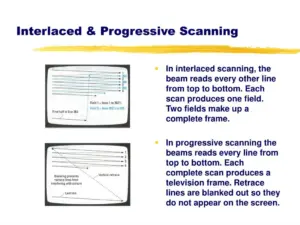
For years, the emulation community relied on two primary methods to simulate CRT displays: spatial filters (which applied scanlines, bloom, and curvature to static frames) and temporal insertion techniques like Black Frame Insertion (BFI). While spatial filters successfully recreated the look of a CRT in a still screenshot, they failed entirely in motion. Objects moving rapidly across the screen suffered from the dreaded sample-and-hold motion blur intrinsic to modern LCD panels.
BFI attempted to remedy this by intermittently flashing black frames between rendered game frames, tricking the human eye into perceiving sharper motion. However, BFI came at a devastating cost: panels lost up to 50% or more of their peak luminance, colors appeared muted, and certain LCD types suffered from temporary image retention or accelerated pixel wear.
The breakthrough came with the conceptualization of RetroArch’s "subframe" shader architecture. By enabling shaders to execute instructions at a frequency higher than the base game’s native frame rate—effectively slicing a single frame into multiple temporal sub-intervals—developers opened the door to true high-frequency temporal manipulation. This laid the technical groundwork for Mark Rejhon and Timothy Lottes to construct their CRT beam simulation shader, transforming theoretical motion clarity research into practical, real-time HLSL/GLSL code implemented directly into RetroArch 1.20.0.
Bridging the Physical and Digital Worlds
Concurrently, the Libretro ecosystem has increasingly focused on utilizing host device hardware sensors to accurately recreate niche peripherals. Historically, emulating games that required light sensors (such as the Game Boy Advance’s Boktai: The Sun Is in Your Hand, where players recharged weapons using a physical photodiode built into the cartridge) required clumsy workarounds, manual slider adjustments, or specialized peripheral hacks.
The inclusion of Linux illuminance sensor support in version 1.20.0—spearheaded by Jesse Talavera—represents a mature evolution in device abstraction. By tapping into standard Linux industrial I/O (IIO) subsystems and hardware APIs, RetroArch can now query ambient light levels from supported host devices in real-time. Demonstrations showcasing Lunar Knights running on a Steam Deck while responding dynamically to room lighting adjustments mark a major milestone in hardware-accurate preservation.
Supporting Context & Technical Metrics
The technical achievements packaged within RetroArch 1.20.0 are best understood through the lens of modern display physics and software architecture.
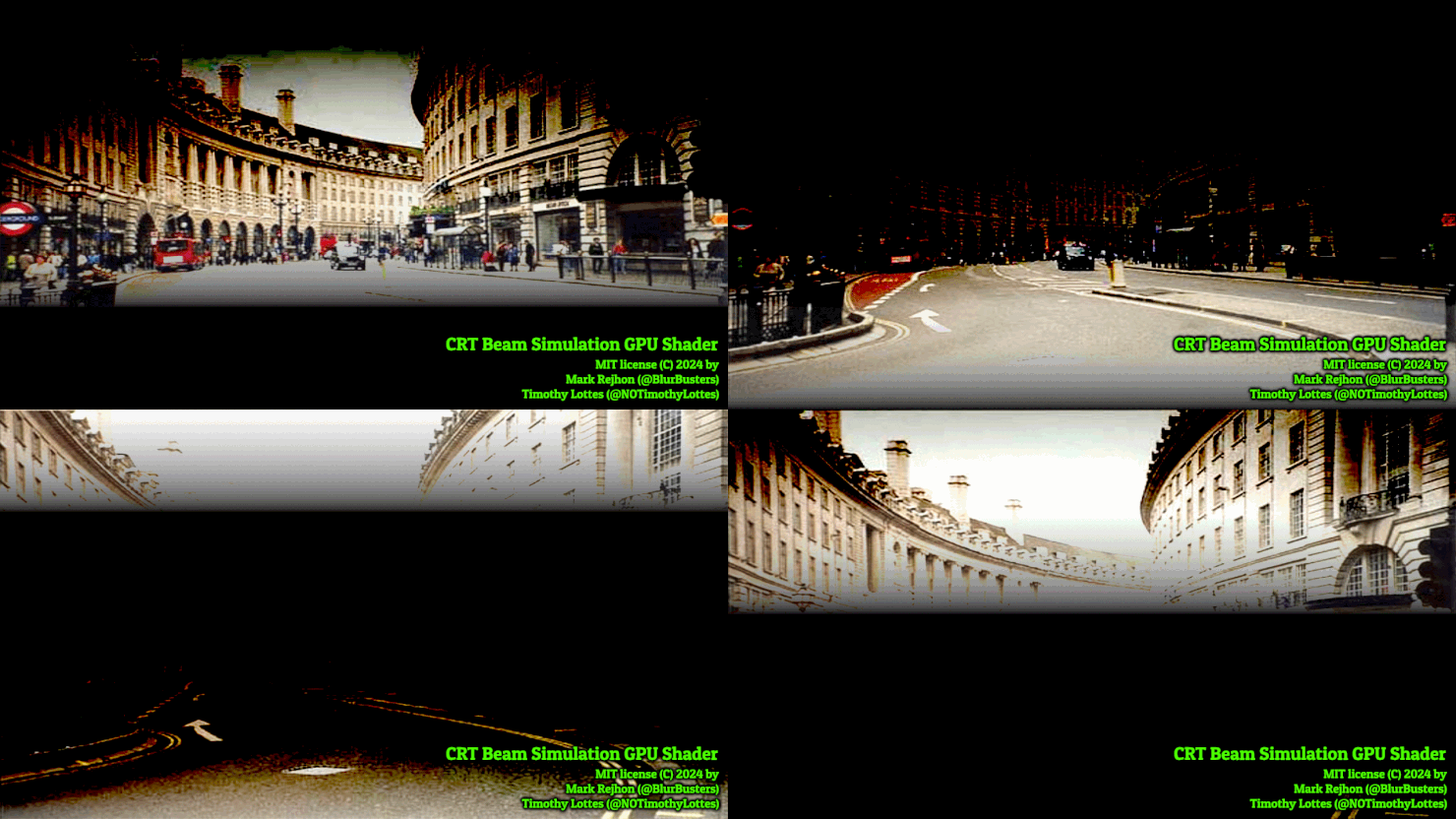
Breaking Down the BlurBusters CRT Beam Simulation
The collaboration between Mark Rejhon (founder of BlurBusters, a leading authority on display motion blur reduction) and Timothy Lottes yields a shader that operates on principles vastly different from traditional CRT filters.
- Temporal Resolution vs. Spatial Resolution: Traditional shaders apply mathematical transformations to pixels after they are rendered to a frame buffer. The new subframe shader injects dynamic scanline sweeps during sub-frame intervals, simulating the physical scanning electron beam of a CRT tube painting phosphors line by line from top to bottom.
- Mitigating Luminance Drop: Unlike traditional BFI, which blanks the entire display for a full frame duration, the beam-racing simulation modulates pixel persistence locally and temporally. This preserves significantly more peak brightness, preventing the dismal gray-out effect common to older motion clarity hacks.
- Compatibility and Requirements: To fully leverage the CRT beam simulation shader, users require a high-refresh-rate display (ideally 120Hz, 240Hz, or higher) capable of executing fast pixel response times. The shader hooks directly into RetroArch’s newly optimized subframe pipeline, ensuring minimal CPU/GPU overhead during execution.
Ambient Light Integration Architecture
The new illuminance sensor support utilizes a modular polling loop designed to query device drivers with negligible latency overhead.
[ Ambient Light Source ]
         │
         ▼ (Linux IIO / Sensors API)
[ RetroArch 1.20.0 Input Driver ]
         │
         ▼ (Dynamic Variable Injection)
[ Emulator Core (e.g., melonDS) ]
         │
         ▼
[ In-Game Solar Gauge Real-Time Adjustment ]
As demonstrated with upcoming updates to cores like melonDS, this sensor data is piped directly into the emulation layer, translating physical lux measurements into corresponding game variables. The development team has also confirmed that camera support for expanded platforms is slated for release shortly after the 1.20.0 cycle, indicating an ongoing push toward holistic real-world sensor integration.
Official Statements and Community Impact
The release of RetroArch 1.20.0 has already generated significant enthusiasm across the emulation and preservation communities. In release notes and community communications, the Libretro core team emphasized the delicate balance between cutting-edge innovation and philosophical integrity.
"Remember that this project exists for the benefit of our users, and that we wouldn’t keep doing this were it not for spreading the love to our users. This project exists because of your support and belief in us to keep going doing great things. We have always prioritized the end-user’s experience, and unlike others, we have never burdened them with in-app ads, monetization SDKs, or paywalled features, and we intend to continue to do so."
This unwavering commitment to an ad-free, open-source model stands in stark contrast to contemporary commercial software trends. By relying exclusively on voluntary contributions via Patreon, GitHub Sponsors, and direct donations, Libretro maintains complete editorial and developmental independence.
Developer Jesse Talavera, reflecting on his work bringing illuminance sensor support to Linux environments, noted the sheer joy of engineering solutions that honor the creative intent of obscure retro titles:
"Now we’re cooking with sunlight! Bringing native light sensor support to Linux means titles like Boktai can finally be played as intended, without tedious workarounds. Seeing Lunar Knights respond dynamically to ambient room lighting on a Steam Deck proves just how versatile the RetroArch frontend has become."
Future Outlook: What Lies Beyond Version 1.20.0
As the dust settles on the rollout of RetroArch 1.20.0, the Libretro development roadmap points toward an even more ambitious horizon. The successful integration of subframe shader capabilities and environmental sensor hooks establishes a robust foundation for upcoming features currently winding their way through experimental branches.
- Expanded Camera and Sensor Integration: Following the release of 1.20.0, the development team has signaled an imminent rollout of cross-platform camera support. This will unlock new possibilities for titles relying on optical recognition, motion tracking, and augmented reality features native to platforms like the Game Boy Camera, PlayStation Eye, and Nintendo DSi.
- Core Updates and Enhancements: Popular cores—most notably
melonDS—are preparing major updates designed to fully capitalize on the new environmental sensor APIs introduced in this version, paving the way for seamless plug-and-play experiences for historically unsupported genres. - Refining High-Refresh-Rate Technologies: As consumer monitors continue to push past 240Hz and 360Hz boundaries, the BlurBusters CRT beam simulation shader will serve as a testing ground for even more granular temporal visual filters. Future iterations may see reduced input lag penalties and automated calibration tools designed to match specific panel response curves.
Ultimately, RetroArch 1.20.0 cements Libretro’s status as the premier, gold-standard frontend for video game preservation. By marrying cutting-edge display science with imaginative hardware integration, the project continues to prove that the best way to honor the past is to relentlessly innovate in the present.
Users are encouraged to download RetroArch 1.20.0 today, test out the new shader pipelines, and consider supporting the project’s ongoing mission via their official donation and sponsorship channels.