RetroArch Officially Debuts on the Apple App Store: A New Era for iOS Emulation

Executive Overview
In a watershed moment for mobile gaming and the emulation community, RetroArch—the universally acclaimed frontend for the libretro architecture—has officially launched on the Apple App Store. Available immediately for iPhone, iPad, and tvOS devices, this release marks a profound shift in Apple’s historically restrictive software distribution policies. For years, iOS users seeking to experience classic retro video games were forced to navigate a labyrinth of complex workarounds, including jailbreaking, sideloading through third-party enterprise certificates, or compiling source code independently using developer tools like Xcode.
Now, with a simple tap of a button, millions of Apple device owners can download the premier all-in-one emulation hub directly from the official storefront. This development not only democratizes access to gaming history on mobile platforms but also signals a broader regulatory and cultural evolution within Apple. Prompted by international antitrust pressures, shifting developer relations, and updated App Store Review Guidelines regarding retro video game emulators, Apple has finally opened its gates to multi-system emulators.
While a dedicated macOS version on the App Store is currently in the pipeline—though awaiting a confirmed release date—the immediate availability on iOS and iPadOS transforms handheld Apple hardware into powerhouse retro consoles. Coupled with the imminent release of a major new version of RetroArch, this launch represents a monumental leap forward for digital preservation, software accessibility, and the ongoing mainstream acceptance of emulation technology.
Detailed Chronology of the Release
The path to RetroArch’s official Apple App Store debut was paved by years of platform friction, policy shifts, and sudden regulatory breakthroughs. To understand the significance of this launch, it is essential to trace the historical timeline of how emulation functioned within the Apple ecosystem and the rapid sequence of events that made this official release possible.
The Pre-Approval Era: Sideloading and Restrictions
For well over a decade, Apple’s walled-garden approach strictly prohibited applications whose primary purpose was to load and execute third-party code or act as system emulators. Apple’s App Store Review Guidelines historically cited security risks, potential copyright infringements, and the prohibition of executing unvetted interpreted code as justifications for rejecting emulators.
Consequently, the libretro development team and individual enthusiasts had to rely on alternative distribution methods:
- Jailbreaking: In the early days of iOS, jailbreaking was the primary method for installing emulators like GPSP or snes9x. However, this compromised device security and grew increasingly difficult as Apple hardened its iOS kernel security with every major software update.
- Sideloading via Xcode: Advanced users could compile RetroArch from source code using a Mac and a free Apple Developer account, sideloading the app onto their iPhones with a mandatory seven-day re-signing limitation.
- Third-Party App Stores and Enterprise Certificates: Services like AltStore and various sideloading repositories emerged to automate this process, though they frequently faced revocation by Apple when enterprise certificates were flagged and blocked.
The April 2024 Policy Shift
The paradigm shifted dramatically in April 2024. Spurred by global antitrust investigations—particularly the European Union’s Digital Markets Act (DMA)—and a growing push for digital fairness, Apple quietly updated Section 4.5.2 of its App Store Review Guidelines. The revision explicitly permitted software "retro game console emulators" to offer games for download, provided the software complied with all applicable laws and copyright standards.
This sudden policy reversal immediately opened the floodgates. Within weeks, single-system emulators for platforms like the Game Boy and Commodore 64 began trickling onto the App Store. However, multi-system frontends—which require dynamic core loading and complex backend management—faced unique technical hurdles regarding Apple’s strict policies against executing downloaded executable code.
The Breakthrough and Official Launch
Following iterative discussions, technical adaptations to comply with Apple’s interpreted-code restrictions (such as compiling cores statically or within Apple’s sanctioned execution sandboxes), the official RetroArch application cleared Apple’s review process.
On May 15, 2024, the libretro team announced that RetroArch was officially live on the Apple App Store for iPhone and iPad, alongside a companion release for tvOS. This eliminated the need for sideloading, jailbreaking, or developer certificates, bringing a polished, professional-grade emulation experience directly to the mainstream consumer market.
Supporting Context & Metrics: The Architecture of RetroArch
To appreciate why RetroArch’s arrival on iOS is such a monumental technical achievement, one must examine its underlying architecture, ecosystem reach, and the sheer breadth of platforms it brings to Apple hardware.
What is RetroArch?
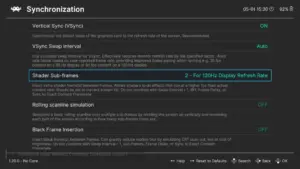
RetroArch is not an emulator in the traditional sense; rather, it is a sophisticated frontend, manager, and GUI for emulation cores, game engines, and media players. Built upon the libretro API, RetroArch allows developers to modularize emulation code into standardized "cores." This means that whether a user wants to play an Atari 2600 cartridge, a Sony PlayStation disc, or a Sega Genesis ROM, the interface, configuration menus, shader pipelines, and controller mappings remain identical.
Core Ecosystem and Compatibility
The availability of RetroArch on iOS opens up a staggering library of classic gaming history. While individual emulators on the App Store often focus on a single console generation, RetroArch acts as a unified hub supporting dozens of systems, including:
- Early Home Consoles & Handhelds: Atari 2600, NES, Game Boy, Game Boy Color, Sega Master System, and PC Engine.
- 16-Bit and 32-Bit Era Powerhouses: Super Nintendo (SNES), Sega Genesis/Mega Drive, PlayStation 1, Sega Saturn, and 3DO.
- Arcade and Computer Systems: MAME (Multiple Arcade Machine Emulator), Commodore 64, MSX, and ZX Spectrum.
Technical Performance on iOS and tvOS Hardware
Modern Apple silicon (ranging from the A15 Bionic up to the M-series chips found in newer iPads and Apple TV 4K units) offers performance headroom that vastly exceeds the hardware requirements of retro systems. Emulating demanding fifth-generation consoles like the PlayStation 1 or Sega Saturn requires significant computational power, particularly when running internal resolution scaling, anti-aliasing shaders, and run-ahead latency reduction techniques.
With RetroArch natively optimized for iOS and tvOS, users can expect:
- Blisteringly Fast Emulation Speeds: Full-speed 60 FPS gameplay across virtually all supported legacy systems, even with heavy graphical enhancements enabled.
- Controller Support: Seamless integration with modern Bluetooth gamepads, including PlayStation DualSense, Xbox Wireless Controllers, and MFi-certified controllers.
- Display Output: On iPadOS and tvOS, users can output gameplay directly to external monitors and 4K television sets, effectively turning an Apple TV into a comprehensive retro-gaming console box.
Official Statements and Community Reception
The release of RetroArch on iOS generated an unprecedented wave of excitement across social media, gaming forums, and technical news outlets. The libretro core development team, speaking through official channels and community updates, expressed cautious optimism regarding the platform’s new accessibility.
"Bringing RetroArch to the Apple App Store has been a long-term goal for the project," noted a representative from the libretro development collective. "For years, our users had to jump through unnecessary technical hoops just to run open-source software on their personal devices. By clearing Apple’s review process, we are finally able to offer a streamlined, secure, and officially supported way for millions of iOS and tvOS users to experience gaming history the way it was meant to be played."
Industry analysts have similarly hailed the move as a watershed moment for consumer software freedom. For decades, Apple’s ecosystem was characterized by strict curation that frequently alienated emulation enthusiasts and open-source developers. The successful launch of a multi-core emulation frontend suggests that Apple is maturing into a more accommodating platform holder, balancing robust security practices with the legitimate demands of power users and preservationists.
Within the gaming community, the reaction has been overwhelmingly positive. Forums such as Reddit’s r/emulation and r/RetroArch were flooded with tutorials, controller configuration tips, and celebration threads. Users highlighted the convenience of no longer needing to rebuild sideloaded apps every seven days, praising the stability and polish of the official App Store release.
Future Outlook: What Lies Ahead for RetroArch on Apple Platforms?
While the initial launch on iPhone, iPad, and tvOS is a historic victory, the development roadmap for RetroArch on Apple hardware is far from complete. The libretro team has confirmed that several major updates and expansions are currently in active development.
The Upcoming macOS App Store Release
While iOS and iPadOS users can currently download RetroArch, Mac users must still rely on direct downloads from the official website or legacy installation methods for the macOS desktop environment. However, the libretro team has officially confirmed that a macOS version specifically tailored for the Mac App Store is actively in the works.
Bringing RetroArch to the Mac App Store presents unique technical challenges, particularly regarding macOS-specific sandboxing rules, file system permissions for loading external ROM directories, and dynamic core downloading. Despite these hurdles, the anticipated release will unify the entire Apple hardware ecosystem under a single, easily accessible distribution channel.
Imminent Software Updates
In tandem with the platform expansion, the libretro team has announced that a brand-new, major version of RetroArch is coming out soon. While specific patch notes and feature sets are kept under wraps until official deployment, community insiders anticipate several key improvements:
- Enhanced UI/UX Responsiveness: Further refinements to the Ozone and XMB menus to make touch navigation on iPhones and iPads even more intuitive.
- Expanded Core Options: Ongoing updates to individual emulation cores for improved accuracy, bug fixes, and performance optimization.
- Cloud Syncing Capabilities: Potential expansions to save-state and configuration syncing across multiple Apple devices via iCloud, allowing seamless transitions from playing on an iPhone during a commute to continuing on an iPad or Apple TV at home.
The Broader Implications for Digital Preservation
Beyond casual gaming, RetroArch’s official presence on the App Store represents a major win for digital preservation. Video game history is notoriously fragile; physical cartridges degrade, optical media rots, and proprietary hardware fails. By providing a stable, legal, and accessible platform for running open-source emulation code on ubiquitous modern hardware, RetroArch ensures that countless titles from the 20th century remain playable for future generations of scholars, historians, and enthusiasts.
As Apple continues to refine its policies and the libretro team pushes the boundaries of what mobile hardware can achieve, the future of retro gaming on iOS has never looked brighter.