The Bullet Heaven Boom: How Major Franchises Are Adapting the Vampire Survivors Formula on Mobile
Executive Overview
The mobile gaming landscape has undergone a dramatic transformation following the runaway success of Vampire Survivors. While titles like Survivors.io may have been first to stake an early claim on mobile devices, Poncle’s seminal indie hit permanently codified the "bullet heaven" or "reverse-bullet-hell" subgenre. Characterized by automated attacks, screen-clearing projectiles, roguelite progression, and massive hordes of onscreen enemies, the formula struck a chord with players worldwide.
Naturally, major publishers and intellectual property holders have taken notice. Today, adaptation is the name of the game, with heavy-hitting franchises like The Walking Dead and My Hero Academia receiving their own dedicated takes on the formula.
However, translating an indie phenomenon born from simple mechanics and pure dopamine loops into a branded, monetization-heavy mobile ecosystem is fraught with friction. When major studios attempt to clone the Vampire Survivors blueprint, they frequently inject traditional free-to-play mobile tropes—such as intrusive gacha systems, meta-progression grinding, and convoluted upgrade trees—that threaten to suffocate the core gameplay loop.
This article explores how two prominent licensed titles—The Walking Dead: Aftermath and My Hero Academia United Survival—attempt to leverage the bullet heaven framework. By examining their design philosophies, pacing, visual identities, and structural missteps, we can better understand why some franchise adaptations succeed in capturing the power fantasy of the genre while others fall flat in drab, uninspired repetition.

Detailed Chronology: The Rise of the Bullet Heaven and Franchise Integration
To understand the current wave of branded bullet-heaven mobile games, one must trace the timeline of the subgenre’s explosive growth and subsequent commercialization.
Phase 1: The Indie Awakening
The modern bullet-heaven craze crystalized with the widespread release and acclaim of Vampire Survivors. Built on a minimalist aesthetic and a devastatingly addictive gameplay loop, the game proved that players did not need complex control schemes to experience high-intensity action. Controlling solely movement while weapons fired automatically, players experienced a steady, satisfying climb from a frail survivor into an untouchable demi-god clearing thousands of monsters per minute.
Phase 2: The Mobile Pioneer Era
Recognizing the perfect synergy between portrait/landscape touchscreens and one-handed movement mechanics, clones and spiritual successors quickly flooded the mobile market. Early pioneers like Survivors.io demonstrated the immense commercial viability of the format on iOS and Android devices, proving that mobile audiences hungered for quick, bite-sized survival sessions.
Phase 3: The IP Influx
Sensing an open market for low-barrier, high-engagement titles, major media conglomerates began partnering with mobile developers to skin the bullet-heaven mechanics with globally recognized intellectual properties. This era brought forth games designed to capture casual fans and genre enthusiasts alike, leading directly to the releases of The Walking Dead: Aftermath and My Hero Academia United Survival. Rather than building entirely new gameplay loops around their respective licenses, publishers sought a safe, proven framework to maximize user acquisition and retention through familiar character rosters and recognizable brand imagery.

Supporting Context & Metrics: Comparing Aftermath and United Survival
When evaluating branded mobile adaptations of Vampire Survivors, it becomes clear that execution is everything. While neither The Walking Dead: Aftermath nor My Hero Academia United Survival manages to completely strip away the intrusive meta-elements of modern mobile gaming—such as gacha mechanics and external equipment grinding—they offer radically different experiences in practice.
Visual Identity and Aesthetic Delivery
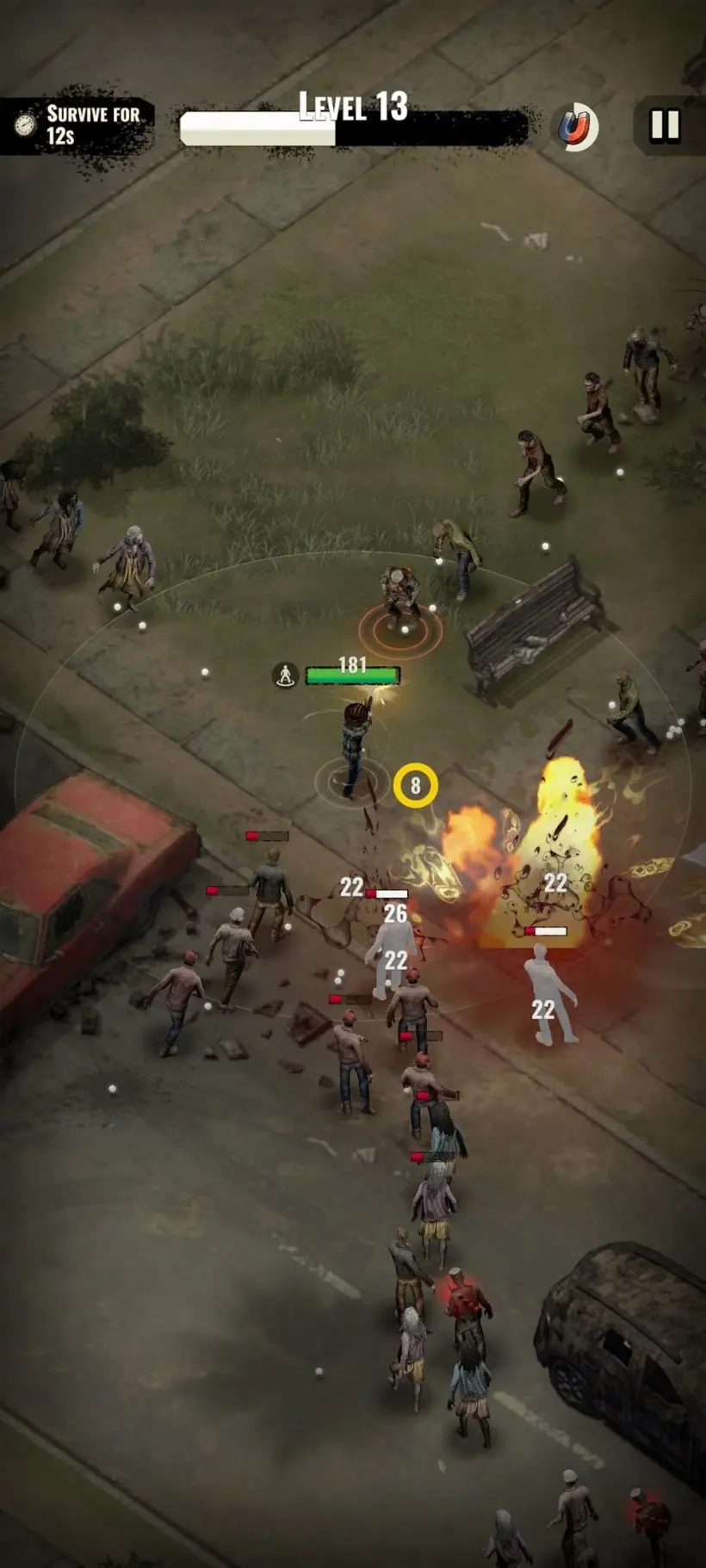
- The Walking Dead: Aftermath: Opting for a grim, post-apocalyptic aesthetic, Aftermath grounds its survival gameplay in muddy, monochromatic environments. Greyish-brown neighborhoods, drab rural fields, and muted urban backdrops dominate the screen. Combat relies on basic gunplay and rudimentary gadgets, with simple white visual indicators representing bullets knocking down hordes of zombies. While this muted tone aligns with the bleak source material, it robs the game of visual excitement. The graphics feel flat, and character models suffer from an uncanny-valley realism that clashes with the frantic, arcade-like nature of bullet-heaven titles.
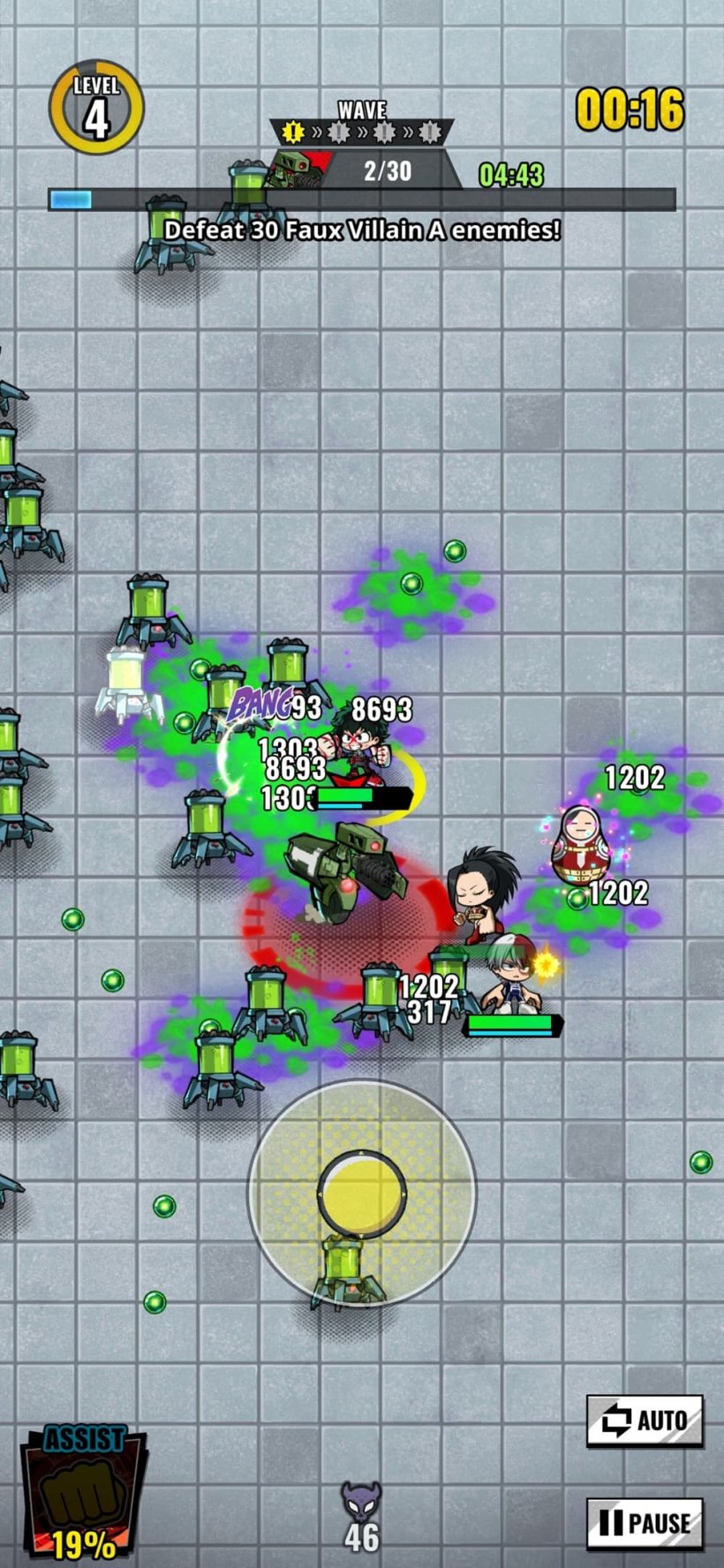
- My Hero Academia United Survival: In stark contrast, United Survival fully embraces the vibrant, four-color aesthetic of its source material. Heroes and villains brandish distinct, larger-than-life "Quirks" (superpowers) alongside an arsenal of unlockable weapons. The screen fills with explosive energy blasts, flashing lights, and chaotic melee combat. Although undeniably cartoonish, the visual presentation feels visceral, dynamic, and genuinely satisfying to watch unfold.
Gameplay Variety and Moment-to-Moment Engagement
The pacing and variety of objectives represent the biggest divergence between the two titles:
- The Stagnation of Aftermath: Playing The Walking Dead: Aftermath often feels like driving on automatic. Even after clearing initial stages, the player character maintains a persistent sense of fragility and weakness. Levels tend to boil down to monotonous endurance tests with rigid victory conditions—either survive for a set number of minutes or eliminate a specific headcount of zombies. Because mobile gamers often judge a title’s worth within its first two to three hours, Aftermath struggles to communicate long-term value, front-loading tedium rather than excitement.
- The Progression Loop of United Survival: United Survival successfully hooks the player by delivering a steady escalation of power. The upgrading process genuinely makes the user feel stronger as matches progress. Furthermore, the inclusion of alternative objectives spices up the gameplay loop, preventing sessions from devolving into mindless endurance checks. Players are consistently incentivized to dive back in, test new characters, and experiment with different Quirk combinations.
The Automation Paradox
Paradoxically, My Hero Academia United Survival introduces a feature that directly undermines its own genre appeal: an "auto" button. By allowing players to automate movement and targeting, the game occasionally strips away the very active engagement that defines the bullet-heaven experience. While manual maneuvering remains necessary during high-difficulty encounters, the inclusion of an auto-play feature highlights a lingering identity crisis among major publishers who cannot seem to decide whether their games are meant to be actively played or passively collected as AFK experiences.
Official Statements and Industry Perspectives: The Tug-of-War Between Purity and Profit
Industry analysts and veteran developers have frequently debated the sustainability of inserting aggressive free-to-play monetization models into genres born from indie purity.
When developers from major studios adapt indie formulas, they often cite player retention and monetization stability as primary drivers behind the inclusion of gacha systems, energy meters, and time-gated upgrade paths. A spokesperson for a major mobile publishing house noted in a recent developer roundtable:
"When launching a game tied to a globally recognized multi-billion-dollar IP, you have to cater to a broad spectrum of users. Hardcore enthusiasts demand mechanical depth and high skill ceilings, while casual franchise fans often prefer streamlined progression, hero collection, and accessible gameplay loops. Balancing these two expectations requires structural compromises—including robust meta-progression systems and flexible automation options."
Conversely, indie purists and genre veterans argue that these exact compromises dilute the core magic of the experience. The original appeal of Vampire Survivors stemmed from an uncompromised 30-minute power fantasy where player skill, tactical pathing, and randomized build synergies dictated victory or defeat—entirely free from paywalls or forced waiting periods.
By layering gacha character rolls and external equipment stat-padding on top of the base survival mechanics, publishers inadvertently introduce artificial friction. As one lead game designer put it:
"The danger of chasing modern mobile monetization trends within an arcade survival framework is that you risk alienating the exact audience that made the subgenre popular in the first place. If a player feels weak because they haven’t rolled a high-tier character from a loot box rather than because they mismanaged their weapon evolution paths, the fundamental psychological reward of the roguelite loop breaks down."
Future Outlook: Where Is the Bullet Heaven Subgenre Headed on Mobile?
As the bullet-heaven subgenre matures on mobile platforms, developers face a critical crossroads. The sheer volume of clones and licensed adaptations flooding app stores means that mere skin-swapping—replacing abstract sprites with licensed heroes and zombies—is no longer enough to guarantee sustained engagement.
1. Moving Beyond Uninspired Copycats
Future iterations must lean harder into what makes their chosen IPs unique. As demonstrated by the contrast between Aftermath and United Survival, grit and realism do not automatically translate well to high-speed arcade survival mechanics unless the game embraces stylized, high-contrast art design and visceral feedback loops. Franchises with explosive, larger-than-life settings (such as anime, high fantasy, or sci-fi) are inherently better suited to the chaotic visual noise of bullet-heaven combat than grounded, gritty survival dramas.
2. Striking a Balance in Monetization
Developers must find innovative ways to monetize these games without disrupting the sacred 30-minute power fantasy. Cosmetics, battle passes, and non-intrusive challenge packs offer viable alternatives to aggressive gacha gating. Allowing players to feel like unstoppable demi-gods purely through in-game choices—rather than locked behind paywalled character upgrades—will remain the gold standard for long-term player retention.

3. The Verdict on Branded Survivors-Likes
Ultimately, while games like The Walking Dead: Aftermath and My Hero Academia United Survival prove that the bullet-heaven subgenre has firmly cemented its place in the mobile ecosystem, they also serve as cautionary tales. Reusing Poncle’s revolutionary gameplay loop is a great starting point, but without respect for the pacing, visual feedback, and pure gratification of becoming an overpowered force of nature, branded mobile adaptations risk fading into the endless sea of forgettable AFK and gacha titles.
For players searching for the true essence of the genre, exploring dedicated survival lists remains the best path forward—yet the constant evolution of licensed entries ensures that developers will keep trying to crack the code of the mobile bullet heaven for years to come.