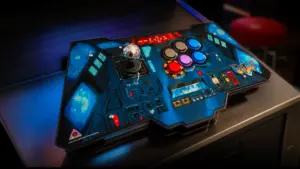
The video game industry has long wrestled with the concept of nostalgia. Too often, it manifests as a superficial coat of paint—a cynical attempt to monetize childhood memories through tired remasters or uninspired clones. However, every so often, a title emerges that manages to capture not merely the visual aesthetic of a bygone era, but its very soul. Enter Wild Blue Skies, the upcoming on-rails arcade shooter developed by Chuhai Labs. Scheduled for an August 13 release on Xbox Series X|S and Xbox on PC with full Xbox Play Anywhere support, the game is an unapologetic love letter to the glory days of the 1990s arcade cabinet and Saturday morning television.
Spearheaded by Studio Director Giles Goddard—a veteran developer whose deep-seated passion for on-rails shooters is fundamentally embedded in the studio’s DNA—Wild Blue Skies represents a masterclass in modernizing a legacy genre. Rather than attempting to "fix" or overcomplicate the conventions of classic flight combat, Chuhai Labs embraced its inherent limitations. Through meticulous level design, innovative camera framing, a vibrant cel-shaded art style reminiscent of Studio Ghibli, and an all-star voice cast featuring industry heavyweights, the studio has crafted a high-flying adventure that bridges the gap between retro purists and a new generation of gamers. This report provides a comprehensive deep-dive into the development philosophy, mechanical innovations, world-building strategies, and future outlook surrounding one of the year’s most anticipated indie releases.
Detailed Chronology: The Making of Wild Blue Skies
The genesis of Wild Blue Skies did not begin with code or polygons; it began with a shared reverence for a genre that many modern publishers have left behind. For the team at Chuhai Labs, particularly Studio Director Giles Goddard, the on-rails shooter was more than just a historical footnote in gaming history—it was a formative experience defined by borrowed controllers, the glow of cathode-ray tube (CRT) monitors, and the relentless pursuit of high scores.
Conceptualization and World-Building First
When pre-production officially commenced, the development team made a foundational decision that would dictate the cadence of the entire project: they built the world before they built a single mission. Eschewing the industry-standard approach of designing isolated levels and stitching them together later, Chuhai Labs conceptualized sprawling environments and mapped out a high-level world map first.
Each mission was treated as a bite-sized episode within a grander, serialized narrative. The workflow began with an environment and a high-level narrative pitch. From there, designers blocked out the raw geometry, segmenting missions into distinct narrative and mechanical beats complete with set pieces. Crucially, the team relied on early prototypes featuring grayboxed environments and floating text placeholders to describe future visual elements, engaging in relentless playtesting to fine-tune the rhythm before a single asset of final art was produced.
The Breakthrough: Embracing Hardware and Design Limitations
One of the most profound turning points in the game’s development cycle occurred when the team confronted the realities of perspective and view distance. Early in development, the game allowed players to see deep into the horizon. However, this design choice inadvertently broke the traditional pacing of the genre: enemies appeared to spawn out of thin air in the far distance, and players were constantly tempted to engage targets long before they posed an immediate threat.
In a move that initially sparked internal debate, the team drastically reduced the view distance. The effect was immediate and transformative. By compressing the visible horizon, players were forced to anchor their focus squarely on the immediate moment. Enemies felt organic rather than artificial, threat assessment became instantaneous, and mission pacing skyrocketed. This pivotal realization taught Chuhai Labs a valuable overarching lesson for the entire project: in an era of boundless technological capabilities, artificial constraints can be a developer’s greatest ally. Whether driven by hardware, resources, or genre conventions, well-defined limitations give a game its sharpest identity.
Supporting Context & Metrics: Mechanics, Visuals, and Audio
Wild Blue Skies achieves its unique feel by harmonizing retro sensibilities with modern engineering. Every pillar of its design—from the physics of the aircraft to the vocal performances of its characters—has been meticulously calibrated.
Flight Mechanics and Camera Engineering
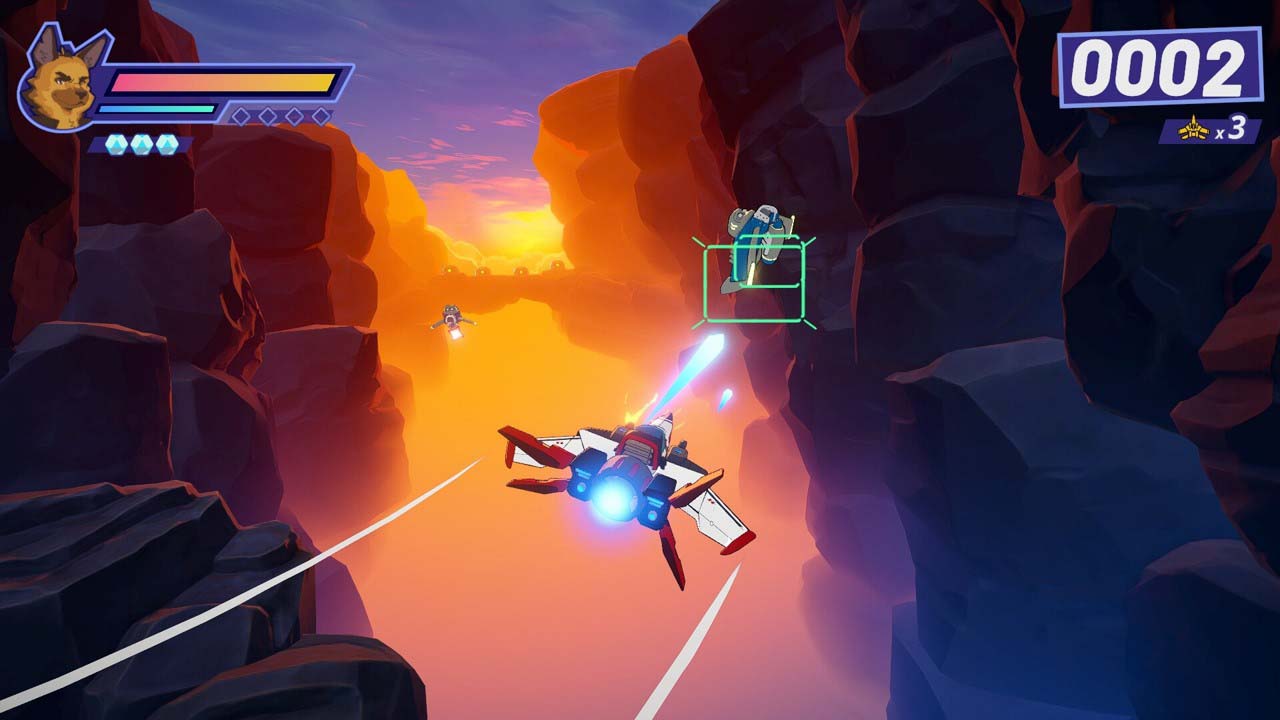
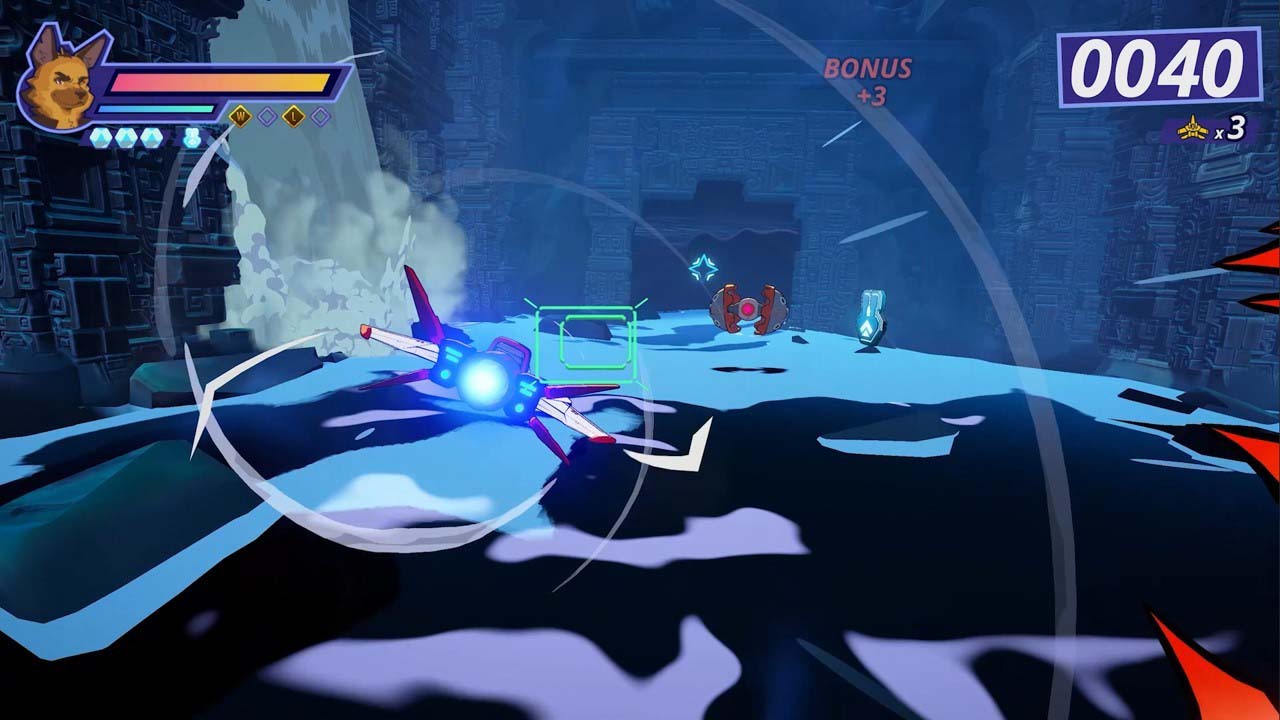
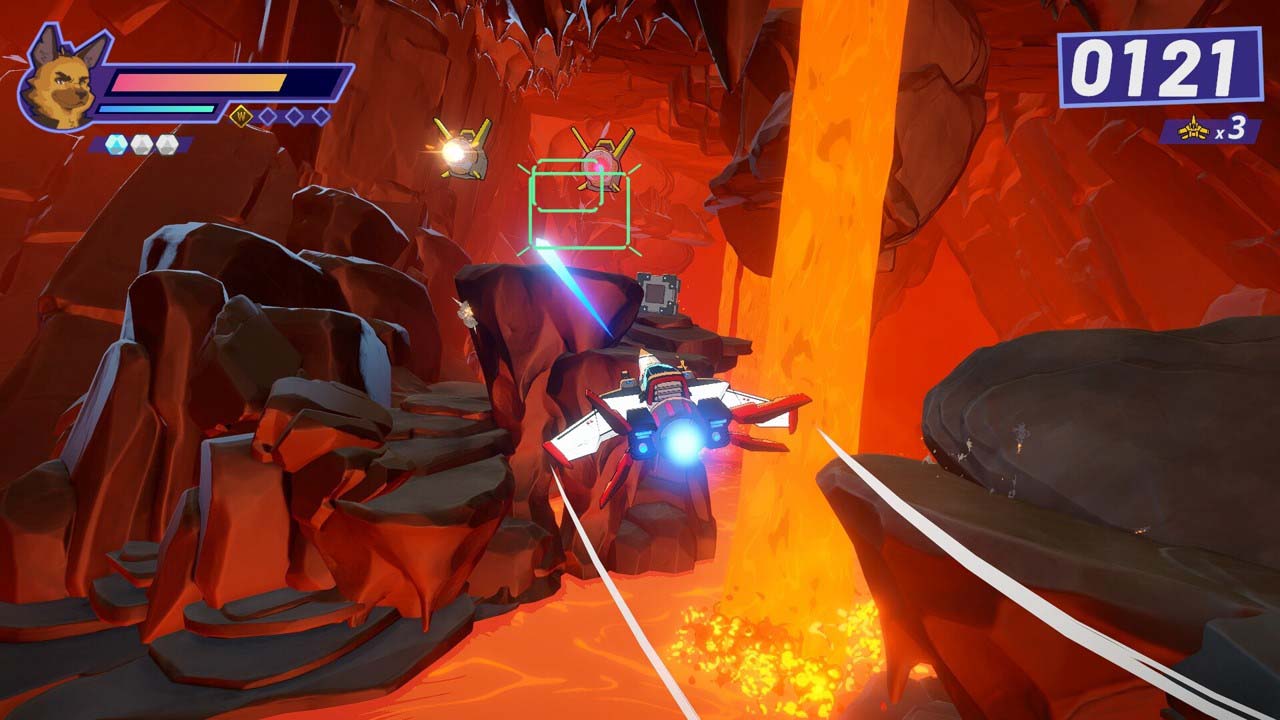
Achieving the correct "feel" for the aircraft was paramount during early development. The team wanted to ensure players could effortlessly navigate and fight through the world without feeling overwhelmed by convoluted controls. A major challenge lay in the framing of the aircraft during on-rails segments: developers needed to convey a sense of flying around the frame while keeping the world legible and ensuring the plane never obstructed the player’s line of sight.
To solve this, Chuhai Labs implemented a specialized dithering technique on the aircraft model, paired with precise camera tuning. This subtle yet effective trick maintains structural visibility without breaking player immersion in the cockpit.
Furthermore, the control scheme was designed to be instantly accessible while harboring a remarkably high skill ceiling:
Dodge Rolls: Not merely a defensive maneuver to evade enemy fire, timed dodge rolls actively deflect projectiles back at attackers, rewarding aggressive playstyles.
Brakes and 180-Degree Turns: In free-flight missions, mastering the brake allows pilots to execute rapid 180-degree pivots, turning the tables on pursuing enemies.
The Audiovisual Tapestry
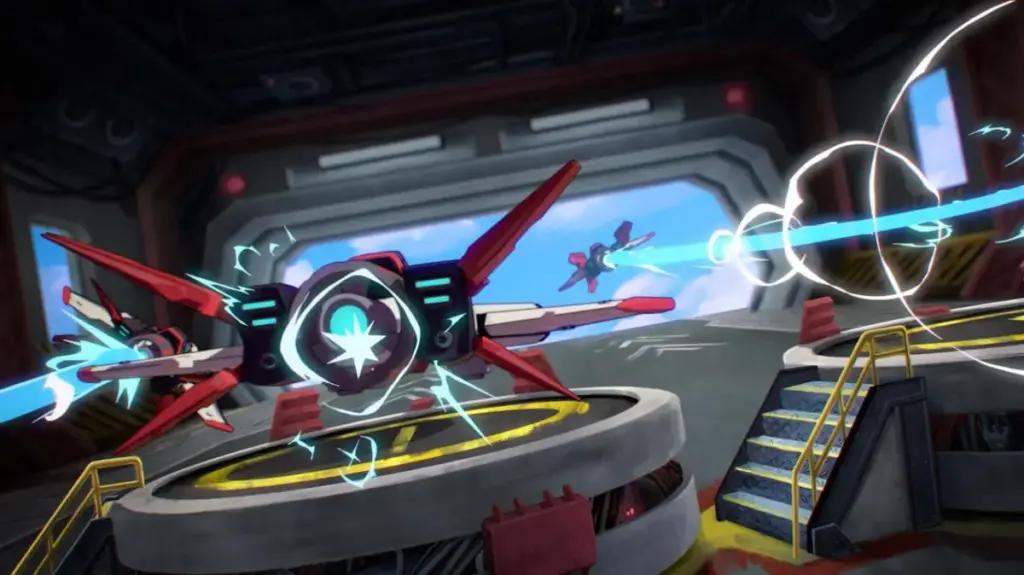
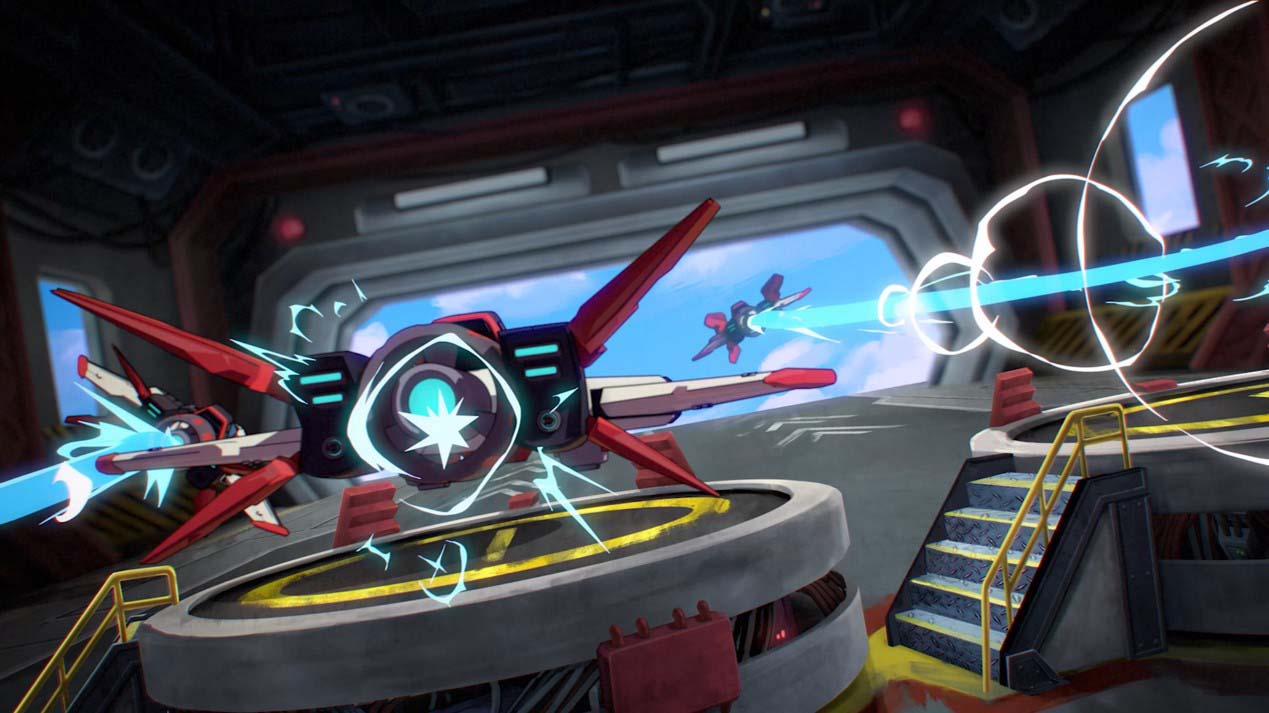
Visually, Wild Blue Skies draws heavy inspiration from classic Japanese animated films, particularly the painterly aesthetic championed by Studio Ghibli. The team utilized an outlined cel-shaded art style to ensure characters, enemy fighters, and player planes pop against vibrant backgrounds. Lighting, shadow, and atmospheric fog were finely tuned to evoke a sense of a living, breathing hand-crafted universe.
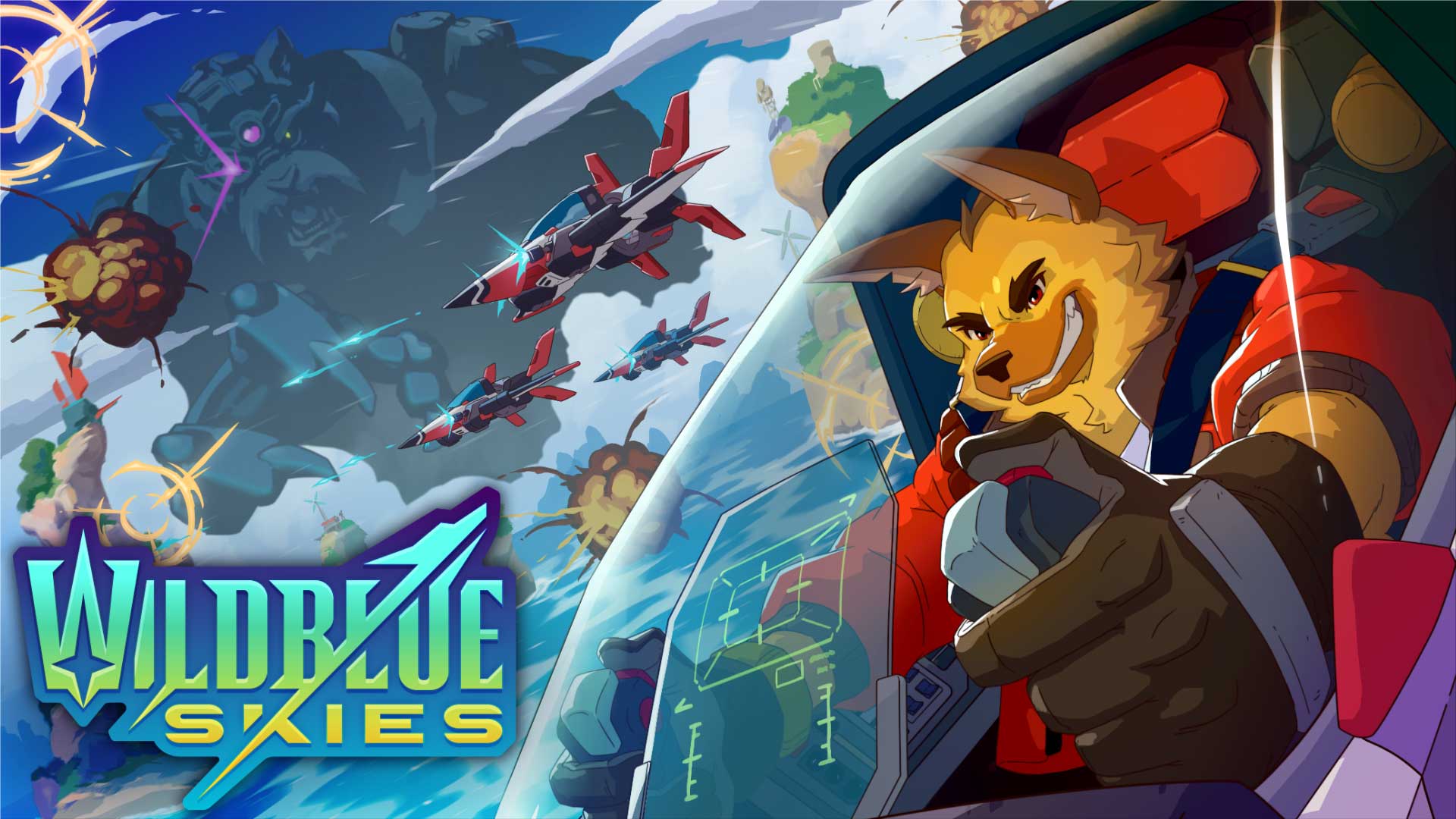
Complementing this visual language is a stellar ensemble voice cast breathing life into the "Blue Bombers"—the game’s central squadron comprising Bowie, Thorne, Chuck, and Roe. The cast features some of the most recognizable and celebrated talent in modern voice acting:
Jonah Scott as Bowie Stray (notable for Beastars and High-Rise Invasion)
Suzie Yeung as Roe Whitetail (notable for Final Fantasy VII Remake and Chainsaw Man)
Edward Bosco as Chuck Barbacoa (notable for Overlord and Genshin Impact)
Daman Mills as Thorne (notable for Dragon Ball Super and Honkai: Star Rail)
Official Statements and Industry Insights
Reflecting on the philosophy driving Wild Blue Skies, Chuhai Labs has consistently emphasized the importance of emotional resonance over mere technological horsepower. In insights shared by the studio, the team notes that developing a genre-authentic title requires looking past modern excess and focusing on core psychological engagement:
"The on-rails shooter is one of those genres that lives in people’s memories in a very specific way. It’s not just a game type; it’s a Saturday morning, it’s a borrowed controller, it’s a high score that means something. We didn’t want to just make another one. We wanted to make the one that reminded you why you loved them in the first place."
This perspective underscores a broader industry trend where independent developers are successfully reclaiming neglected niches from the past, proving that tight design, deliberate pacing, and mechanical mastery remain timeless virtues in interactive entertainment.
Future Outlook
As Wild Blue Skies approaches its launch on August 13 across Xbox Series X|S and Xbox on PC, the gaming community is poised to welcome a rare breed of arcade action. With branching mission paths designed to ensure no two playthroughs are identical, hidden routes that reward exploratory mastery, and a robust scoring system, the title offers immense replay value.
Moreover, the inclusion of Xbox Play Anywhere ensures that players can seamlessly transition between console and PC platforms without losing a single frame of mission progress or a single earned achievement. For Chuhai Labs, the launch of Wild Blue Skies is not merely the culmination of years of iterative development, but a bold statement about the enduring viability of classic arcade design philosophies in the modern era. As players take to the skies to beat back Grimclaw’s forces alongside Bowie, Thorne, Chuck, and Roe, they will not just be playing a video game—they will be stepping back into a golden age of gaming, brilliantly reimagined for today.