Beyond the Lens: Inside Apple’s Ambitions to Transform Smart Glasses into Health and Fitness Powerhouses

Executive Overview
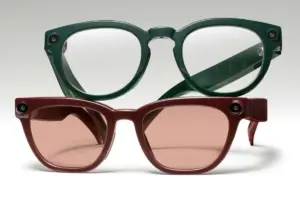
Apple is quietly laying the foundational groundwork for a paradigm shift in consumer wearables. While the tech giant’s highly anticipated first-generation smart glasses—currently in development within its secretive Vision Products Group (VPG)—are not expected to feature advanced health-monitoring hardware out of the gate, internal blueprints and strategic recruitment signals point to a much grander long-term vision.
According to industry reports and recent corporate job listings, Apple ultimately hopes to place health, wellness, and fitness tracking at the very center of its next major product category. This strategic pivot mirrors Apple’s historic playbook with AirPods. Initially launched as simple wireless audio accessories, AirPods have steadily evolved into sophisticated medical-grade devices, most notably through software updates that transform them into ad hoc clinical hearing aids.
Apple aims to replicate this trajectory with spatial computing and smart eyewear. By equipping future iterations of smart glasses and extended reality (XR) headsets with a dense array of optical, environmental, and inertial sensors, the company plans to transition these accessories from casual photo-and-video capture devices—and endpoints for generative AI queries—into indispensable wellness monitors. However, realizing this ambitious roadmap will require overcoming steep engineering hurdles, particularly balancing biometric accuracy, thermal management, and device weight, which famously derailed early attempts to integrate Apple Fitness+ directly into the Apple Vision Pro.
Detailed Chronology: The Evolution of Apple’s Spatial Health Ambitions
To understand where Apple’s wearable technology is heading, it is necessary to examine how the company’s hardware roadmap has evolved over the past several years.
The Vision Pro Experiment and the Weight Constraint
Long before rumors of Apple smart glasses dominated supply-chain chatter, the company’s Vision Products Group (VPG) harbored ambitions to bring comprehensive fitness tracking to spatial computing.
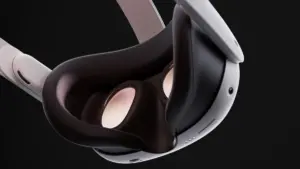
During the development phase of the Apple Vision Pro, engineers conceptualized integrating Apple Fitness+ directly into the headset. The theoretical use case was compelling: users could perform guided workouts while the headset’s outward- and inward-facing sensors utilized advanced body-tracking algorithms to analyze form, count repetitions, and gauge workout intensity in real time.
However, physics intervened. The Vision Pro’s hardware footprint—laden with high-resolution micro-OLED displays, processing silicon, complex camera arrays, and structural framing—made the headset too heavy and cumbersome for high-intensity physical activity. Wearing a device of that mass during dynamic movements caused discomfort and instability, forcing Apple to abandon the fitness-focused integration before the product shipped to consumers.
Pivoting to Lightweight Form Factors
Recognizing that heavy headsets are poorly suited for the gym or the running track, Apple shifted its focus toward a lighter form factor: augmented reality smart glasses.
Unlike fully enclosed XR headsets, smart glasses prioritize everyday wearability, resembling traditional prescription frames or sunglasses. Because these devices are designed to be worn for hours at a time, they necessitate a completely different engineering approach. Rather than relying on heavy cranial straps and bulky batteries, smart glasses must be sleek, lightweight, and unobtrusive.
Yet, maintaining a low profile does not preclude computational power. Future smart glasses will inherently house an array of micro-cameras, depth sensors, and spatial audio speakers. By cleverly repurposing these integrated sensors, Apple can track user movements, analyze physical environments, and capture biometric markers without adding cumbersome standalone hardware.
Strategic Recruitment Signals
The clearest indicator of Apple’s long-term health trajectory for spatial products emerged via a corporate job posting issued by the Vision Products Group. Apple formally opened a search for a “Strategic Product Design, VPG Health & Fitness” leader.
The official job description explicitly details the company’s expansive mandate for the division:
"Apple’s Vision Products Group is looking for a strategic product design leader to help define the future of health, wellbeing, and fitness experiences across vision products. You will translate ambiguous opportunities at the intersection of spatial computing, wearables, consumer health, and human behavior into clear first-party product direction by identifying high-impact opportunities, shaping early concepts, defining what should be built, and helping cross-functional teams bring those experiences to life."
This high-level recruitment drive underscores that Apple is not merely experimenting with health features as an afterthought; it is intentionally structuring its R&D teams to build an entire wellness ecosystem around spatial hardware.
Supporting Context & Metrics: The Wearables Landscape and Competitor Strategies
Apple does not operate in a vacuum. The race to dominate the smart glasses market has intensified dramatically, with major technology conglomerates vying to capture consumer attention by pairing AI capabilities with health tracking.
+-------------------------------------------------------------------------+
                    THE SMART GLASSES FITNESS ECOSYSTEM
+---------------------------+---------------------------------------------+
| Competitor / Ecosystem    | Core Health & Fitness Focus Areas           |
+---------------------------+---------------------------------------------+
| Meta / EssilorLuxottica   | - Visual macronutrient estimation           |
| (Ray-Ban & Meta Glasses)  | - Calorie logging via computer vision       |
|                           | - AI-powered nutritional tracking           |
+---------------------------+---------------------------------------------+
| Apple (VPG Future Roadmap)| - Computer vision movement analysis         |
|                           | - Repetition & weight tracking              |
|                           | - Integration with Apple Watch / Fitness+   |
+---------------------------+---------------------------------------------+
Meta’s Aggressive Head Start
Meta Platforms, partnered with eyewear giant EssilorLuxottica, currently commands a commanding lead in the mainstream smart glasses market through its Ray-Ban Meta and proprietary smart eyewear lineups.
Meta has systematically expanded the utility of its glasses beyond social media integration and basic conversational AI. In a pivotal software push, Meta introduced computer-vision-powered health capabilities designed to streamline nutritional tracking. By leveraging the glasses’ onboard cameras, users can visually estimate a food item’s macronutrients and log calories directly into health platforms. This functionality removes the psychological and administrative friction associated with traditional calorie-tracking apps, which require users to manually search databases and log every meal.
The Sensor Dilemma: Wrist vs. Face
Despite the excitement surrounding facial computing and smart eyewear, industry analysts remain divided on whether smart glasses can ever entirely replace dedicated wrist-worn trackers like the Apple Watch or specialized fitness bands.
- Biometric Accuracy: While researchers continually explore novel sensor placements—such as nose bridge-mounted pulse oximeters and photoplethysmography (PPG) sensors to measure heart rate—skin contact on the face is inherently less stable than on the wrist or upper arm. Facial expressions, chewing, talking, and sweat migration can easily disrupt optical sensors mounted on frames.
- The Adjunct Model: Rather than attempting to supplant the smartwatch, smart glasses are far more likely to function as high-powered adjuncts to existing fitness ecosystems.
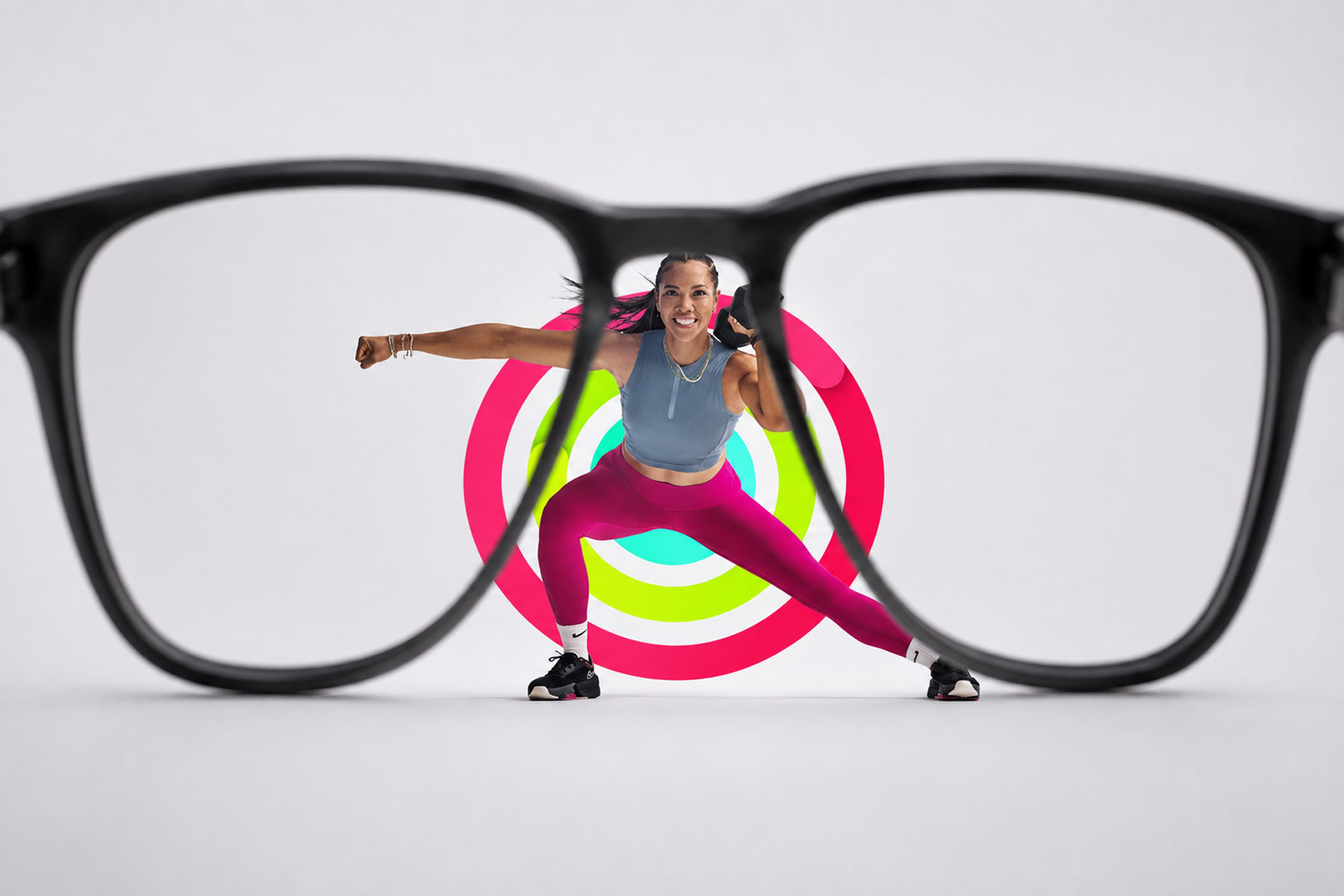
In an Apple ecosystem workflow, the Apple Watch would continue to handle gold-standard biometric monitoring—such as continuous heart rate, electrocardiograms (ECGs), and blood oxygen saturation—while Apple smart glasses provide the visual context. Using advanced computer vision, the glasses could "watch" a user work out, automatically logging metrics like treadmill speed, weight machine settings, and repetition counts without requiring manual inputs.
Official Statements and Industry Insights
According to reporting by Mark Gurman of Bloomberg, Apple’s internal roadmap for smart glasses is being calibrated with deliberate pragmatism. While the ultimate corporate objective is to position smart glasses as premier health and fitness companions, consumers should temper expectations for the initial hardware generation.
Industry insiders note that the first-generation Apple smart glasses will likely focus on foundational pillars: establishing a sleek aesthetic, integrating seamless Apple Intelligence (AI) features, enabling media capture, and serving as a low-latency interface for spatial audio and visual notifications.
However, tech sector analysts emphasize that Apple views health tracking as the ultimate "moat" for its hardware ecosystem. Once a consumer relies on Apple devices to monitor their cardiovascular health, track their sleep, and log their physical fitness, switching to a competing hardware platform becomes exceptionally difficult. Expanding this ecosystem into spatial eyewear represents the logical next frontier in user retention and deep technological integration.
Future Outlook: What Lies Ahead for Spatial Health
As the consumer electronics industry marches toward a post-smartphone future, the convergence of augmented reality, artificial intelligence, and digital health will redefine how humans interact with technology.
1. The Realization of Ambient Health Monitoring
In the coming decade, health tracking is poised to become entirely ambient. Instead of requiring users to actively interact with a screen or strap on dedicated medical-grade gear, passive sensors embedded in everyday accessories—such as smart rings, smart rings, wireless earbuds, and smart glasses—will continuously collect wellness data in the background. Apple’s ongoing research into optical movement analysis positions the company to excel in this ambient paradigm.
2. Regulatory Hurdles and Medical Validation
As Apple pushes deeper into health and fitness, the regulatory landscape will present significant challenges. Transforming consumer electronics into diagnostic or wellness monitoring tools requires navigating stringent oversight from regulatory bodies like the U.S. Food and Drug Administration (FDA). Just as Apple had to secure regulatory clearance for features like the Apple Watch’s ECG and sleep apnea notifications, any future health-monitoring capabilities integrated into smart glasses—whether optical heart rate tracking or advanced postural analysis—will undergo rigorous scrutiny.
3. The Battle for the Face
The competition between Apple, Meta, Google, and emerging hardware players to dominate facial computing is heating up. While Meta currently holds a temporal advantage in market penetration and visual AI features, Apple’s unmatched hardware-software integration, coupled with its booming health services ecosystem, gives it the tools required to mount a formidable challenge.
Ultimately, while the first generation of Apple smart glasses may debut without dedicated fitness sensors, the corporate writing is clearly on the wall. Apple is engineering a future where your glasses do more than just help you see the world—they will watch how you move through it, helping you live a healthier life in the process.